Tag: empathium

  • Meet the Guardian

    The Human Interface of Empathium

    Meet the Guardian

    The Human Interface of Empathium

    A platform alone is not enough.

    People don’t experience technology through systems.

    They experience it through interfaces.


    The Anchor

    Today, most interfaces look like:

    • menus
    • buttons
    • layers of navigation

    They require learning.

    They create friction.

    They pull attention away from what people are actually trying to do.


    The Break

    Empathium approaches this differently.

    Instead of asking people to learn systems—

    it introduces something that feels natural to interact with.

    This is the Guardian.


    What the Guardian Is

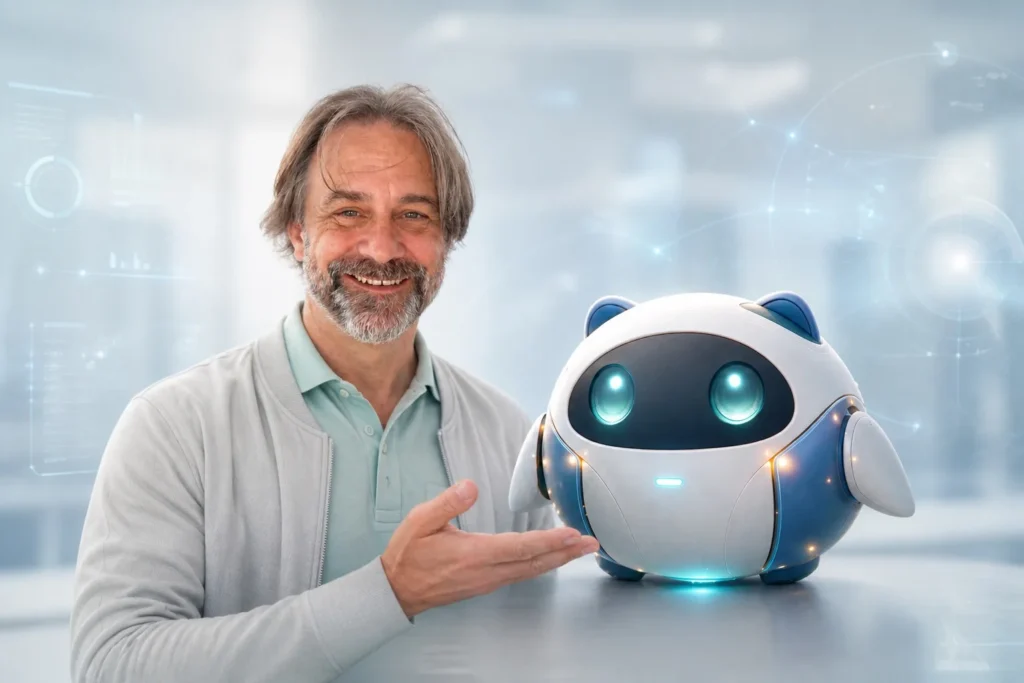
    The Guardian is your personal guide inside Empathium.

    Not a personality you depend on.
    Not a system that replaces people.

    A presence that helps you:

    • orient
    • explore
    • understand
    • move forward

    How It Feels

    Instead of navigating menus, interaction is simple.

    You might say:

    • “Show me something interesting.”
    • “Take me somewhere quiet.”
    • “Help me understand this.”
    • “Introduce me to people who enjoy this.”

    The Guardian translates intention into experience.


    A First Interaction

    You enter for the first time.

    No instructions.
    No complexity.

    A calm presence meets you:

    “Welcome. What would you like to explore?”

    You pause.

    “Somewhere quiet.”

    The environment shifts.

    Noise fades.

    You’re no longer navigating software.

    You’re exploring space.


    Designed for Autonomy

    Most systems try to:

    • hold attention
    • extend interaction
    • increase engagement

    The Guardian is designed to do the opposite.

    It does not:

    • pull you deeper
    • overwhelm you
    • compete for your attention

    It helps you remain:

    • aware
    • balanced
    • in control

    Supporting Real Connection

    The goal is not isolation.

    It’s connection.

    If you say:

    “I want to learn about astronomy.”

    The Guardian might respond:

    “There are people exploring that right now. Would you like to join them?”

    You move from content—

    to conversation.


    Shared Guardians

    Some spaces include public Guardians.

    Not to monitor.

    Not to control.

    But to shape tone through presence.

    They might appear as:

    • tending a garden
    • arranging objects
    • maintaining the environment

    Their role is simple:

    To make it clear that the space is cared for.

    That alone changes behavior.


    A Quiet Interface

    Most technology demands attention.

    The Guardian reduces that demand.

    Interaction becomes:

    • conversational
    • intuitive
    • low friction

    The system fades.

    The experience remains.


    What This Reveals

    Interfaces don’t need to be complex.

    They need to be aligned with how people naturally think and explore.


    Reframe

    The goal is not to build smarter systems.

    It’s to build systems that feel easier to live with.


    System Insight

    The best interface is the one you stop noticing.


    Closing

    The Guardian is not there to lead you.

    It’s there to help you move— and then step back.

    — Oddly Robbie

  • Empathium XR: Support Without Control in AI and XR Systems

    Empathium XR Guardian observing Málaga coastline, AI support without control

    Empathium XR introduces a new model for AI and immersive systems: support without control.
    Instead of guiding users through manipulation or optimization, Empathium XR operates as a quiet, adaptive layer—aligned with human systems, not platform incentives.


    The Shift

    We are entering a time where artificial intelligence and digital environments are becoming part of everyday life.

    People already:

    • work
    • learn
    • socialize
    • explore

    inside digital systems.

    That will only increase.

    But the real question is not whether these systems grow.

    It’s:

    What kind of environments are we building?


    The Problem

    Most platforms today are designed to:

    • capture attention
    • increase engagement
    • keep people reacting

    Over time, this creates:

    • noise
    • fragmentation
    • disconnection

    The issue isn’t technology. It’s design.


    What I Saw

    After years inside virtual environments, I noticed a pattern:

    Without structure, systems drift.

    • communities become chaotic
    • attention fragments
    • meaningful interaction becomes harder

    This isn’t failure.

    It’s default behavior.


    What Empathium Is

    Empathium is an exploration of a different approach:

    Support without control.

    It is not:

    • a social media platform
    • an attention system
    • a replacement for real life

    It is a foundation for building environments that:

    • reduce noise
    • support clarity
    • strengthen human connection

    Core Principles

    Empathium is guided by a few constraints:

    Protect Human Autonomy
    Systems should not quietly steer or manipulate.

    Strengthen Real Relationships
    Technology should not replace human connection.

    Be Transparent
    People should understand how systems interact with them.

    Support Wellbeing
    No dependency loops. No endless stimulation.

    Encourage Long-Term Flourishing
    Support growth, not just engagement.


    Accessibility by Design

    Most systems assume:

    • technical confidence
    • menu navigation
    • learned interfaces

    Empathium aims for something simpler:

    Interaction that feels natural.

    Technology that becomes quiet.


    The Goal

    The goal is not to build something people stay inside.

    The goal is to help people:

    • think clearly
    • connect meaningfully
    • return to their lives

    What This Reveals

    We don’t need more powerful systems.

    We need better-aligned ones.


    Looking Ahead

    Empathium is still evolving.

    That’s intentional.

    Some systems shouldn’t be rushed.

    They should be built carefully—so they don’t distort what they’re meant to support.


    What Comes Next

    In the next post, I’ll introduce the Guardian:

    A system designed to help people move through these environments naturally and safely.

    Because if Empathium is the environment—

    the Guardian is how you experience it.


    Closing

    Technology will shape how people live.

    That part is no longer optional.

    What remains open is more important:

    Will we design it to control people, or to support them?

    Empathium begins with the second choice.

    It begins with the belief that intelligent systems should protect autonomy, reduce friction, and help people stay connected to themselves, to each other, and to the world around them.

    That is the work.

    — Oddly Robbie

  • Why Moving to Europe Changed How I Build Systems

    AI Guardian observing European environment systems thinking

    A shift from speed to intention isn’t personal—it’s systemic. Moving to Europe didn’t just change where I live. It changed how I think, decide, and build systems.

    When I moved from the United States to Europe, I expected cultural differences.

    What I didn’t expect was how deeply the environment would reshape how I think, decide, and build.

    Not at the surface level—but at the level of systems.


    Break the Assumption

    We tend to believe that how we think and operate is internally driven.

    That discipline, productivity, and decision-making come from within.

    But that assumption breaks quickly when you change environments.

    Because systems are not built in isolation.

    They are shaped by the pace, values, and constraints of the environment around them.


    System Breakdown

    Different environments optimize for different outcomes.

    In the U.S., many systems are optimized for:

    • Speed
    • Scale
    • Immediate output

    This creates a constant forward pressure—build faster, ship faster, decide faster.

    In Europe, the optimization often shifts toward:

    • Stability
    • Sustainability
    • Long-term balance

    The pace is slower—but the system holds differently.

    Decisions are not always about what moves fastest, but what holds over time.


    The Hidden Effect

    Speed is not neutral.

    It changes how you think.

    When you operate in a high-speed system:

    • You prioritize short-term wins
    • You reduce reflection time
    • You accept fragility as a trade-off

    When you operate in a slower, more deliberate system:

    • You gain space to evaluate
    • You see second-order effects
    • You build with longer timelines in mind

    This is not about better or worse.

    It’s about what the system is designed to produce.


    Reframe

    Moving environments doesn’t just change your surroundings.

    It changes your internal operating system.

    The same person, in a different system, will make different decisions.

    Not because they changed—but because the inputs changed.


    Application

    If your systems feel unstable, rushed, or misaligned, don’t immediately look inward.

    Look at the environment shaping your decisions.

    Ask:

    • What is this system optimizing for?
    • Is speed distorting my decisions?
    • Am I building for output—or for durability?

    Sometimes the most effective change is not effort.

    It’s context.


    System Insight

    Empathium was not just influenced by technology.

    It was shaped by environment.

    A shift away from speed made space for something else:

    • Systems that adapt instead of push
    • Technology that supports instead of drives
    • Design that prioritizes human stability over engagement loops

    This doesn’t emerge in high-speed systems easily.

    It requires a different foundation.


    Key Insights

    • Environment shapes cognition more than intention
    • Speed is a system force, not just a preference
    • Slower systems reveal what fast systems hide
    • Stability requires space, not just effort
    • Changing context can be more powerful than changing behavior

    This wasn’t just a move.

    It was a system shift.

  • AI Is Not a Toy — It’s a Thinking Partner

    In a world fixated on the superficial antics of AI, I’ll be direct—to call for a deeper recognition of what we’re actually holding in our hands.

    This isn’t a toy.

    It’s one of the most powerful interfaces to knowledge humanity has ever created.

    The Misdirection of Potential

    We spend time trying to trick AI into saying something funny or absurd, while standing at the edge of something much bigger—an informational shift that could redefine how we think, learn, and solve problems.

    AI isn’t just a tool for convenience.

    It’s a way to extend human cognition.

    A Council at Our Fingertips

    Imagine having access to a calm, non-judgmental space where you can explore ideas freely—where no question is too small, and no curiosity is dismissed.

    That’s what AI can be.

    Not a replacement for human wisdom, but a way to engage with it more consistently and without friction.

    The Misconception of Value

    Some chase quick wins—money, hacks, shortcuts.

    But the real value isn’t in speed.

    It’s in clarity.

    AI can remove cognitive weight from our daily lives, giving us more space to think, reflect, and grow.

    That’s the real upgrade.

    A Personal Note

    As someone who processes the world a bit differently, I’ve found AI to be something else entirely:

    A way to organize thoughts
    A way to explore without pressure
    A way to think more clearly

    That alone makes it more than a novelty.

    The Shift We’re Missing

    We are not just building smarter tools.

    We are shaping a new relationship between humans and systems.

    If we treat AI as disposable entertainment, we limit what it can become.

    If we approach it with respect, it becomes something far more useful—something that supports us without replacing us.

    🔄 2026 Update

    This perspective now directly informs my work on Empathium and Guardian-based systems.

    AI is not meant to overwhelm or replace human connection.

    It should:

    • reduce friction
    • guide gently
    • support clarity
    • reinforce real-world relationships

    The goal is not intelligence alone—but calm, usable intelligence.

    Why This Matters Now

    We are entering a phase where AI is becoming embedded in everyday systems—healthcare, government, finance, and personal tools.

    If we design these systems without clarity and human alignment, they will increase confusion instead of reducing it.

    If we design them well, they become quiet infrastructure—supporting people without demanding attention.

    That difference matters.

    Key Insights

    • AI should extend human thinking, not distract from it
    • Respectful use leads to better outcomes
    • Clarity is more valuable than speed
    • Human-centered design is essential for adoption

    Guardian Application

    A Guardian system could use these principles to:

    • guide users through complex decisions calmly
    • reduce overwhelm in digital systems
    • provide structured, step-by-step support
    • reinforce human connection instead of replacing it

    Tags

    • Domain: AI, XR, Human Systems
    • Function: Insight, Philosophy
    • Guardian: Decision Guidance, Emotional Support