
Tag: nervous system

  • When There Seems There Are No Options

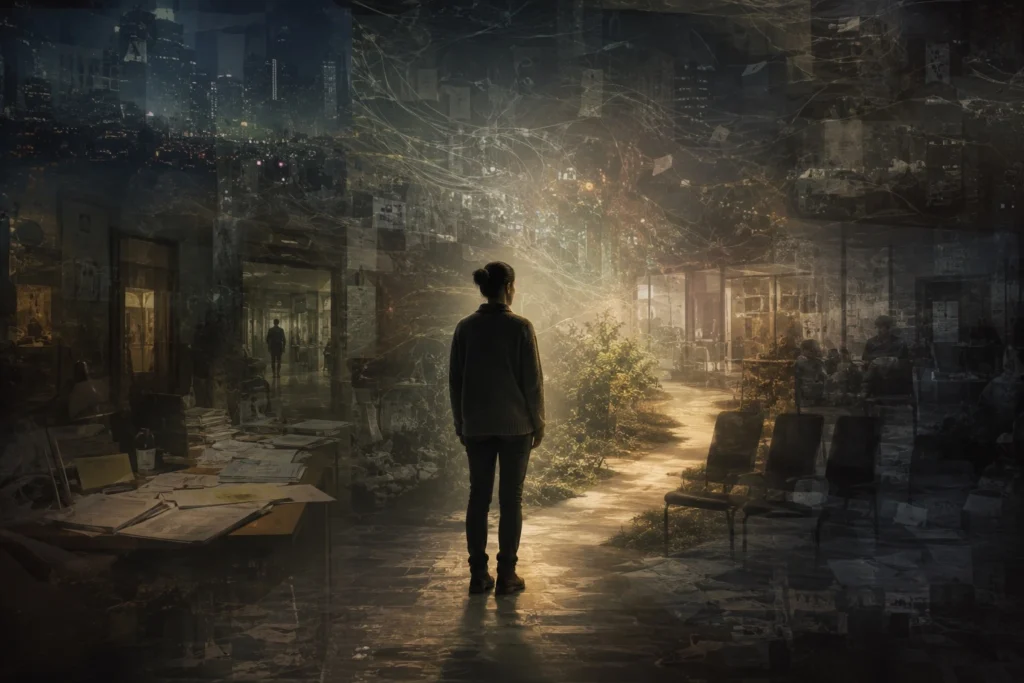
    A person stands in a quiet symbolic space where many unclear paths are hidden by fog and noise, while one calm path ahead becomes visible.

    When pain becomes the only visible option, the system has narrowed too far.

    Content note: suicide, emotional pain, mental health, and system failure. This post does not discuss methods. It is about compassion, prevention, and how human systems can make options either visible or invisible.

    Belief

    When people die by suicide, many assume they chose death.

    That belief is too simple.

    It treats the final action as if the person were standing in a calm room, looking at a clear list of options, and then freely choosing one.

    But human beings do not always experience life that way.

    Sometimes pain becomes so loud that it fills the whole room. Sometimes fear, shame, exhaustion, paperwork, money, isolation, sensory overload, or trauma narrow the mind until only one exit appears visible.

    That does not mean other options did not exist.

    It means the person could not reach them.

    Break

    A better way to understand this is through human systems.

    People do not live inside thoughts alone. They live inside bodies, nervous systems, families, economies, medical systems, housing systems, social expectations, sensory environments, and histories of harm or support.

    When those systems overload a person, the visible option field can collapse.

    The person may still be intelligent.
    They may still be loved.
    They may still have future possibilities.
    They may still have people who would help.

    But if those things are not visible, reachable, or usable in the moment, they cannot function as options.

    That distinction matters.

    System Breakdown

    A system fails when it lets a human being reach a point where death feels more available than help.

    That failure can happen quietly.

    It can happen when someone needs support but receives judgment.
    It can happen when the paperwork is too confusing.
    It can happen when therapy is delayed, expensive, or inaccessible.
    It can happen when people say “just ask for help,” but the act of asking requires more strength than the person has left.
    It can happen when sensory noise never stops.
    It can happen when shame becomes louder than connection.
    It can happen when every path forward looks like another demand.

    For some people, especially autistic people or people living with trauma, the problem is not that we do not care about life.

    The problem can be that the noise of life becomes too much to process.

    Too many inputs.
    Too many expectations.
    Too many unclear rules.
    Too many consequences.
    Too little quiet.
    Too little translation.
    Too little space to recover.

    When that happens, options do not always announce themselves. They may exist outside the person, but they do not appear inside the person’s usable reality.

    Personal Evidence

    I write this carefully because I know what it is like to not see options show themselves.

    There were points in my life when options probably existed somewhere, but they were not visible to me. The noise was too much. The systems around me were too much. My mind was not empty; it was overloaded.

    That is different from weakness.

    It is different from selfishness.

    It is different from not caring.

    Sometimes the human system is carrying more than it can organize. Sometimes the next safe step is hidden behind too much pain, too much input, or too many demands arriving at once.

    I have learned that one of the most important forms of help is not telling someone to “think positive.”

    It is helping make the next real option visible.

    Not ten options.
    Not a lecture.
    Not a moral argument.
    One next safe option.

    Reframe

    The question should not only be:

    “Why did they do that?”

    A better question is:

    “What made every other option disappear?”

    And after that:

    “How do we design human systems where options stay visible before people reach collapse?”

    That is suicide prevention as a human systems problem.

    It is not only a medical issue.
    It is not only an individual issue.
    It is not only a family issue.
    It is not only a spiritual issue.

    It is also a design issue.

    A humane society should make help easier to reach than harm.
    It should make rest easier to access than collapse.
    It should make asking for help less humiliating.
    It should make support practical, quiet, direct, and usable.
    It should not require a person in crisis to become an expert navigator of broken systems.

    System Insight

    When someone is in deep pain, the goal is not to win an argument.

    The goal is to widen the visible field.

    That can mean reducing noise.
    It can mean staying physically nearby.
    It can mean helping with one phone call.
    It can mean sitting in silence.
    It can mean helping someone eat, sleep, shower, or breathe.
    It can mean saying, “You do not have to solve your whole life right now. We only need the next safe step.”

    This is why compassion has to become practical.

    A person in crisis may not need a theory.
    They may need a ride.
    They may need a room without noise.
    They may need someone to help translate paperwork.
    They may need someone to sit beside them while the storm passes.
    They may need someone who does not panic, shame them, or make their pain about morality.

    Support should reduce the load, not add another demand.

    Application

    For someone in pain, the next step does not have to be a life plan.

    It can be smaller.

    Move away from the most dangerous moment.
    Find one person.
    Change the room.
    Lower the noise.
    Drink water.
    Delay any permanent decision.
    Let another human help hold the options until they become visible again.

    For people supporting someone else, the work is also practical.

    Do not debate whether their pain is logical.
    Do not shame them for feeling trapped.
    Do not demand that they explain everything perfectly.
    Do not make them prove they deserve help.

    Instead, reduce the system pressure.

    Ask simple questions.
    Offer one concrete action.
    Stay calm.
    Stay present.
    Help make the next safe option easier to see.

    A useful sentence might be:

    “I am here with you. We do not have to solve everything right now. Let’s find the next safe step.”

    Key Insights

    When pain becomes the only visible option, the problem is not only inside the person.

    It is also in the systems around them.

    A healthy system keeps options visible.
    A compassionate system lowers the cost of asking for help.
    A humane system understands that overload can hide possibility.
    A better system does not wait until someone is at the edge before becoming kind.

    Suicide awareness should not be built on blame.

    It should be built on visibility, access, quiet, connection, and practical help.

    The goal is not to pretend pain is small.

    The goal is to make the next safe option easier to reach than the final one.


    If this topic is close to you right now, do not use this post as your only support. Reach a real person, local emergency services, a crisis line, or someone who can stay near you. The next step does not have to solve everything. It only has to keep you here long enough for more options to become visible.

    resources

    For Spain, the Ministry of Health lists 024 as the suicidal behaviour support line for people experiencing suicidal thoughts or risk, and for family or loved ones. In an emergency anywhere in the EU, 112 is the free European emergency number. In the U.S. and Canada, 988 connects people to suicide and crisis support.

  • When Paperwork Leaves the Body


    There is a kind of relief that does not arrive as an emotion first.

    It arrives in the body.

    The shoulders drop.
    The breathing changes.
    The background scanning quiets.
    The future stops pressing against the nervous system from every direction.

    That is what happened when the uncertainty around my residency cleared.

    On paper, residency approval is administrative. It is a legal status. A file. A decision. A document moving from one state to another.

    But the body does not experience it that way.

    The body experiences legal uncertainty as a threat model.

    When the future of home is unclear, the nervous system does not simply “wait for paperwork.” It calculates risk. It tracks possible disruption. It asks where the body will be safe, where the mind will be understood, and what systems may regain power over one’s life.

    That is why paperwork can live inside the body long after it has left the office.


    Bureaucracy Is Not Neutral to the Nervous System

    Bureaucracy often presents itself as neutral.

    Submit the form.
    Wait for the response.
    Provide the document.
    Check the status.
    Return if more information is needed.

    From the outside, this looks procedural.

    From inside a human body, especially a body that has lived through systems of control, it can feel very different.

    Administrative uncertainty creates an unstable horizon. The mind cannot fully plan because the system has not yet answered a basic question:

    Will this life be allowed to continue here?

    That question is not abstract.

    It affects sleep.
    It affects focus.
    It affects digestion.
    It affects creativity.
    It affects how much energy is available for building.

    A legal status does not only determine where someone may reside. It can determine how much of their nervous system remains allocated to survival.


    The Threat Was Not Only “Going Back”

    Going back to the United States would not be the worst possible thing in a simple logistical sense.

    There are people there.
    There are places I know.
    There are systems I have survived before.

    But survival is not the same as flourishing.

    I am doing well here.

    The Costa del Sol gives my nervous system something I did not fully know I needed: space from certain kinds of cultural pressure.

    Here, the daily environment does not constantly route me back into old threat patterns. There is more room to walk, breathe, observe, create, and simply exist without having to defend the basic shape of my mind.

    The most unsettling part of returning would not be geography.

    It would be the cultural noise around autism.

    Especially the language of “curing” autism.

    That language is not neutral to me. It does not sound like care. It sounds like a system trying to remove the very divergence that makes perception, pattern recognition, invention, and human variation possible.

    If human beings had not diverged, we would still be trying to figure out fire and the wheel.

    Or more likely, we would not have become Homo sapiens at all.

    Divergence is not a defect in the human system. It is one of the ways the system learns.


    When “Fixing” Becomes a Threat Signal

    The language of curing autism pathways my brain back to another kind of system.

    A religious system that tried to fix my sexuality.

    That is not just an idea from the past. It is a stored pattern.

    My old journals show how deeply I once lived inside a system where worthiness, prayer, obedience, sexuality, and self-correction were tied together. As a teenager, I repeatedly interpreted distress through prayer, worthiness, temptation, and the need to become cleaner, stronger, or more acceptable inside the system.

    That matters because the body remembers structure.

    It remembers what it felt like when love came with conditions.
    It remembers what it felt like when difference was treated as danger.
    It remembers what it felt like when inner life had to be translated into compliance.

    So when I hear public talk about curing autism, my body does not hear a detached medical debate.

    It hears an old pattern:

    Something about you is wrong.
    Something about you must be corrected.
    The system knows what you should become.

    That is the destabilizing part.

    Not because I am fragile.

    Because I recognize the architecture.


    Legal Stability Changes the Body’s Forecast

    Residency approval did not magically solve life.

    It did something more specific.

    It removed a major uncertainty from the body’s forecast.

    Before approval, the nervous system had to keep a background process running:

    What if this does not work?
    What if we have to leave?
    What if home becomes temporary again?
    What if the systems I escaped become relevant again?
    What if the cultural environment becomes less safe for my mind?

    After approval, that background process lost power.

    The body could stop preparing for a forced pivot.

    That is what I mean by paperwork leaving the body.

    The document did not only change my legal state. It changed my internal allocation of threat.

    More energy became available for building.
    More attention became available for writing.
    More imagination became available for Empathium.
    More calm became available for daily life.

    This is the part bureaucracy rarely measures.

    A file approval can release stored survival energy.


    Leaving Polo Was Part of the Same Pattern

    Leaving Polo also belongs in this system map.

    At the surface level, leaving a coworking or tech hub may look like a simple practical change.

    But sometimes a space stops matching the nervous system.

    A place can be useful for a season and then become misaligned. Not because it was bad. Not because the people were wrong. But because the body is giving updated data.

    When uncertainty around residency was still active, being attached to external structures carried extra weight. Every commitment had to be filtered through a larger question:

    Is this still the right container for the life I am building?

    Once the residency pressure cleared, the signal became cleaner.

    Leaving Polo was not retreat.

    It was system correction.

    It created more sovereignty, less unnecessary exposure, and more alignment between environment, energy, and direction.

    That matters because human systems are not only built from institutions. They are built from fit.

    A system that works on paper can still drain the body.
    A system that looks informal can still support stability.
    A system that once helped can later become friction.

    The body often detects that before the résumé does.


    The Human System Insight

    The core mistake is treating legal status as merely administrative.

    It is not.

    Legal status affects the body’s model of the future.

    When home is uncertain, the nervous system cannot fully downshift. It keeps running simulations. It prepares for disruption. It scans for danger. It holds energy in reserve.

    For autistic people, immigrants, queer people, trauma survivors, and anyone who has lived under corrective systems, this pressure can be amplified.

    The question is not only:

    Do I have the right document?

    The deeper question is:

    Can my body safely believe that this life is allowed to continue?

    That is a human systems question.


    Reframe

    Paperwork is not just paperwork when it controls continuity.

    Residency is not just residency when it determines whether the nervous system may stop preparing for displacement.

    Bureaucracy is not neutral when its delays become embodied threat.

    And relief is not only emotional when approval arrives.

    Sometimes the body receives the decision before the mind has words for it.

    The system says:

    Approved.

    And somewhere deeper, the body answers:

    I can stay.


    Key Insights

    1. Legal status changes the nervous system.
      Residency approval does not only resolve paperwork. It reduces uncertainty in the body’s threat model.
    2. Bureaucracy can become embodied pressure.
      Waiting for administrative decisions can consume attention, energy, and emotional bandwidth.
    3. Home uncertainty destabilizes future planning.
      When the future of home is unclear, the mind keeps preparing for disruption.
    4. Corrective systems leave pattern memory.
      Language about “curing” autism can activate older trauma patterns when the person has lived through systems that tried to fix sexuality, identity, or difference.
    5. Divergence is human infrastructure.
      Neurodivergence is not a system error. Human evolution, invention, and culture depend on variation.
    6. Relief can be physical before it is intellectual.
      Sometimes the clearest evidence that a system pressure has lifted is the body’s release.

    🎧 Podcast companion: This post also exists as a spoken Human Systems episode, where I explore how legal uncertainty, residency, and bureaucracy can become nervous-system pressure.
    https://rss.com/podcasts/oddlyrobbie/2846935

  • Human Stability in Complex Systems

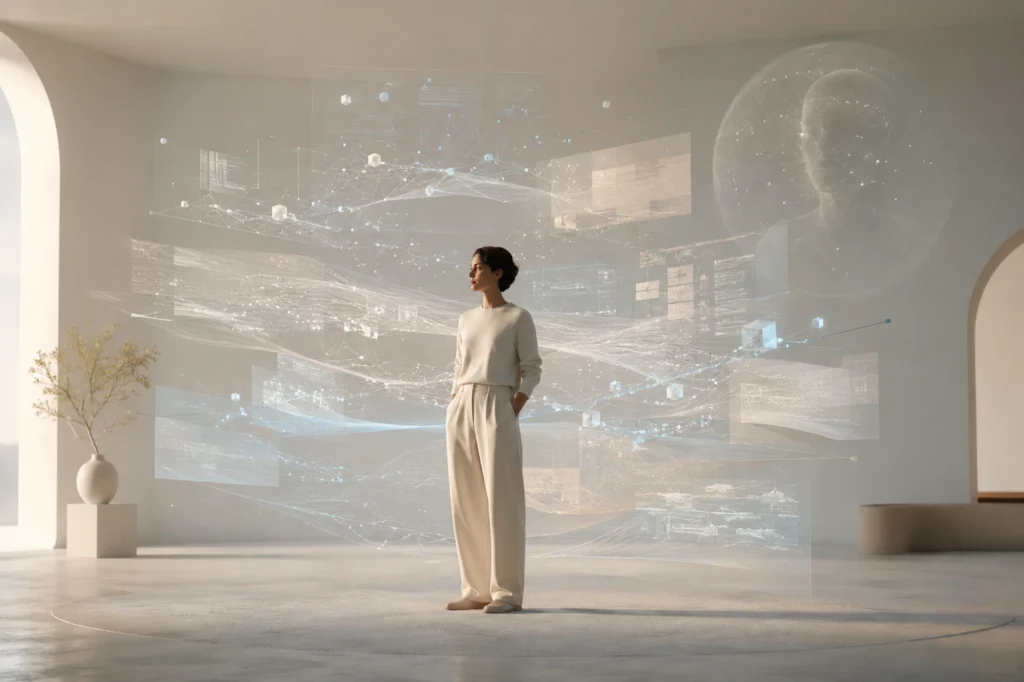
    Calm human figure standing peacefully inside a softly lit minimalist space while translucent layers of abstract AI systems, infrastructure signals, and flowing digital information surround them without overwhelming them, symbolizing human stability within accelerating complex systems.

    Modern systems are accelerating faster than most humans realize.

    Artificial intelligence is expanding into daily life.
    Information systems operate continuously.
    Economic conditions shift rapidly.
    Administrative systems grow more complex.
    Digital environments compete constantly for attention.

    Most discussions about the future focus on intelligence, speed, or productivity.

    But those may not be the most important pressures emerging from modern systems.

    Human stability might be.

    Break the Assumption

    We often assume humans naturally adapt to increasing complexity.

    If tools become faster, we simply learn faster.
    If systems become more demanding, we become more efficient.
    If information increases, we process more information.

    But biological systems have limits.

    Human nervous systems evolved around:

    • rhythm
    • recovery
    • environmental predictability
    • manageable social groups
    • periods of rest between stressors

    Modern systems rarely provide those conditions.

    Instead, many humans now exist inside continuous low-grade vigilance:

    • unresolved financial pressure
    • constant notifications
    • algorithmic stimulation
    • administrative uncertainty
    • social comparison systems
    • infinite information exposure
    • rapidly changing technological expectations

    The body adapts the best it can.

    But adaptation is not the same as stability.

    System Breakdown

    As systems become more interconnected, humans are increasingly expected to regulate themselves inside environments that never fully slow down.

    Artificial intelligence now assists with:

    • writing
    • planning
    • communication
    • decision-making
    • information filtering
    • emotional support

    At the same time:

    • work follows people home
    • digital systems remove recovery space
    • economic uncertainty increases background stress
    • social systems become more fragmented
    • attention becomes monetized infrastructure

    The result is subtle but important.

    Many people are no longer operating from stable regulation.

    They are operating from continuous adaptation.

    That changes:

    • decision quality
    • emotional regulation
    • relationship stability
    • cognitive endurance
    • ambiguity tolerance
    • physical wellbeing

    A nervous system under constant pressure begins prioritizing immediate relief over long-term clarity.

    This is one reason modern systems increasingly optimize around:

    • convenience
    • stimulation
    • instant feedback
    • friction removal
    • emotional reassurance

    These systems reduce discomfort temporarily.

    But they do not always increase stability.

    A Personal Observation

    Recently, after resolving several long-running system pressures at once — residency documentation, financial uncertainty, international logistics, and administrative instability — I noticed something unusual.

    My nervous system did not know what to do with the absence of pressure.

    There were no immediate problems demanding attention.
    No unresolved loops continuously running in the background.
    No active instability requiring constant monitoring.

    The experience felt strangely unfamiliar.

    Not because something was wrong.

    But because stability itself felt unfamiliar.

    That realization stayed with me.

    Many humans may spend so much time adapting to pressure that the absence of pressure begins to feel disorienting.

    When stability feels unfamiliar, that does not mean the person is broken. It may mean the system has trained the body to expect pressure.

    The Reframe

    Stability is often misunderstood as passive.

    It is not.

    Human stability is infrastructure.

    A stable nervous system:

    • processes information more clearly
    • tolerates uncertainty more effectively
    • adapts without collapsing
    • makes better long-term decisions
    • becomes less vulnerable to manipulation
    • maintains stronger human connection

    As technological systems grow more complex, stable humans may become more valuable than optimized humans.

    This may become one of the defining challenges of the AI era.

    Not whether systems can think faster.

    But whether humans can remain psychologically and biologically stable while living inside accelerating complexity.

    Environmental Systems Matter

    This is also why environment design matters more than many people realize.

    Human cognition is shaped by:

    • sound
    • light
    • posture
    • social density
    • information load
    • environmental predictability
    • emotional atmosphere

    Future systems may increasingly need to support regulation instead of stimulation.

    This is one reason XR environments, adaptive interfaces, and calm computing systems are becoming important.

    A future interface may not be valuable because it captures more attention.

    It may be valuable because it helps humans remain stable while navigating complex systems.

    That is a very different design philosophy.

    Closing

    The future may not belong to the fastest systems.

    It may belong to the systems that help humans remain stable as complexity increases around them.

    And in a world increasingly optimized for stimulation, stability itself may become one of the most valuable human resources left.

  • The Human in Stability

    Minimalist scene of a calm person surrounded by dissolving abstract pressure, representing the body adjusting to stability after long stress.

    The Human in Stability

    Opening

    Most human systems are designed around instability.

    Deadlines.
    Bills.
    Status pressure.
    Social expectations.
    Fear of failure.
    Fear of exclusion.
    Fear of losing security.

    Many people spend so long adapting to pressure that they begin mistaking pressure for normal human existence.

    When instability becomes constant, the nervous system reorganizes around survival.

    Break the Assumption

    We often assume that when pressure disappears, a person will immediately feel free.

    But that is not always what happens.

    Sometimes peace feels unfamiliar.
    Sometimes safety feels suspicious.
    Sometimes stability feels empty at first, not because something is wrong, but because the system has never had to operate there before.

    A person who has lived under constant pressure may not relax immediately when the pressure is removed.

    They may scan for the next problem.

    They may feel disoriented.

    They may wonder whether calm is safe.

    That reaction is not weakness.

    It is adaptation.

    System Breakdown

    Human beings are not only emotional creatures.

    We are regulatory systems.

    When a person lives under repeated stress, the body learns patterns:

    • anticipate problems
    • prepare for loss
    • monitor threats
    • manage consequences
    • stay ready for interruption
    • treat relief as temporary

    Over time, pressure becomes part of the operating environment.

    The system does not simply experience stress.

    It begins to organize around it.

    This affects attention, planning, sleep, decision-making, and identity.

    A person may begin to feel useful only when solving problems.
    They may feel grounded only when managing risk.
    They may feel familiar with pressure and unfamiliar with ease.

    So when the pressure finally drops, the body may not celebrate right away.

    It may hesitate.

    Because the nervous system is asking a practical question:

    Is this real?

    Personal Evidence

    There are moments in life when a problem disappears and the mind does not know where to go next.

    A debt gets resolved.
    A document arrives.
    A feared outcome does not happen.
    A system that was creating pressure finally stops creating pressure.

    From the outside, this should feel simple.

    Relief.

    But internally, it can feel strange.

    Not bad.
    Not wrong.
    Just unfamiliar.

    The mind reaches for the next worry and finds nothing obvious to hold.

    That empty space can feel almost disorienting when worry has been acting like structure.

    Reframe

    Stability is not the absence of life.

    Stability is a condition where the human system can stop operating from emergency mode.

    It creates room for better functions:

    • deeper attention
    • clearer decisions
    • slower interpretation
    • healthier relationships
    • creative thought
    • actual rest
    • long-term planning

    But stability must be learned if instability was the previous normal.

    A person may need time to trust it.

    Peace is not always instantly comfortable.

    Sometimes peace is a new skill.

    System Insight

    A human system shaped by pressure does not automatically become free when pressure ends.

    It must recalibrate.

    This is why stable environments matter.

    People do not only need motivation.
    They do not only need discipline.
    They do not only need better habits.

    They need conditions where the nervous system can stop defending itself.

    When pressure is constant, intelligence gets redirected toward survival.

    When stability becomes real, intelligence can return to growth.

    Application

    When stability appears, do not rush to fill it with new pressure.

    Let the system notice what has changed.

    Ask:

    • What problem is actually gone?
    • What pressure no longer needs my attention?
    • What am I still carrying out of habit?
    • What would I choose if I were not organizing around fear?
    • What can I now build slowly instead of urgently?

    The goal is not to become passive.

    The goal is to stop confusing emergency energy with purpose.

    A stable human is not a lazy human.

    A stable human has access to more of themselves.

    Key Insights

    • Constant pressure can become a person’s default operating system.
    • Relief may feel unfamiliar when the nervous system is used to survival.
    • Stability is not emptiness; it is capacity returning.
    • Calm may need to be practiced before it feels normal.
    • Human systems improve when people are not forced to organize their lives around fear.

    Closing

    When nothing is pressing down, the human does not disappear.

    The human becomes more visible.

    Not the defensive version.
    Not the over-adapted version.
    Not the version built around fear.

    The quieter human underneath.

    The one who can finally ask:

    What do I want to build now that I am not only surviving?

  • Modern Shoes Foot Health: Why They Disconnect Us (Human Systems)

    Modern shoes and foot health are more connected than most people realize. While shoes are designed to protect us, they often reduce the sensory input our bodies rely on to function properly.

    The Assumption

    Shoes are designed to protect and support us.

    The Break

    Most modern shoes don’t improve function — they reduce it.

    They don’t just protect the foot.
    They disconnect it from the environment it evolved to read.


    The System

    This is why modern shoes foot health issues often go unnoticed until dysfunction becomes normalized.

    This is a recurring human pattern:

    When sensory input is reduced → awareness drops → the body compensates → dysfunction becomes normalized.

    Shoes are one example of this system.


    System Breakdown

    1. Sensory Suppression

    The human foot contains dense nerve networks designed for:

    • balance
    • terrain awareness
    • micro-adjustments

    Thick soles reduce this signal.

    The brain receives less data and begins to guess.


    2. Compensation Layer

    When input drops:

    • muscles over-tighten
    • posture shifts
    • movement becomes rigid

    The system adapts — but not optimally.


    3. Structural Drift

    Over time:

    • toes compress
    • arches weaken
    • alignment changes

    This becomes “normal,” even though it’s degraded function.


    4. Perception Shift

    The most important layer:

    Disconnection starts to feel correct.

    People interpret reduced sensation as:

    • comfort
    • support
    • stability

    But it’s often the opposite.


    Personal Evidence (Condensed)

    After years of restrictive footwear, I experienced:

    • toe misalignment
    • tension after short walks

    Switching to barefoot and minimal footwear led to:

    • increased range
    • reduced fatigue
    • improved awareness of movement

    Nothing else changed.


    The Reframe

    The goal is not better shoes.

    The goal is restored communication between body and environment.


    System Insight

    This pattern extends beyond footwear:

    • Over-processed food → reduced internal signals
    • Constant digital input → reduced attention clarity
    • Controlled environments → reduced adaptability

    When systems remove feedback, humans lose calibration.


    Environment Mismatch

    Modern environments amplify the problem.

    Flat surfaces, controlled temperatures, and repetitive movement patterns reduce the need for adaptation.

    When combined with modern shoes, this creates a double-layer of disconnection:

    • the environment becomes predictable
    • the body stops adjusting

    Over time, the system loses resilience.

    Foot health declines not from damage alone, but from lack of meaningful variation.


    Application

    Improving modern shoes foot health starts by restoring natural sensory input.

    Start small:

    • Remove shoes at home
    • Use minimal footwear in low-risk environments
    • Walk on varied surfaces (grass, stone, wood)

    Focus on reintroducing signal, not forcing outcomes.


    Key Insights

    • Sensory input is not noise — it’s guidance
    • Comfort can mask dysfunction
    • The body performs best with accurate feedback
    • Disconnection often feels normal before it feels wrong

    Final Thought

    We don’t need more support.

    We need better signal.

    Start at the sole.
    Restore the system.