Some Nervous Systems Need Less World Before They Can Return to It
When I was young, I made a quiet space under the stairs.
It was dark.
It was small.
No one really used it.
I put blankets on the floor. I kept favorite possessions there. I ran an extension cord so I could have a night light.
No one called it a sensory room.
No one called it neurodivergent architecture.
No one called it nervous-system regulation.
But that is what it was.
It was a place where the world got smaller.
And sometimes smaller is safer.
At some point, my dad closed up the part I used to get in. But I was skinny enough to find another way through.
That detail matters because it shows the real function of the space.
I was not just playing.
I was not just hiding.
My body had found a place where it could stop scanning.
When a needed space disappears, the nervous system searches for another way in.
That happens everywhere.
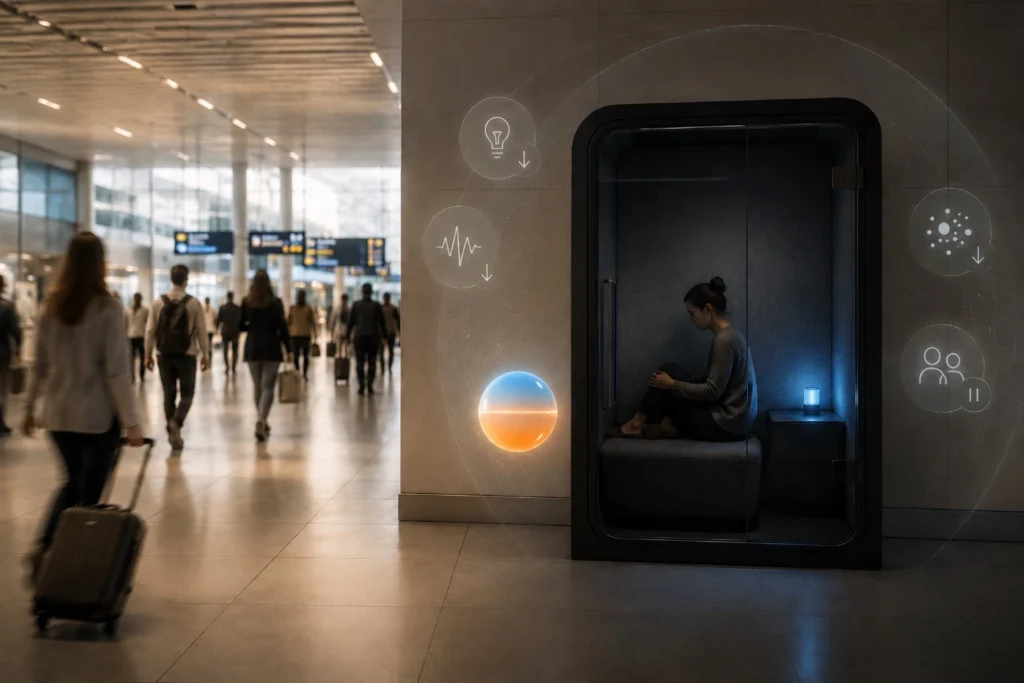
If an airport has no quiet recovery space, people sit in bathroom stalls.
If a workplace has no low-demand room, people hide in cars.
If a school has no calm place, children disappear into corners.
If a public building has no sensory retreat, people leave before they are ready.
The behavior can look strange from the outside.
From inside the nervous system, it is logical.
The person is not rejecting the world. They are trying to regulate enough to stay in it.
Quiet Pods Are Not Luxury
This is why quiet pods matter.
A quiet pod should not be treated like a luxury lounge, wellness decoration, or optional comfort feature.
It is access infrastructure.
Airports already understand that people need bathrooms, ramps, elevators, signs, seating, and charging points. Public buildings understand that bodies have physical needs.
But many environments still do not understand that nervous systems also have access needs.
Some people need a temporary reduction of:
- light
- sound
- movement
- visual complexity
- social demand
- interruption
- being observed
Not forever.
Just long enough to return.
That is the point many designs miss.
A quiet pod is not an escape from public life. It is a bridge back into public life.
Calm Is Not One Setting
The mistake is assuming calm is generic.
Soft music does not calm everyone.
Warm light does not calm everyone.
Open space does not calm everyone.
Inspirational words on the wall do not calm everyone.
For me, the ideal calm space would be small, dark, quiet, and enclosed. Almost like a cave. Just enough room to sit or curl up.
Almost no sound.
Almost no visual input.
One controllable low blue light.
That light matters because it is chosen.
Not house light.
Not public light.
Not fluorescent work light.
Not someone else flooding the space by turning on a switch.
One safe signal.
One controllable signal.
One small piece of agency.
A good quiet pod should be tunable.
The person should be able to adjust light, sound, visibility, enclosure, posture, and social access.
The design question should not be:
How do we make this space look relaxing?
The better question is:
What inputs can this person turn down?
That is the Human Systems lens.
Some People Regulate by Becoming Unavailable
Many environments assume constant availability.
Available to noise.
Available to light.
Available to conversation.
Available to eye contact.
Available to movement.
Available to being observed.
Available to interruption.
When every input stays open, withdrawal becomes the only available control.
But some nervous systems recover by becoming temporarily unavailable.
That does not mean disconnected forever.
It does not mean antisocial.
It does not mean broken.
It does not mean unwilling.
It means the system needs less input before it can re-engage.
When public environments do not allow that, people compensate.
They mask.
They escape.
They shut down.
They hide.
They improvise.
The safe room under the stairs was an improvisation.
So is the person sitting in an airport bathroom stall because there is nowhere else to reduce the world.
So is the worker hiding in a car between meetings.
So is the student disappearing into a corner.
These are not random behaviors.
They are design feedback.
The Guardian Design Lesson
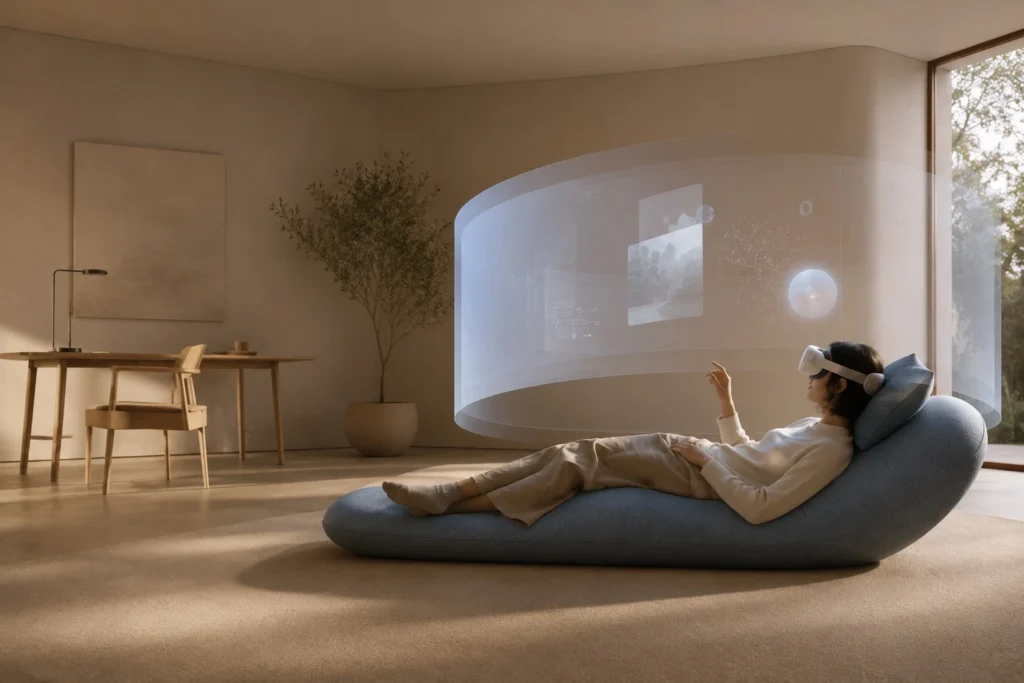
This also points toward better XR and Guardian design.
A Guardian should not decide when someone needs calm.
It should not manipulate mood.
It should not push a person into a preset emotional state.
It should preserve choice.
A Guardian could help a person carry their calm settings across environments:
{
  "light": "very low",
  "color": "soft low blue",
  "sound": "near silence",
  "space": "small and enclosed",
  "visual_complexity": "minimal",
  "social_access": "paused",
  "purpose": "sensory reset"
}
But the important part is not the technology.
The important part is agency.
The Guardian should offer:
Would you like the room to go quieter?
Would you like low blue?
Would you like to pause visual input?
Would you like a no-demand space for a while?
Not command.
Not control.
Not hidden steering.
Support without control.
That is the difference between a helpful system and a manipulative one.
The Human Systems Reframe
The safe room under the stairs was not just a childhood hiding place.
It was an early interface between my nervous system and a world that was often too loud, too bright, too demanding, or too socially complex.
I did not have the words for it then.
I did not know about sensory architecture.
I did not know about autism.
I did not know about XR Guardian systems.
I did not know about personal configuration layers.
But my body knew the pattern.
Reduce the world.
Keep one safe signal.
Make the space small enough to feel protected.
Let the mind settle.
That was not random.
That was a nervous system designing shelter.
A better public system would not make people improvise shelter in corners, cars, stalls, or stairwells.
It would build recovery into the environment.
Quiet pods should be part of airports, schools, hospitals, workplaces, conference centers, public buildings, and housing design.
Not as luxury.
As access.
Some nervous systems do not need more encouragement to keep going.
They need less world for a while.
Then they can come back.