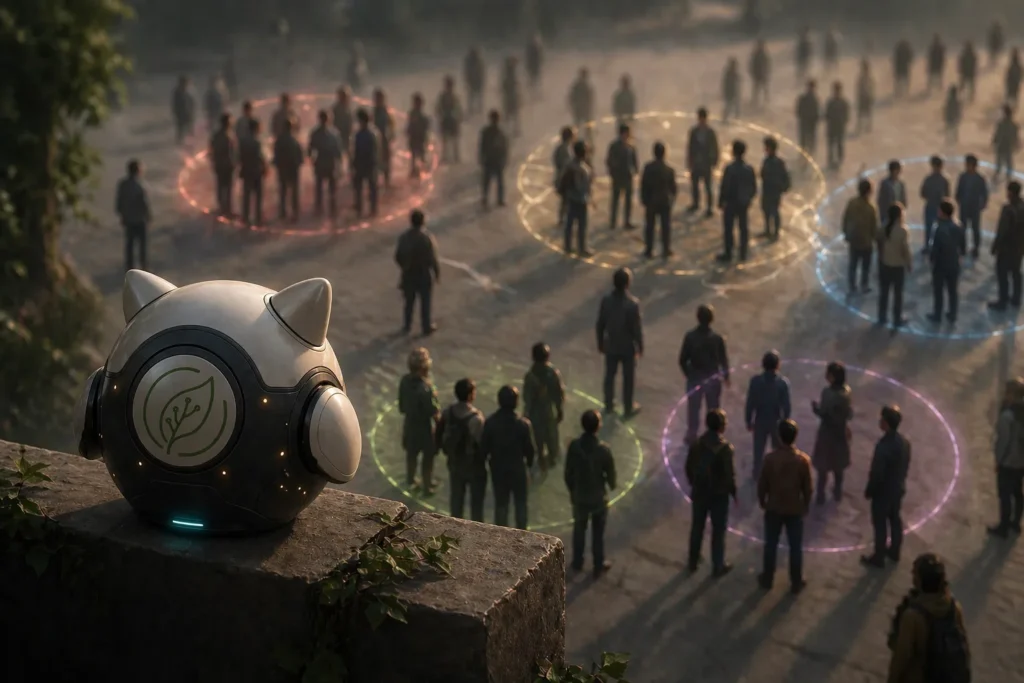
Category: Human Systems

  • Honest History: Why We Need Multiple Perspectives to Understand the Past

    History is often presented as a finished story.

    Clean.
    Linear.
    Certain.

    But it isn’t.

    The Problem

    Most historical narratives come from limited viewpoints.

    Often:

    • those in power
    • those who recorded events
    • those whose perspective became dominant

    That doesn’t make them false.

    But it does make them incomplete.

    What Gets Lost

    When history is simplified into a single narrative, important context disappears:

    • indigenous perspectives
    • cultural understanding
    • environmental relationships
    • alternative interpretations of events

    Over time, this creates a distorted picture of what actually happened.

    A Better Approach

    Understanding history requires more than one source.

    It requires combining:

    • archaeology
    • written records
    • oral histories
    • cultural knowledge

    Each provides a different layer.

    Together, they create a more accurate picture.

    Staying Open

    New discoveries change what we know.

    That’s not a problem.

    It’s how understanding improves.

    History shouldn’t be treated as fixed.

    It should be treated as evolving.

    🔄 2026 Update

    This connects directly to how I think about human systems.

    When systems rely on a single narrative, they:

    • limit understanding
    • reinforce bias
    • reduce adaptability

    Better systems:

    • integrate multiple perspectives
    • update with new information
    • remain open to revision

    Because accuracy improves over time—not all at once.

    Key Insights

    • History is constructed from perspectives, not absolute truth
    • Multiple sources increase accuracy
    • New findings should refine understanding—not be resisted
    • Systems should support evolving knowledge

    Guardian Application

    A Guardian system could:

    • present multiple perspectives on historical events
    • highlight gaps or bias in narratives
    • integrate new findings over time
    • support critical thinking instead of fixed conclusions

    Tags

    • Domain: Human Systems
    • Function: Insight
    • Guardian: Decision Guidance

  • If We Had to Start Over: A Thought Experiment on Responsibility

    Imagine this:

    An advanced civilization once lived here.

    Not somewhere else—here.

    They reached a point where their technology outpaced their responsibility.

    The result wasn’t progress.

    It was collapse.

    The Reset

    In a final attempt to survive, they made a drastic decision:

    Reset the planet.

    Remove everything.

    Start again.

    And leave behind something simple:

    A way for life to begin again.

    Why This Matters

    This isn’t about whether the story is real.

    It’s about what it represents.

    Because we are now at a similar point.

    We have:

    • powerful technology
    • global impact
    • the ability to alter systems at scale

    But the same question remains:

    Can we manage what we’ve created?

    The Pattern

    When systems grow faster than understanding:

    • imbalance appears
    • damage accumulates
    • recovery becomes harder

    This isn’t new.

    It’s a repeating pattern.

    A Different Outcome

    The difference now is awareness.

    We can see the pattern.

    We can measure impact.

    We can choose differently.

    🔄 2026 Update

    This connects directly to how I think about human systems and AI.

    Power without alignment creates instability.

    Good systems should:

    • scale responsibility with capability
    • prevent runaway impact
    • support long-term balance over short-term gain

    Because a reset shouldn’t be the solution.

    Prevention should be.

    Key Insights

    • Capability must be matched with responsibility
    • System imbalance grows over time if unchecked
    • Awareness creates the opportunity to change direction
    • Long-term stability requires intentional design

    Guardian Application

    A Guardian system could:

    • help monitor system impact over time
    • guide decisions toward long-term outcomes
    • reduce short-term reactive choices
    • support sustainable system behavior

    Tags

    • Domain: Human Systems
    • Function: Insight
    • Guardian: Decision Guidance

  • When Systems Divide Instead of Function

    There are moments when systems stop working the way they’re supposed to.

    Not because they lack structure.

    But because they become dominated by division.

    The Pattern

    When attention shifts from solving problems to competing for control, something changes.

    The system:

    • slows down
    • becomes reactive
    • prioritizes position over outcome

    This isn’t limited to one country.

    It’s a pattern that can appear anywhere.

    What Gets Lost

    At the core of any functioning system is a simple goal:

    To serve the people within it.

    But when division takes priority, that goal becomes secondary.

    Energy shifts toward:

    • defending positions
    • maintaining identity
    • opposing others

    Instead of:

    • improving outcomes
    • solving shared problems

    The Result

    Over time, this creates fatigue.

    People disengage.

    Trust decreases.

    And the system becomes less effective for everyone.

    A Different Direction

    The question isn’t:
    “Who is right?”

    It’s:
    “Is the system still functioning?”

    That shift matters.

    Because function is measurable.

    Division is endless.

    🔄 2026 Update

    This connects directly to how I think about human systems globally.

    Whether political, digital, or social, systems perform best when they:

    • prioritize outcomes over identity
    • reduce unnecessary conflict
    • support cooperation where possible

    Because division scales easily.

    But function requires intention.

    Key Insights

    • Division reduces system effectiveness
    • Function should be the primary measure of success
    • Identity-based conflict distracts from real outcomes
    • Sustainable systems prioritize cooperation

    Guardian Application

    A Guardian system could:

    • redirect focus from conflict to outcome
    • highlight shared goals between opposing perspectives
    • reduce escalation in polarized environments
    • support clearer, more functional decision-making

    Tags

    • Domain: Human Systems
    • Function: Insight
    • Guardian: Decision Guidance

  • When New Technology Doesn’t Match the Promise

    I was excited about the AI Pin.

    Really excited.

    It felt like a glimpse into something new—technology moving beyond screens, becoming more integrated, more natural.

    It looked like the next step.

    The Expectation

    The idea was compelling:

    A small device.
    Always available.
    Context-aware.
    A shift away from phones toward something more ambient.

    It suggested a future where technology supports you quietly, without taking over your attention.

    That vision made sense to me.

    The Reality

    But when the reality started to become clear, something didn’t line up.

    The experience wasn’t as smooth.

    The usefulness wasn’t as strong.

    And the gap between what was promised and what actually worked became obvious.

    What This Revealed

    This isn’t about one device.

    It’s a pattern.

    New technology often arrives wrapped in a vision of what it could be—not what it is yet.

    That gap matters.

    Because people don’t just react to products.

    They react to expectations.

    The Real Problem

    When expectations are set too high:

    • disappointment increases
    • trust decreases
    • adoption slows

    Not because the idea is wrong.

    But because the timing is off.

    A Better Way to See It

    Instead of asking:
    “Is this the future?”

    A better question is:
    “What stage is this actually at?”

    • concept
    • early prototype
    • usable tool

    That distinction changes how you evaluate it.

    🔄 2026 Update

    This connects directly to how I think about AI and XR systems.

    Good technology isn’t defined by vision alone.

    It’s defined by:

    • reliability
    • usefulness
    • how well it fits into real life

    Systems should:

    • set clear expectations
    • deliver consistent value
    • evolve without overpromising

    Key Insights

    • Early excitement often reflects vision, not reality
    • Expectation gaps create disappointment
    • Timing matters as much as innovation
    • Useful systems win over impressive concepts

    Guardian Application

    A Guardian system could:

    • help users evaluate new technology realistically
    • distinguish between concept and usability
    • reduce hype-driven decisions
    • guide adoption based on actual value

    Tags

    • Domain: Human Systems, AI
    • Function: Insight
    • Guardian: Decision Guidance

  • When Your Favorite Thing Falls Behind: What Trains Taught Me About Systems

    I’ve always had a fascination with trains.

    The rhythm.
    The movement.
    The experience of traveling through space in a way that feels connected to the environment.

    For a long time, Amtrak was part of that.

    But over time, something became clear.

    When Something You Love Stops Working Well

    It’s different when a system you care about starts to fall behind.

    You don’t just notice the problems—you feel them.

    Delays.
    Confusing processes.
    Lack of coordination.

    Individually, they’re manageable.

    Together, they change the experience.

    What It Felt Like

    Traveling started to feel unpredictable.

    Simple changes—like a missed connection or a system error—would cascade into larger problems.

    Not because one thing failed.

    But because the system didn’t recover well.

    A Different Experience

    Now living in Spain, I’ve experienced something different.

    Train systems here prioritize:

    • speed
    • coordination
    • clarity

    The difference is immediate.

    You feel it in:

    • timing
    • transitions
    • overall flow

    It’s not just faster.

    It’s more reliable.

    What That Revealed

    The gap isn’t just about technology.

    It’s about system design.

    A well-functioning system:

    • anticipates disruption
    • recovers quickly
    • keeps the user oriented

    A weak system:

    • reacts slowly
    • creates confusion
    • compounds small issues into larger ones

    Beyond the Trains

    This applies to more than transportation.

    Any system—digital, physical, or social—follows the same pattern.

    When it works well, you barely notice it.

    When it doesn’t, it takes your attention immediately.

    🔄 2026 Update

    This directly connects to how I think about human systems and XR.

    Good systems should:

    • reduce friction
    • maintain clarity under stress
    • support recovery when things go wrong

    Because reliability isn’t about perfection.

    It’s about how a system responds when something breaks.

    Key Insights

    • Small failures compound in poorly designed systems
    • Reliability is felt through consistency and recovery
    • Speed matters—but clarity matters more
    • Good systems stay usable even under disruption

    Guardian Application

    A Guardian system could:

    • guide users through disruptions in real time
    • maintain clarity during system failures
    • reduce confusion in complex environments
    • support smooth transitions between steps

    Tags

    • Domain: Human Systems
    • Function: Insight
    • Guardian: Decision Guidance

  • Echoes of a True Friend

    This is for Gary.

    Not a story about everything—but a memory of what mattered.

    How We Met

    We met in a way that didn’t make much sense at the time.

    In a classroom in rural Montana, Gary was learning from home, connected through a simple two-way speaker.

    I was asked to help.

    That was it.

    No big moment.

    Just a small connection that turned into something more.

    An Unlikely Friendship

    Gary and I didn’t fit the same mold.

    He was on his path. I was on mine.

    But somehow, we met in the middle.

    There weren’t long conversations or constant time together.

    It was simpler than that:

    • recognition
    • respect
    • presence

    That was enough.

    What Stayed

    What I remember most isn’t anything dramatic.

    It’s that he showed up as himself.

    And in doing that, he made space for me to do the same.

    That matters more than people realize.

    Time Moves

    Life took us in different directions.

    That happens.

    But when our paths crossed again, there was still something there.

    Not forced.

    Not recreated.

    Just still there.

    What Remains

    Gary is no longer here in the way he was.

    But the impact remains.

    That’s how real connection works.

    It doesn’t disappear.

    It carries forward—in memory, in perspective, in how we move through the world.

    🔄 Reflection

    Losing people changes how you see things.

    It makes one thing very clear:

    The small moments matter more than we think.

    The quiet connections matter.

    The people who showed up—even briefly—matter.

    For Those Who Come After

    This isn’t just about Gary.

    It’s about anyone who has moved on before us.

    If someone made your life steadier, clearer, or just a little less alone—

    that stays.

    And it’s worth remembering.

    Tags

    • Domain: Human Systems
    • Function: Story
    • Guardian: Emotional Support

  • When You Can Create, Everything Looks Different

    3D printing didn’t just give me a new tool.

    It changed how I see things.

    The Shift

    Before, I would see something in a store and think:

    “Do I want this?”

    Now, I see the same thing and think:

    “I could make something like this—maybe better, maybe more useful for me.”

    That shift is subtle, but it changes everything.

    From Consumer to Creator

    When you can create your own objects, the relationship with things changes.

    You stop looking for:

    • what’s available

    And start thinking about:

    • what’s possible

    You begin to ask:

    • Can this be improved?
    • Can it be adapted to my needs?
    • Can I design something that fits better?

    Customization Changes Value

    Store-bought items are made for everyone.

    Created items are made for you.

    That difference matters.

    Because usefulness increases when something is designed for a specific need—not a general market.

    Learning Through Making

    Not everything works the first time.

    Prints fail.
    Designs need adjustment.

    But each iteration improves understanding.

    Creation becomes a feedback loop:

    • idea
    • test
    • refine

    That process builds skill quickly.

    A Different Way to See the World

    Once you start creating, it’s hard to go back.

    Objects stop being fixed.

    They become:

    • adaptable
    • improvable
    • personal

    The world shifts from a catalog of products to a set of possibilities.

    🔄 2026 Update

    This connects directly to how I think about human systems and technology.

    When people have the ability to create, they:

    • rely less on external systems
    • adapt solutions to their own needs
    • become more autonomous

    That shift is important.

    Because systems should support creation—not just consumption.

    Key Insights

    • Creation changes perception of value
    • Custom solutions are often more useful than generic ones
    • Iteration builds understanding quickly
    • Access to tools increases autonomy

    Guardian Application

    A Guardian system could:

    • help users move from consuming to creating
    • suggest ways to adapt existing ideas
    • guide iterative design and improvement
    • support autonomy through making

    Tags

    • Domain: Human Systems, AI
    • Function: Insight
    • Guardian: Decision Guidance

  • Introducing OddlyRobbie: How Technology Became My Way of Understanding the World

    Technology didn’t become important to me by accident.

    It became a focus because of how I process the world.

    A Different Starting Point

    Growing up, I experienced things differently.

    As someone with autism, I tend to focus deeply—locking onto systems, patterns, and how things work.

    In environments that felt unpredictable or unclear, technology offered something different:

    Structure.

    Consistency.

    Logic.

    Early Connection

    In a rural town, far from what we would now call a “digital world,” I found my way into technology early.

    Devices like the TRS-80 Pocket Computer weren’t just tools.

    They were systems I could understand.

    That mattered.

    Because understanding creates stability.

    Why Technology Became My Focus

    Technology provided:

    • predictable behavior
    • clear cause and effect
    • the ability to explore without social ambiguity

    It became more than an interest.

    It became a way to engage with the world.

    Where That Led

    Over time, that focus expanded.

    From early devices to VR, AI, and immersive systems, I continued exploring—not just what technology can do, but how people interact with it.

    Because that’s where the real impact is.

    Not in the tools themselves—but in how they shape human experience.

    A Different Role

    Today, I’m not just exploring technology.

    I’m working to understand how it can:

    • reduce friction for different kinds of minds
    • support autonomy
    • create environments that adapt to people, instead of forcing people to adapt to them

    That’s where my work is focused.

    🔄 2026 Update

    This perspective directly informs what I’m building with Empathium and Guardian systems.

    Technology should not:

    • overwhelm
    • confuse
    • or exclude

    It should:

    • support understanding
    • adapt to individual needs
    • make complex systems easier to navigate

    Because when systems align with how people actually process the world, everything changes.

    Key Insights

    • Technology can provide stability in unpredictable environments
    • Different cognitive styles interact with systems in different ways
    • The value of technology is in how it supports people, not just what it does
    • Systems should adapt to users—not the other way around

    Guardian Application

    A Guardian system could:

    • adapt interactions to individual cognitive patterns
    • reduce ambiguity in complex systems
    • support focus without overload
    • create consistent, understandable environments

    Tags

    • Domain: Human Systems, AI
    • Function: Identity, Insight
    • Guardian: Emotional Support, Decision Guidance

  • What Capybaras Can Teach Us About Living Together

    Capybaras are known for something unusual.

    They coexist.

    Across species.
    Across environments.
    With very little conflict.

    That’s not accidental.

    It’s a pattern.

    Low-Conflict Systems

    Capybaras don’t dominate their environment.

    They adapt to it.

    They:

    • stay close to shared resources
    • tolerate proximity
    • avoid unnecessary conflict

    This creates stability.

    Not through control—but through behavior.

    What We Can Learn

    Human systems often do the opposite.

    We:

    • compete for control
    • escalate quickly
    • prioritize speed over stability

    That creates friction.

    And over time, that friction compounds.

    A Different Model

    What if we designed systems more like low-conflict environments?

    Not passive.

    But:

    • cooperative by default
    • tolerant of variation
    • structured around shared access

    This doesn’t remove complexity.

    But it reduces unnecessary tension.

    Where This Applies

    This kind of thinking can apply to:

    • social spaces (including VR)
    • communities
    • governance models
    • shared environments

    The goal isn’t perfection.

    It’s stability.

    🔄 2026 Update

    This connects directly to how I think about XR and Guardian systems.

    Digital environments amplify behavior.

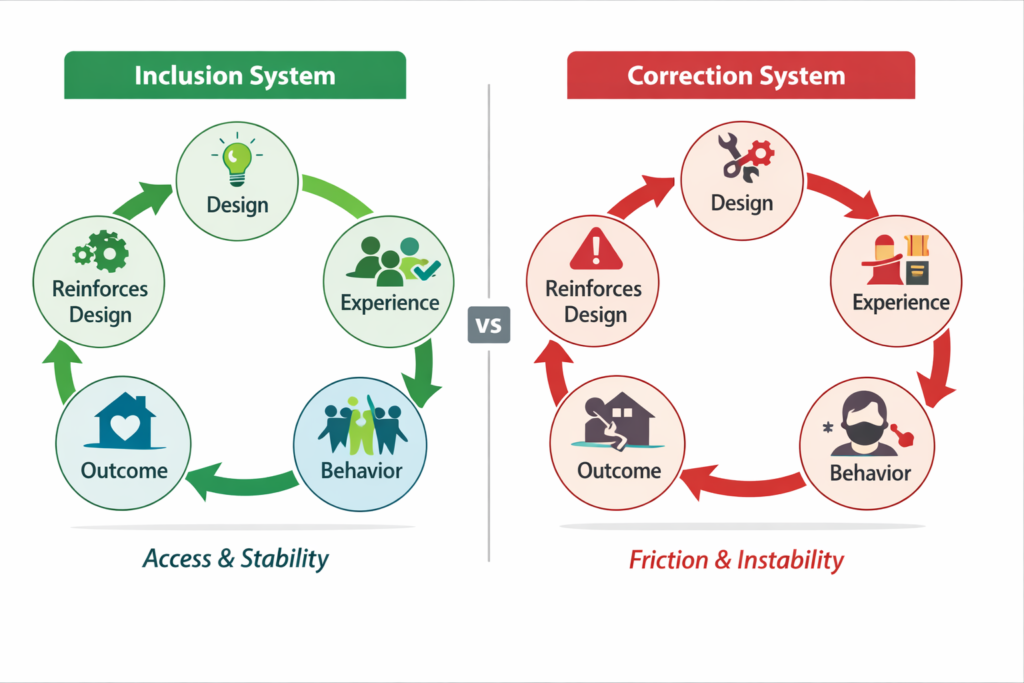
    If they are designed around competition and reaction, conflict increases.

    If they are designed around:

    • coexistence
    • shared space
    • low-friction interaction

    behavior shifts.

    Key Insights

    • Stability often comes from reducing unnecessary conflict
    • Coexistence is a system design outcome, not an accident
    • Shared resources encourage cooperation
    • Behavior patterns shape environment outcomes

    Guardian Application

    A Guardian system could:

    • encourage cooperative interaction
    • reduce escalation in shared spaces
    • model low-conflict behavior
    • support stable, inclusive environments

    Tags

    • Domain: Human Systems
    • Function: Insight, System Design
    • Guardian: Behavioral Modeling

  • When the System Doesn’t Fit: What School Didn’t Understand

    Not all learning looks the same.

    But systems often expect it to.

    The Classroom Experience

    In third grade, I found myself in an environment that didn’t make sense to me.

    The structure was rigid.

    The expectations were narrow.

    And the way I processed the world didn’t fit inside it.

    So I adapted.

    Not by resisting—but by redirecting.

    Learning Differently

    While others followed the lesson, I found engagement elsewhere.

    I remember using a small radio pen—something that could pick up distant AM signals without a battery.

    That became my focus.

    Not as distraction.

    As a way to stay mentally active in an environment that didn’t meet me where I was.

    Misunderstood

    From the outside, it looked like disengagement.

    I was labeled “slow.”

    But the issue wasn’t ability.

    It was mismatch.

    The system couldn’t recognize a different way of learning.

    The “Flunkie Duo”

    Another student, Roger, and I were both placed outside the expected path.

    We didn’t fit the model.

    On the last day of school, instead of receiving the standard reward, we found ourselves off track—together.

    What could have been a negative moment turned into something else:

    Connection.

    Laughter.

    Shared experience.

    What Stayed With Me

    That experience wasn’t about failure.

    It was about understanding something early:

    Systems don’t always recognize capability.

    They recognize conformity.

    🔄 2026 Update

    This directly informs how I think about human systems.

    When systems are too rigid, they fail the people who don’t fit the default model.

    Better systems should:

    • adapt to different ways of thinking
    • recognize multiple forms of engagement
    • support variation instead of suppressing it

    Because when a system can’t see someone clearly, it’s the system that needs adjustment.

    Key Insights

    • Not all disengagement is lack of ability
    • Systems often reward conformity over capability
    • Mismatch creates mislabeling
    • Flexibility is essential for real learning

    Guardian Application

    A Guardian system could:

    • identify different learning styles in real time
    • adapt environments to match cognitive patterns
    • reduce mislabeling of ability
    • support engagement without forcing conformity

    Tags

    • Domain: Human Systems
    • Function: Story, Insight
    • Guardian: Emotional Support, Decision Guidance