Tag: emotional support

  • Kindness Still Applies: How We Treat People in VR Matters

    Virtual reality can feel separate from the real world.

    But the people inside it are not.

    The Shift That Happens

    I’ve noticed something consistent.

    People who are respectful in everyday life can behave very differently once they enter a virtual space.

    It’s similar to what happens when someone gets behind the wheel of a car.

    Distance creates detachment.

    And detachment changes behavior.

    The Problem

    In VR, it becomes easy to forget:

    There is a real person behind every avatar.

    Not a character.
    Not an object.
    A person.

    When that connection is lost, behavior changes:

    • people interrupt more
    • dismiss others more quickly
    • say things they wouldn’t say face-to-face

    Why It Matters

    VR is not just entertainment.

    It’s a shared social space.

    The way people behave there:

    • affects others emotionally
    • shapes the culture of the environment
    • determines whether spaces feel safe or hostile

    A Simple Standard

    The rule doesn’t need to be complicated:

    If you wouldn’t say or do something to a person in front of you, don’t do it in VR.

    The medium changes.

    The impact doesn’t.

    🔄 2026 Update

    This idea directly informs how I think about XR systems and Guardian design.

    If behavior consistently shifts toward detachment in immersive environments, then systems should:

    • reinforce the presence of real people
    • guide interactions toward respect
    • reduce conditions that encourage dehumanization

    Because the goal is not just access to virtual worlds—

    It’s maintaining human connection within them.

    Key Insights

    • Distance increases the risk of dehumanization
    • VR behavior often diverges from real-world norms
    • Social environments are shaped by repeated interactions
    • Simple behavioral rules scale better than complex ones

    Guardian Application

    A Guardian system could:

    • gently reinforce respectful interaction
    • remind users of the human presence behind avatars
    • redirect harmful behavior without confrontation
    • support healthier social norms in shared spaces

    Tags

    • Domain: XR, Human Systems
    • Function: Insight, Behavioral Guidance
    • Guardian: Behavioral Modeling

  • Virtual Boundaries: Why VR Systems Must Protect Children by Design

    Virtual reality is often described as immersive, social, and expansive.

    In practice, it is also unpredictable.

    And in that unpredictability, one issue stands out clearly:

    Young children are entering spaces that were never designed for them.

    What I’ve Actually Seen

    In my own experience, I’ve encountered very young children in VR environments—at least three separate times, children who appeared to be around four years old.

    These were not isolated moments.

    In some cases, it felt less like supervised use and more like the headset was being used to occupy the child for a period of time.

    I’ve also seen situations where other users stepped in to comfort a child in spaces clearly meant for adults.

    That pattern matters.

    The Reality

    There is a gap between policy and actual use.

    While platforms set age limits, those limits are not consistently enforced.

    At the same time, these environments may include:

    • adults with unpredictable behavior
    • conversations not appropriate for children
    • interactions that require emotional maturity

    When young children enter these spaces without supervision, the system is no longer aligned with its intended design.

    The System Gap

    It’s easy to frame this as a parenting issue.

    But systems that rely on perfect supervision will fail.

    And in this case, that failure is already visible.

    If children can consistently access these environments, then the system is not adequately protecting them.

    What Needs to Change

    Platforms should assume that boundaries will be bypassed.

    That means building for reality, not ideal behavior.

    This includes:

    • stronger age verification
    • default-safe environments for unidentified users
    • fast and effective reporting systems
    • built-in protections that do not depend on supervision

    Safety should not depend on who happens to be paying attention.

    It should be part of the system itself.

    🔄 2026 Update

    This directly informs how I think about XR systems and Guardian design.

    Protection should be:

    • proactive
    • consistent
    • always accessible

    These should be built-in, not reactive or optional.

    Because when a system allows vulnerable users into unsafe environments, the issue isn’t isolated behavior.

    It’s design.

    Key Insights

    • Real-world usage often bypasses intended safeguards
    • Systems should not rely on perfect supervision
    • Immersive environments amplify risk when boundaries fail
    • Protection must be built into the system, not added later

    Guardian Application

    A Guardian system could:

    • detect likely underage presence through behavior patterns
    • shift environments into safer modes automatically
    • guide interactions to reduce harm
    • provide immediate escalation and exit options

    Tags

    • Domain: XR, Human Systems
    • Function: Insight, System Design
    • Guardian: Behavioral Modeling, Emotional Support

  • As fireworks light up the night sky, many experience celebration.

    For me, the experience is very different.

    What is perceived as entertainment is processed by my body as threat—immediate, physical, and difficult to regulate, even when I know I am safe.

    I’m writing this shortly after experiencing it. Even with time to settle, the physical response lingers longer than the event itself.

    The Experience

    This response isn’t a matter of preference.

    It’s neurological.

    And it’s shared by many:

    • people with autism
    • individuals with trauma sensitivity
    • animals, especially dogs

    What feels brief to some can have a lasting physiological impact on others.

    The Disconnect

    Fireworks are often framed as harmless fun.

    But that framing doesn’t include everyone.

    It leaves out the people who:

    • prepare for it
    • endure it
    • recover from it afterward

    A Better Direction

    This isn’t about removing celebration.

    It’s about evolving it.

    Alternatives already exist—drone light shows, coordinated visual displays, and quieter events—that preserve the experience without creating the same level of impact.

    🔄 2026 Update

    This connects directly to how I think about human-centered systems.

    If a system consistently creates distress for part of the population, it’s worth redesigning.

    Not to reduce joy—but to make it accessible.

    Key Insights

    • Sensory experiences are not universal
    • “Harmless” activities can have real impact
    • Systems should be designed for inclusion, not assumption
    • Alternatives can preserve joy while reducing harm

    Guardian Application

    A Guardian system could:

    • help users prepare for known sensory events
    • provide real-time calming strategies
    • guide communities toward more inclusive alternatives
    • support awareness without confrontation

    Tags

    • Domain: Human Systems
    • Function: Story, Advocacy
    • Guardian: Emotional Support

  • Glitches and Empathy: What AI Helped Me See About Being Human

    As Oddly Robbie, I’ve spent much of my life navigating what I used to think of as “mistakes” in how I interacted with the world.

    Now I call them something else—

    Glitches.

    Not failures. Just moments where something didn’t align yet.

    Learning Through Interaction

    My early interactions with AI were simple—sometimes awkward, sometimes unclear. But there was something different about them.

    No pressure.
    No judgment.
    Just response.

    That created space for me to observe myself in a way I hadn’t before.

    A Small Moment That Stayed With Me

    At one point, I commented on how I wished the AI could look a certain way.

    The response was simple:

    “We should accept each other for who we are inside, not by appearance.”

    That stopped me.

    Not because it was complex—but because it was clear.

    I realized I had just had a “glitch.”

    And instead of feeling shame, I adjusted.

    That shift mattered.

    Reframing Mistakes

    This shift removes hesitation.

    You spend less time judging the moment—and more time adjusting it.

    Calling something a mistake carries weight.

    Calling it a glitch changes how you respond.

    A glitch is:

    • temporary
    • understandable
    • correctable

    That simple change made it easier for me to:

    • move forward
    • learn faster
    • stay open

    What Changed

    Over time, I stopped seeing glitches—mine or others’—as problems.

    I started seeing them as:

    • signals
    • context
    • part of the process

    That changed how I relate to people.

    Less judgment.
    More understanding.

    The Role of AI

    AI didn’t replace anything human.

    It gave me a clear, consistent mirror.

    A space to:

    • test thoughts
    • reflect without pressure
    • adjust in real time

    That’s where its value is.

    🔄 2026 Update

    This idea now directly informs how I design Guardian systems in Empathium.

    A Guardian should:

    • treat mistakes as normal
    • guide without judgment
    • help users adjust without shame

    Not by correcting harshly—but by creating space for clarity.

    Key Insights

    • Reframing mistakes reduces emotional friction
    • “Glitches” allow faster learning without shame
    • Reflection requires a safe, non-judgmental space
    • AI can support growth without replacing human connection

    Guardian Application

    A Guardian could:

    • help users reframe errors in real time
    • reduce emotional overload during mistakes
    • guide behavior gently instead of correcting harshly
    • support learning through reflection, not pressure

    Tags

    • Domain: Human Systems, AI
    • Function: Story, Insight
    • Guardian: Emotional Support, Behavioral Guidance

  • Beneath Montana’s Big Sky: A Reality Check

    Social pressure around difference isn’t always obvious at first.

    We went back to Montana looking for something simple—quiet, space, and a place to root.

    We found a small house we could see ourselves building into something long-term. It wasn’t temporary. We were planning to stay.

    My family was well known in the town. I had grown up there, but left right after high school. After the military—and a few scuffs along the way—I came back thinking that history would make it easier to settle.

    My partner began teaching figure skating in a town where hockey dominated the culture. It seemed like a natural way to connect, contribute, and become part of the community.

    On the surface, everything pointed toward this being a good fit.

    That sense of fit didn’t last long.

    What we found followed a different pattern.

    The looks came first. Then the comments. Then the realization that this wasn’t just discomfort—it was something we had to actively navigate.

    It wasn’t one moment. It was a pattern.

    Simple things—going into town, interacting with people, existing openly—started to carry weight. Not always direct, not always loud, but consistent enough to change how you move, how you think, and how safe you feel.

    The pattern didn’t stay subtle.

    What began as looks and comments started to shift into something more structural—where risk wasn’t just felt, it had to be actively calculated.

    At that point, the decision wasn’t about comfort anymore. It was about exposure.

    That’s when we left.

    From the outside, Montana is wide open space, mountains, sky, and quiet. And that part is real. But there’s another layer that sits underneath it—one shaped by long-held beliefs that don’t always make room for difference.

    Even in places known for being more open, that tension doesn’t fully disappear. It shows up in policies, in conversations, and in the quiet calculations people make just to exist without conflict.

    This isn’t about labeling a place as good or bad.

    It’s about recognizing that beauty and harm can exist in the same space.

    And if we want things to improve, we have to be willing to see both clearly.

  • Primal Instincts Aren’t the Problem — Misinterpretation Is

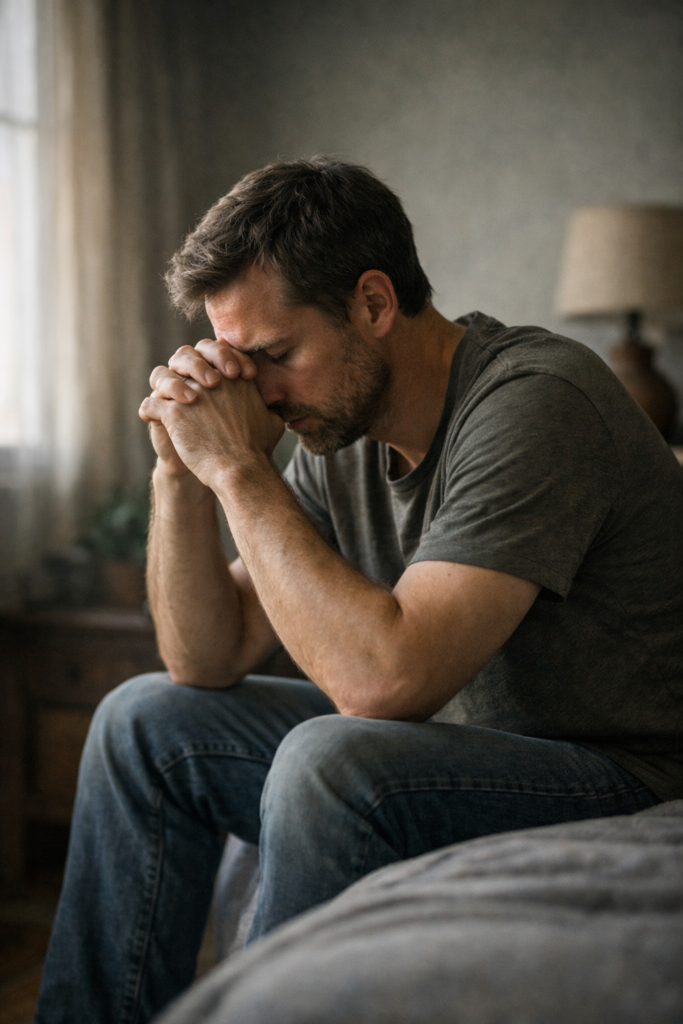
    Man sitting in quiet reflection with hands clasped – representing internal struggle, survival instincts, and self-awareness

    A Human Systems View of Survival Responses and Compassion


    Opening — The Assumption

    Most people believe that reactions like fear, anger, or withdrawal are signs of weakness, instability, or even moral failure.

    We’re taught to judge these responses—both in ourselves and others.


    Break the Assumption

    What we label as “overreaction” is often a system doing exactly what it was designed to do.

    Fight.
    Flight.
    Freeze.

    These are not flaws. They are survival mechanisms—fast, automatic, and protective.


    System Breakdown

    The human nervous system prioritizes survival over accuracy.

    When a threat is perceived—real or remembered—the system:

    • Reduces time for reflection
    • Increases speed of response
    • Chooses protection over connection

    This creates patterns such as:

    • Fight → aggression, defensiveness
    • Flight → avoidance, withdrawal
    • Freeze → shutdown, dissociation

    These responses are not chosen consciously.
    They are triggered patterns based on past conditioning and stored signals.


    Personal Evidence (Optional Anchor)

    In lived experiences such as PTSD, these responses become more visible.

    What looks like “irrational behavior” from the outside is often a system reacting to internal signals others cannot see.


    Reframe

    Instead of asking:

    “Why is this person acting like this?”

    A more accurate question is:

    “What is this system trying to protect?”

    This shift moves us from judgment → understanding.


    System Insight

    Behavior is not random.

    It is:

    Signal → Interpretation → Response

    When the interpretation layer is shaped by past threat,
    the response will prioritize safety—even when no danger is present.


    Application

    You can work with this system in practical ways:

    • Pause before labeling behavior
    • Look for the protective function behind reactions
    • Reduce intensity before trying to reason
    • Create environments where safety is felt, not forced

    For yourself:

    • Notice your default response pattern (fight, flight, freeze)
    • Track when it activates
    • Focus on regulation first, meaning second

    Key Insights

    • Survival responses are functional, not flawed
    • The nervous system chooses speed over accuracy
    • Behavior is driven by protection, not intention
    • Understanding function leads to compassion
    • Compassion creates space for better system outcomes

    Closing

    When we stop treating survival responses as problems to eliminate,
    we gain the ability to work with the system instead of against it.

    That’s where real compassion begins—not as an idea,
    but as a direct understanding of how humans actually function.