Category: Human Systems

  • The Dead Balcony Signal

    When Homes Become Lifestyle Inventory

    Spend half a day walking around the Costa del Sol and you may hear a North American accent once or twice. Canadian. American. Not common.

    What you hear far more often is ordinary life.

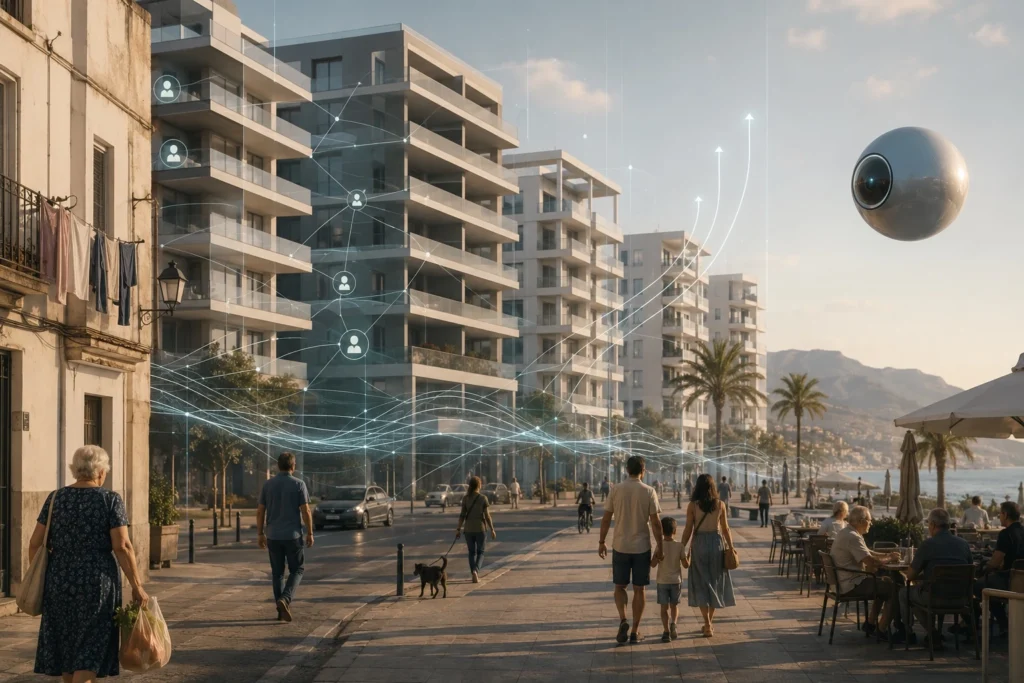
    People walking dogs. Older residents carrying groceries. Families sitting at cafés. Workers heading home. Joggers along the paseo. Laundry hanging from balconies. Quiet conversation drifting through open windows.

    The surprising thing about much of the Costa del Sol is that it does not feel especially luxurious.

    It feels simple.

    And that simplicity may be exactly why global housing pressure is arriving so aggressively.

    People are not only searching for fantasy anymore. They are searching for nervous-system relief.

    Walkability. Sunlight. Public life. Lower tension. Slower pacing. Human-scale streets. Places where daily existence feels less combative.

    Continuous high-alert urban environments increase cognitive fatigue and long-term emotional load. Over time, people begin to prioritize places with lower nervous-system friction.

    That shift matters.

    Because when calm places become desirable, they do not stay outside the market for long.

    The System Under the Calm

    Underneath the calm surface, another system is becoming visible.

    The cranes.

    They are everywhere now along parts of the coast.

    Not just small local construction projects. Large residential developments. New complexes. New ownership models. New ways of turning homes into financial products.

    At first glance, this can look like prosperity.

    More homes. More investment. More international interest. More construction. More visible growth.

    But a different signal appears when you walk slowly and look carefully.

    The unused balcony.

    No plants. No chairs. No towels. No coffee cup. No small signs of daily life.

    A beautiful apartment may exist physically, but not socially.

    It may be owned, marketed, rented, shared, reserved, or held as an asset.

    But it is not fully lived in.

    That is the dead-balcony signal.

    What the Dead Balcony Reveals

    The dead balcony is not just about rich people buying second homes.

    It is also about ordinary people participating in a system that turns livable places into lifestyle inventory.

    Fractional ownership. Short-term rentals. Investment apartments. Holiday-use properties. Remote-worker escapes. Retirement plans. Lifestyle branding. Real estate packaged as access to calm.

    Many of the people entering this system are not villains.

    They may also be tired.

    They may also be leaving places that feel too expensive, too aggressive, too noisy, too politically tense, or too emotionally exhausting.

    They may be looking for the same thing local residents value:

    A calmer life.

    That is what makes the system difficult.

    The problem is not only greed.

    The problem is that human nervous systems are under pressure in many places at the same time.

    When enough people seek relief, the places that offer relief become targets for extraction.

    The Pattern

    The pattern is simple:

    1. A place becomes emotionally livable.
    2. People notice the relief.
    3. Global attention arrives.
    4. Housing becomes an asset category.
    5. Livability becomes monetized.
    6. Local continuity begins thinning underneath the surface.

    The result is not always dramatic at first.

    The streets may still feel calm.

    The cafés may still be full.

    The sea may still look beautiful.

    But the social fabric begins to change.

    Homes become less connected to daily life. Buildings become less connected to communities. Neighborhoods become more connected to outside capital than to the people who actually live there.

    This is how a place can look successful while quietly becoming less livable for the people who made it livable in the first place.

    This Is Not Only Southern Spain

    This pattern is not unique to the Costa del Sol.

    Versions of it are appearing in many emotionally livable places, including:

    • Portugal
    • Barcelona
    • the Canary Islands
    • parts of Italy
    • coastal Greece
    • other walkable, sunny, or calmer urban zones around the world

    The details change by location.

    But the system pattern repeats.

    A place becomes desirable because it reduces human stress. Then the market extracts value from that relief. Eventually, the same pressure that people were trying to escape begins to follow them into the place they escaped to.

    Why This Is a Human Systems Problem

    Housing is usually discussed through money.

    Prices. Rent. Supply. Demand. Investment. Regulation.

    Those things matter.

    But they are not the whole system.

    Housing is also nervous-system infrastructure.

    A home is not only a private asset. It is part of the emotional stability of a person, a family, a street, and a community.

    When housing becomes unstable, people do not only lose affordability.

    They lose continuity.

    They lose predictability.

    They lose the ability to imagine staying.

    That loss creates cognitive and emotional load.

    People begin to live in a state of background alertness. They wonder if rent will rise. If the neighborhood will change. If their children can stay. If local workers can remain. If ordinary life is being priced out by people who only visit.

    A housing system can appear functional on paper while quietly increasing emotional strain in daily life.

    The Real Signal

    The dead balcony is a small visual clue.

    It shows the difference between financial occupancy and human occupancy.

    A unit can be sold but not lived in.

    A building can be full on a spreadsheet but empty in daily life.

    A place can be valuable to investors while becoming less available to residents.

    That gap is the signal.

    The balcony is there.

    The view is there.

    The property exists.

    But the human continuity is missing.

    The Better Question

    The question is not whether outsiders should ever move somewhere calmer.

    Movement is part of human life.

    The better question is:

    Can a place remain emotionally livable after the market discovers why people want it?

    That is the real challenge.

    Because if every calm place becomes a financial product, then calm itself becomes harder to access.

    And when calm becomes scarce, housing pressure becomes more than an economic issue.

    It becomes a human systems issue.

    Key Insight

    People are not only searching for better homes.

    They are searching for environments that reduce cognitive fatigue, emotional load, and nervous-system friction.

    But when those environments are turned into lifestyle inventory, the relief that made them valuable begins to disappear.

    The dead balcony is not just an empty balcony.

    It is a warning signal.

    It shows what happens when homes remain physically present, but human life begins to thin out underneath them.

  • The Future Competition Between Nations May Be Emotional Livability

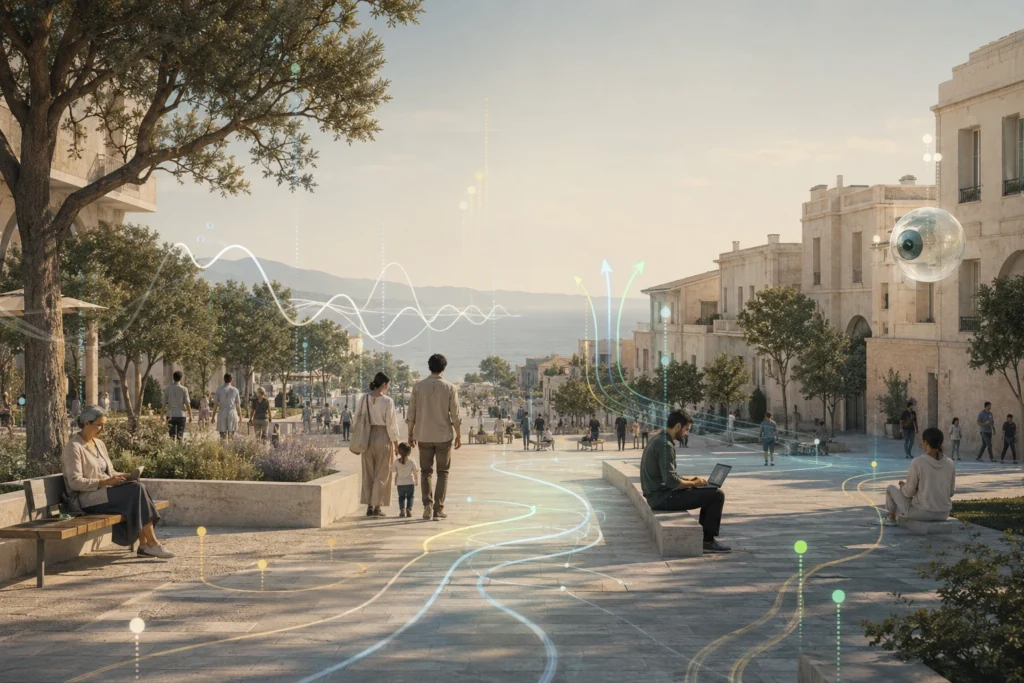
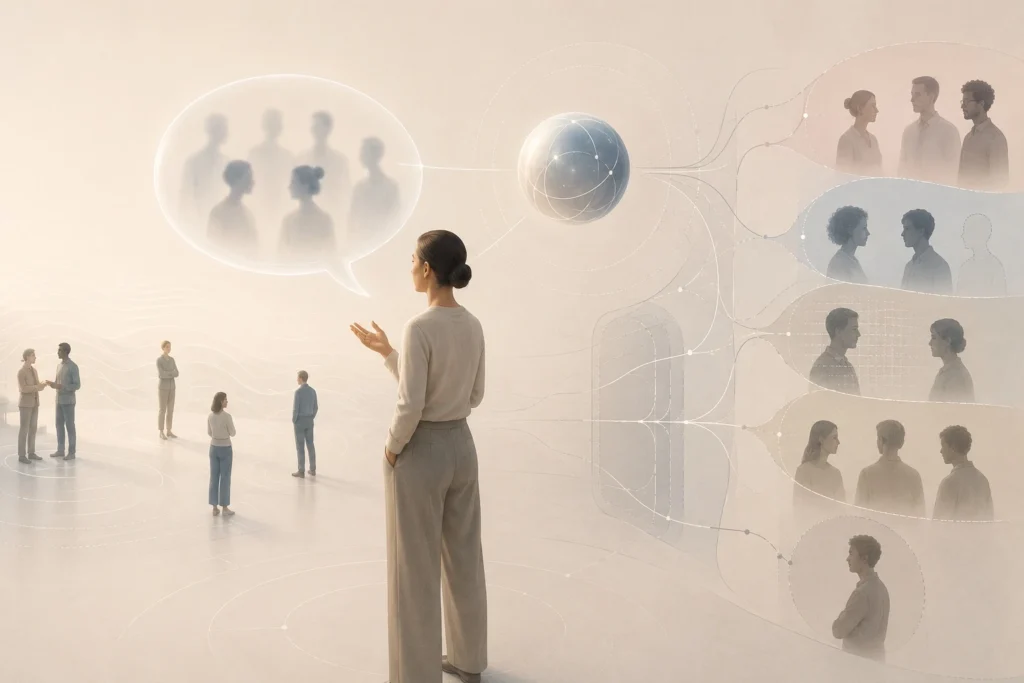
    Minimalist XR editorial image of a calm Mediterranean city showing emotional livability, safer destinations, and human systems signals.

    Nations, cities, and regions will not only compete by GDP, climate, or infrastructure. They will compete by how safe people feel inside their bodies while living there. Emotional livability is not a luxury signal. It is becoming a survival, migration, tourism, and governance signal.

    A quiet global pattern is becoming easier to see.

    People are not only traveling toward beaches, food, history, or cheaper vacations. More people are choosing places where their nervous system can relax.

    You can see it on the Costa del Sol: younger visitors, young families, strollers, multilingual conversations, remote workers, and people who seem to be testing whether a place feels livable, not just enjoyable.

    At first, it looks like tourism.

    But underneath, it may be a larger human-systems shift.

    The old assumption

    Countries used to compete mainly through obvious systems:

    jobs, wages, taxes, military strength, universities, airports, and national prestige.

    Those still matter.

    But they are no longer enough.

    A country can be wealthy and still feel socially hostile.

    A city can have opportunity and still feel unsafe.

    A destination can be exciting and still keep the body in alert mode.

    That changes how people choose where to go.

    The global signal

    Tourism is growing strongly again. Eurostat reported that 2025 was another record year for EU tourism, with nearly 3.1 billion nights spent in tourist accommodation across the EU, up 2.2% from 2024. Spain alone accounted for 513.6 million of those nights, the highest in the EU.  

    Costa del Sol also had a record 2025, with about 14.65 million tourists and more than €21.8 billion in tourism impact.  

    That is not just a vacation statistic.

    It shows that certain places are becoming emotional landing zones.

    What people may really be selecting for

    Many people are not saying:

    “I am choosing a nervous-system-friendly country.”

    They say simpler things:

    “I feel safer there.”

    “The kids can be outside.”

    “People seem calmer.”

    “I can walk.”

    “I don’t feel on guard all the time.”

    “It feels easier to exist there.”

    That is the signal.

    People are choosing environments where daily life requires less defensive posture.

    Global examples

    This pattern shows up in places like:

    • Portugal
    • Spain
    • Slovenia
    • Austria
    • Denmark
    • New Zealand
    • Japan
    • Costa Rica

    They are not identical. They do not all offer the same culture, cost, climate, or visa pathway.

    But they often share a few emotional-livability traits:

    • lower visible aggression
    • safer public spaces
    • stronger social trust
    • walkable daily life
    • reliable healthcare or infrastructure
    • calmer family environments
    • less constant threat signaling

    The 2025 Global Peace Index supports part of this pattern: Portugal ranked 7th, Denmark 8th, Slovenia 9th, Japan 12th, Spain 25th, and New Zealand 3rd among 163 countries and territories. The index measures peacefulness across safety/security, ongoing conflict, and militarization.  

    The United States comparison

    For some travelers and families, the United States now feels less emotionally predictable than it once did.

    Not everywhere. Not for everyone.

    But enough people notice the public tension: political hostility, gun anxiety, healthcare uncertainty, social fragmentation, high costs, and the feeling that daily life requires constant vigilance.

    That creates a different kind of travel and migration pressure.

    People may not only leave for cheaper rent or better weather.

    They may leave because they are tired of living braced.

    Conflict avoidance is now part of destination choice

    Families also calculate risk differently.

    They ask:

    Can my children be safe here?

    Can we walk here?

    Can we sleep here?

    Can we get medical care here?

    Can we relax here?

    Can we live without emergency mode?

    That is not luxury thinking.

    That is survival intelligence.

    In a world where conflict, instability, and social stress feel more visible, emotionally calmer places become more attractive.

    The hard truth

    This pattern also creates pressure.

    Costa del Sol is not perfect. Málaga is already seeing serious housing strain, with tourist apartment blocks increasing and concern that tourism is displacing residential life. Recent reporting described Málaga’s tourist apartment blocks rising by 15% in two years, passing 10,000 places, while housing remains a major local concern.  

    So emotional livability can become self-consuming.

    A place becomes attractive because it feels calm.

    More people arrive.

    Housing tightens.

    Locals feel pressure.

    The calm system starts to strain.

    That is the warning.

    Reframe

    Tourism may be the surface signal.

    Emotional migration may be the deeper pattern.

    People are quietly testing places with their bodies.

    They arrive, walk, eat, listen, sleep, watch their children, feel the social temperature, and ask one basic question:

    Can we live here without becoming smaller?

    That question may shape the next generation of tourism, migration, and national competitiveness.

    Key insight

    The future competition between nations may not only be about who is richest, strongest, or most famous.

    It may be about who can create environments where ordinary people feel safe enough to think clearly, raise children, stay regulated, and build good lives.

    That is emotional livability.

    And it may become one of the most important forms of infrastructure in the world.

    The Central Tension of Modernity

    Modern civilization has become extremely advanced at scaling systems, automating systems, and optimizing systems.

    But it remains comparatively weak at aligning systems with human flourishing.

    We have built powerful infrastructure for movement, commerce, entertainment, communication, and productivity. Yet many people still feel cognitively overloaded, socially fragmented, and emotionally unsafe inside the systems meant to serve them.

    That gap may become one of the defining problems of the next era.

    The future competition between nations may not be only about GDP, military strength, tax policy, or technological capacity. It may also be about emotional livability.

    Can people rest there?

    Can families walk there?

    Can children grow there?

    Can older people feel included there?

    Can neurodiverse people function there without constantly masking?

    Can visitors imagine becoming residents because their bodies feel less guarded?

    These questions are not soft. They are system-level questions.

    A place that feels safe, coherent, walkable, socially functional, and emotionally breathable becomes more than a destination. It becomes a nervous system refuge.

    Why This Matters

    People do not only move toward opportunity. They move toward regulation.

    They move toward places where daily life feels less hostile, less chaotic, and less cognitively expensive. They move toward environments where the body does not have to stay on alert all the time.

    That is why emotional livability matters.

    It connects tourism, migration, urban design, public safety, healthcare, family life, and social trust into one human systems signal.

    A country can have strong infrastructure and still feel difficult to live in. A city can be beautiful and still feel exhausting. A destination can be popular and still fail to become emotionally livable.

    The deeper question is not only whether people want to visit.

    The deeper question is whether people can imagine staying.

    The Human Systems Signal

    Costa del Sol, Portugal, and other calmer destinations may be showing an early pattern.

    People are not simply looking for beaches, cheaper prices, or better weather. Many are looking for places where the human system feels less threatening.

    This does not mean these places are perfect. No society is. Spain has bureaucracy, housing pressure, regional inequality, tourism strain, and real social challenges.

    But perfection is not the signal.

    The signal is comparative relief.

    When people arrive somewhere and their nervous system softens, that matters. When young families, remote workers, older residents, and tired visitors all begin choosing places that feel safer and more breathable, that becomes a systems trend.

    The next global advantage may belong to places that understand this clearly:

    Human beings are not only economic actors.

    They are nervous systems living inside social environments.

    And when a place helps those nervous systems settle, people notice.

  • Permanent Exposure for Temporary Access

    A minimalist XR-style image of a traveler checking into a hotel while one small identity document expands into many faint digital pathways, showing how temporary access can create long-term data exposure.

    Temporary access should not require permanent identity exposure.

    I hand my passport to a hotel clerk for a one-night stay.

    For a brief moment, I understand why.

    The hotel needs to know:

    • I am the person who booked the room
    • I paid for it
    • I am legally allowed to stay there

    That part makes sense.

    The problem is not that the hotel checks my identity. The problem is that a temporary need often creates a permanent record.

    The problem is not the moment of verification.

    The problem is what happens after the moment has passed.

    A hotel may need temporary proof that I am the person connected to the booking. It does not necessarily need long-term exposure to my identity, document details, travel pattern, and presence in that place after the stay is over.

    Copies of identity documents move through databases I will never see.

    Those copies may pass through hotel systems, booking platforms, compliance records, outsourced software, cloud storage, government reporting channels, and backup systems.

    All of that exposure happens so I can sleep in a room for one night.

    That is a strange trade.

    The System Asks for Too Much

    Most identity systems were built around a simple assumption:

    To prove something about yourself, you must expose yourself.

    If a business needs to confirm your age, it asks for your full identity.
    If a hotel needs to confirm your booking, it asks for your passport.
    If a platform needs to know you are allowed to access something, it often collects far more information than the access actually requires.

    The system does not usually ask:

    What is the minimum proof needed?

    It asks:

    What document can we collect?

    That difference matters.

    A passport was designed to prove identity and nationality across borders.
    It was not designed to become a general-purpose access token for hotels, apps, rentals, events, deliveries, and services.

    Yet that is often how identity documents are used.

    A temporary need becomes permanent exposure.

    Identification Is Not the Same as Data Collection

    There is a difference between proving a fact and handing over a file.

    A hotel may need to know that I am the guest attached to a reservation.

    It does not always need long-term access to every detail printed on my passport.

    A service may need to know that I am over a certain age.

    It does not need my full birthdate, address, document number, nationality, photo, and signature stored indefinitely.

    A system may need to know that payment was completed.

    It does not need to connect my identity, payment trail, location, and behavioral data into one long-term profile.

    But many systems collapse these things together.

    Proof becomes collection.
    Collection becomes retention.
    Retention becomes risk.

    The Risk Is Not Only Theft

    When people talk about identity risk, they usually think about criminals stealing documents.

    That is real.

    But the deeper risk is quieter.

    The deeper risk is that everyday life becomes dependent on exposing permanent identity to temporary systems.

    A hotel stay.
    A gym pass.
    A delivery.
    A rental.
    A ticket.
    A border check.
    A medical form.
    A platform login.

    Each one may feel small.

    Together they create a trail of identity fragments spread across systems the person does not control.

    Even when nothing bad happens, the structure is still poor.

    A safe system should not require people to scatter permanent identity everywhere just to move through daily life.

    A Better Pattern: Temporary Proof

    The better question is not:

    How do we store identity more securely?

    That question matters, but it does not go far enough.

    The better question is:

    Why does the system need to store so much identity at all?

    For many interactions, what is needed is not a copy of the person.

    What is needed is a temporary proof.

    A temporary proof could confirm:

    • This person has a valid reservation
    • This person has paid
    • This person is legally eligible for this service
    • This person is the same person who checked in
    • This proof expires after the stay ends

    The business gets the confirmation it needs.

    The person does not have to surrender more identity than necessary.

    Guardian Capsules

    This is where I imagine something like a Guardian Capsule.

    A Guardian Capsule would not be a profile.
    It would not be a permanent identity file.
    It would not be another database collecting everything about a person.

    It would be a small, bounded proof packet.

    The capsule would carry only what is needed for a specific situation.

    For a hotel stay, the capsule might say:

    • Reservation confirmed
    • Payment confirmed
    • Legal stay requirement satisfied
    • Valid for this hotel
    • Valid only during these dates
    • Expires automatically after checkout

    The hotel does not need to own the person’s identity.

    It only needs to verify the relevant facts.

    That is a very different architecture.

    Vectors Instead of Copies

    The old model copies documents.

    The better model transmits bounded proofs.

    A proof can be thought of as a small vector of trust.

    Not trust in the emotional sense.

    Trust in the system sense:

    • What claim is being made?
    • Who verified it?
    • What context is it valid for?
    • How long does it last?
    • What can it not be used for?

    This matters because identity should not be treated like a loose object.

    Identity should behave more like controlled access.

    A key opens one door.
    It does not give the building owner your whole life history.

    Temporary Access Should Stay Temporary

    The biggest failure in many systems is not that they ask for access.

    Some access is necessary.

    The failure is that temporary access becomes permanent exposure.

    A hotel needs a short-lived proof.
    A service needs a limited confirmation.
    A platform needs a bounded permission.

    But the person should not have to leave permanent identity residue behind every temporary interaction.

    That residue becomes system noise.

    It creates risk.
    It creates dependency.
    It creates surveillance potential.
    It creates databases that become valuable targets.

    And most of it exists because systems were designed around collection rather than restraint.

    Human Systems Need Better Defaults

    A humane identity system would start from restraint.

    It would ask:

    What is the smallest proof needed here?

    It would separate:

    • identity from access
    • verification from storage
    • temporary permission from permanent record
    • human presence from system ownership

    That is the shift.

    Not hiding identity.
    Not refusing all verification.
    Not pretending systems do not need trust.

    The shift is designing trust without unnecessary exposure.

    The Reframe

    The problem is not that hotels ask for ID.

    The problem is that our systems still treat identity as something to copy, store, and pass around.

    That model made sense when paper was the only interface.

    It makes less sense in a world of databases, cloud storage, automated compliance, AI indexing, and long-term digital trails.

    The future should not require more copies of the person.

    It should require better proofs.

    Temporary access should use temporary proof.

    Permanent identity should remain with the person.

    Key Insight

    A healthy system does not ask humans to expose their whole identity for every small permission.

    It verifies only what is needed, only for as long as needed, and lets the rest remain private.

    That is not just better privacy.

    It is better system design.

  • It’s not special privileges. It’s a very smart investment  

    The Input Shapes the Output
    Human performance is not produced in isolation. Output comes from input: sound, light, stress, unfinished tasks, addictive loops, social pressure, and the design of the systems around us. When those inputs are cleaner, people do not become “privileged.” They become more accurate, more regulated, and more useful.

    We often judge people by their output.

    Did they finish the task?
    Did they stay calm?
    Did they communicate clearly?
    Did they do something useful?
    Did they perform consistently?

    That is how many systems measure human value. They look at what came out and decide what kind of person must be inside.

    But output does not appear from nowhere.

    Human output is shaped by input conditions.

    If the input stream is noisy, addictive, ambiguous, or full of unresolved open loops, the output becomes more reactive, more scattered, and less useful. If the input stream is clear, calm, and well-tuned, the output becomes more intentional, accurate, creative, and productive.

    For autistic people, this can be especially visible.

    The difference between shutdown and innovation is not always the person.
    Often, it is the input layer.

    The system mistake

    Most systems treat output as the problem.

    If someone is overwhelmed, distracted, inconsistent, irritable, avoidant, or unproductive, the system often assumes the person is failing in some personal way. It may call them disorganized, too sensitive, unreliable, lazy, difficult, or emotionally unstable.

    But many of those outputs are not primary problems.

    They are downstream effects.

    The real issue may be that the environment is feeding the nervous system the wrong signal:

    • too much noise
    • too much ambiguity
    • too many demands
    • too many interruptions
    • too many unresolved loops
    • too many digital hooks competing for attention

    The system sees performance.
    It misses conditions.

    Autism makes this easier to see

    Autistic people are often judged harshly because the output changes so visibly when the input changes.

    A noisy room can reduce language access.
    Too many competing demands can collapse task initiation.
    Unclear instructions can produce paralysis.
    Frequent interruptions can break deep focus.
    Visual clutter, sensory friction, and social uncertainty can all drain processing power before the real task even begins.

    Then the outside world looks only at the output and says:

    • Why aren’t they functioning?
    • Why are they upset?
    • Why didn’t they finish?
    • Why are they so inconsistent?

    But autistic cognition is not weak.
    It is highly sensitive to signal quality.

    That sensitivity can create struggle in chaotic systems, but it can also create extraordinary value in tuned conditions:

    • deep pattern recognition
    • precision
    • innovation
    • artistic depth
    • strong system perception
    • meaningful productivity

    A powerful system still needs a clean signal.

    Open loops are part of the input burden

    One part of the input layer gets ignored all the time: open loops.

    Open loops are unresolved signals that continue occupying background attention.

    They include things like:

    • unattended email
    • unread messages
    • red notification numbers on apps
    • open browser tabs
    • vague tasks with no clear end
    • things waiting for a reply
    • unresolved obligations
    • half-finished decisions
    • digital clutter
    • social tension that has not been closed

    These are often treated as small things.
    They are not small.

    Each one acts like a cognitive hook.

    It keeps pulling at the system:

    • Check this.
    • Don’t forget.
    • Someone may need something.
    • There might be a problem.
    • You still haven’t handled this.
    • Something is unfinished.

    For some people, those hooks are background irritation.
    For others, especially many autistic people, they can become constant low-grade drag.

    Not always dramatic.
    Just persistent.

    The result is a nervous system that never fully settles and a mind that never gets full closure.

    That affects output.

    Digital systems are designed to keep loops open

    This is not accidental.

    Many digital systems benefit from unresolved attention. They are built around reminders, alerts, badges, interruptions, urgency signals, and easy re-entry points. They do not always help people close loops. Often, they help keep loops active.

    The red numbers on apps are a perfect example.

    They are tiny, but they signal incompletion.
    They create a visual demand.
    They sit quietly in the background, asking for cognitive energy even when you are trying to focus somewhere else.

    An unread email is not just an email.
    For many minds, it becomes a live thread.

    A vague obligation is not just a task.
    It becomes a low-level open process.

    When enough of these stack up, people do not simply become “less disciplined.” They become saturated.

    Better output often starts with cleaner input

    If we want better human performance, we should stop starting only at the output layer.

    Before asking:

    • Why is this person not producing?
    • Why are they dysregulated?
    • Why are they not focused?
    • Why are they inconsistent?

    We should ask:

    • What is entering their system?
    • What is still open in their attention field?
    • What keeps pulling background processing?
    • What sensory or digital conditions are distorting performance?
    • What can be reduced, clarified, or closed?

    This is a better human systems question.

    Because many people do not need more pressure.
    They need a cleaner signal.

    Input conditions that commonly distort output

    Here are some common examples:

    Input conditionLikely output effect
    Noise and sensory overloadirritability, shutdown, reduced language, mistakes
    Ambiguityhesitation, paralysis, over-processing
    Constant interruptionsbroken focus, slower recovery, unfinished work
    Addictive digital loopscompulsive checking, scattered attention
    Red badges and unattended emailbackground tension, reduced clarity, mental drag
    Vague obligationslingering stress, low task initiation
    Clear tasks and calm spaceprecision, regulation, useful production
    Reduced open loopsmore intentional action, deeper focus

    The pattern is simple:

    better inputs tend to create better outputs.

    The reframe

    Autism is often framed as an output problem.

    But many autistic struggles are actually input problems.

    And that changes everything.

    It means the person may not be broken.
    The environment may be misaligned.

    It means support is not only about teaching the person to “cope better.”
    It is also about designing better conditions:

    • quieter spaces
    • clearer expectations
    • less visual and digital clutter
    • fewer interruptions
    • stronger closure systems
    • reduced addictive loops
    • interfaces that respect attention instead of harvesting it

    This is not lowering standards.

    It is improving system design.

    Practical application

    If you want to improve your own output, or support someone else’s, start here:

    1. Reduce sensory noise

    Identify obvious friction:

    • background sound
    • visual clutter
    • competing screens
    • unnecessary stimulation

    2. Clarify the task

    Make the next action visible and concrete.
    Not “work on this.”
    Better: “open the file and write the first paragraph.”

    3. Close open loops

    Pick a few active drains:

    • clear the red badges
    • archive or sort key email
    • close extra tabs
    • define unresolved tasks
    • remove unnecessary pending decisions

    4. Reduce interruption points

    Turn off nonessential notifications.
    Protect deeper work windows.

    5. Respect recovery

    A system under strain may need quiet before it can produce strong output again.

    6. Judge output more fairly

    Before blaming the person, inspect the conditions that shaped the output.

    Why this matters beyond autism

    Autism makes the pattern more visible, but the principle is human-wide.

    Everyone is shaped by what enters their system.

    Noisy inputs create noisy outputs.
    Fragmented attention creates fragmented behavior.
    Unresolved loops create mental drag.
    Clear conditions create clearer action.

    The difference is that some people can mask the effects longer, while others show them sooner.

    That does not make the pattern less real.
    It only makes it easier to ignore.

    Final insight

    Many systems are trying to improve people without improving the inputs surrounding them.

    That is backwards.

    Before judging the output, inspect the input.

    A mind may not be failing.
    The signal may simply be wrong.

    And sometimes the most effective intervention is not motivation, discipline, or pressure.

    Sometimes it is this:

    reduce the noise, close the loops, and let the system think.

    Key Insights

    • Human output is shaped by input conditions.
    • Noise, ambiguity, addiction loops, and unresolved open loops all affect performance.
    • For autistic people, small input changes can create dramatically different outputs.
    • Red notification badges, unattended email, and digital clutter are not trivial; they act as ongoing cognitive hooks.
    • Many performance problems are better understood as environmental or systems problems before they are treated as personal failures.
    • Better human systems start by improving signal quality, not just demanding better output.

  • When “They” Replaces Clarity

    Minimalist XR image showing the word “they” as an ambiguous placeholder that can create assumption, distance, blame, and othering in human systems.

    We often use the word “they” casually.

    Most of the time, it feels harmless. It sounds like a normal shortcut. A simple way to talk about people, offices, cultures, systems, companies, governments, or groups without slowing the sentence down.

    But sometimes “they” is not neutral.

    Sometimes “they” enters the sentence before we have clearly identified who we actually mean.

    That is where the word becomes useful.

    Not as something to ban.

    As a signal.

    The Placeholder Problem

    “They” often works like a placeholder.

    We say:

    “They don’t care.”

    “They always do this.”

    “That is so them.”

    “I wonder what they are up to now.”

    “Why do they do this?”

    The word slips out quickly. But the meaning is not always clear.

    Who are they?

    A person?

    A family?

    A culture?

    A government office?

    A company?

    A political group?

    A whole country?

    A vague emotional category?

    This matters because the listener often fills the empty space with their own assumption.

    The speaker may think they are being clear.

    The listener may hear something completely different.

    The word becomes a container.

    And whatever we place inside that container shapes the emotional meaning of the sentence.

    The “They” Game

    I used to play a small mental game with this word.

    I would use “they” ambiguously, then ask:

    When I said the word “they,” who did you place in that placeholder?

    That question reveals a lot.

    Not because people are bad.

    Because the human mind fills gaps.

    If the sentence does not name the subject clearly, the listener’s nervous system often completes the pattern using memory, bias, frustration, fear, habit, or past experience.

    That is not always intentional.

    It is just how perception works.

    But once we see it, we become responsible for using the word more carefully.

    When “They” Becomes Othering

    The danger is not the word itself.

    The danger is what can hide behind it.

    “They” can quietly turn unclear thinking into social distance.

    It can turn one person’s action into a group trait.

    It can turn one bad experience into a cultural judgment.

    It can turn a system failure into blame against ordinary people.

    It can turn discomfort into othering.

    The sentence may sound simple:

    “It’s all their fault. They are the reason it’s like this.”

    But underneath it, the meaning may be doing more work than we realize.

    Who is “they”?

    What evidence are we using?

    Are we talking about a specific person?

    A repeated pattern?

    A formal system?

    A culture?

    A rumor?

    A feeling?

    Those are different things.

    When we collapse them into one vague “they,” we lose precision.

    And when we lose precision, we increase the chance of unfairness.

    Systems Need Clear Subjects

    Human systems fail when language becomes too vague.

    A system cannot improve if we do not know what part of the system we are talking about.

    If a government office is slow, that is different from saying “they don’t care.”

    If one employee was rude, that is different from saying “they are rude.”

    If a policy creates harm, that is different from blaming every person inside the institution.

    If a culture has a pattern, that still requires care, context, and specificity.

    Clear subjects help us see the real pressure point.

    Unclear subjects turn frustration into fog.

    And fog is where blame grows.

    The Better Question

    The correction is simple.

    When the word “they” slips out, pause and ask:

    Who did I just assign that word to?

    That one question changes the sentence.

    “They don’t care” might become:

    “The office did not respond.”

    “The policy does not account for this situation.”

    “That person dismissed the concern.”

    “The system is not designed for this need.”

    “This group has developed a pattern I do not trust.”

    Those sentences are not softer.

    They are clearer.

    Clarity is not politeness.

    Clarity is accuracy.

    Why This Matters

    The word “they” can be useful.

    We need shorthand sometimes.

    We cannot name every actor in every sentence.

    But when the word carries blame, fear, contempt, suspicion, or certainty, it deserves a pause.

    Because vague language creates vague enemies.

    And vague enemies are hard to question.

    Once “they” becomes a fixed category, the mind stops looking for detail.

    It stops asking what happened.

    It stops asking who acted.

    It stops asking what system produced the behavior.

    It stops asking whether the story is accurate.

    That is how language turns into distance.

    A Human Systems Reframe

    The goal is not to remove “they” from speech.

    The goal is to notice when the word is doing too much.

    “They” should not carry more meaning than we have examined.

    When we use the word carefully, it can still be useful.

    When we use it carelessly, it can hide assumption, blame, and othering.

    A healthy system needs better language than that.

    Not perfect language.

    Clearer language.

    Because clearer language gives us better maps.

    And better maps help us respond to real systems instead of imagined enemies.

    Key Insight

    When “they” slips out, it may be a signal that the mind has created a placeholder before the subject is clear.

    The next step is not shame.

    The next step is precision.

    Ask:

    Who do I mean?

    What happened?

    What system is involved?

    What evidence do I actually have?

    That pause can turn blame into analysis.

    It can turn distance into understanding.

    And sometimes, it can stop a small word from becoming a wall.

    And after all, isn’t that what “they” would want us to do?

  • When Intelligence Becomes Infrastructure

    A minimalist XR-style image showing a calm human figure surrounded by subtle digital infrastructure layers, with a small Guardian-like sphere nearby. The image represents artificial intelligence becoming part of the invisible systems that shape daily life, while keeping human autonomy at the center.

    Most people still talk about artificial intelligence as if it is software.

    A tool.
    An app.
    A chatbot.
    A feature added to something else.

    But that framing is already too small.

    AI is beginning to act less like a tool and more like infrastructure. It is moving underneath daily life: search, work, learning, healthcare, logistics, communication, identity, and decision-making.

    A person may think they are simply asking a question. But the system around them may already be shaping which answers appear, which choices feel available, which tasks feel easy, and which parts of reality become visible.

    That is infrastructure.

    Not because it looks like roads, pipes, or power lines, but because it starts to shape the conditions people live inside.

    The Old Assumption

    The old assumption is that AI is something people choose to use.

    You open an app.
    You ask a question.
    You get an answer.
    You decide whether it helped.

    That is still true in some cases.

    But it is not the whole system anymore.

    Intelligence is being built into search engines, browsers, phones, operating systems, customer service systems, financial tools, workplace software, education platforms, healthcare routing, government forms, logistics networks, and creative tools.

    That means intelligence is no longer only something sitting on top of society.

    It is moving underneath it.

    The System Break

    Infrastructure is different from ordinary software.

    A tool helps you do a task.

    Infrastructure shapes the conditions around the task.

    Roads shape where people can easily move.
    Banks shape how people access money.
    Browsers shape how people reach information.
    Cloud platforms shape what developers can build.
    Recommendation systems shape what people notice.

    So when intelligence becomes infrastructure, it does not simply answer questions.

    It shapes the conditions under which people think, choose, work, communicate, and relate to each other.

    That is the break.

    AI is not only becoming more capable.

    It is becoming more embedded.

    A Human Example

    A simple human example is attention.

    Most people do not wake up thinking, “I am going to let an infrastructure system shape my mind today.”

    But that is often what happens.

    A news feed, search result, recommendation system, notification stream, or algorithmic timeline quietly decides what rises to the surface. It does not need to force anyone. It only needs to make some options easier to notice than others.

    Over time, that shapes behavior.

    A person may feel informed, while actually being pulled through repeated urgency loops. They may feel connected, while being routed toward reaction instead of reflection. They may feel like they are choosing freely, while the system has already narrowed the field of visible choices.

    That is why intelligence infrastructure matters at the human level.

    It does not only process information.

    It shapes the conditions under which people think, decide, and relate to each other.

    Infrastructure Shapes Human Behavior

    Once intelligence becomes part of the background, it can quietly influence what people experience as normal.

    It can shape:

    • what information appears first
    • what options feel available
    • what risks are emphasized
    • what choices are hidden
    • what behavior gets rewarded
    • what kind of language feels acceptable
    • what kind of emotion gets amplified
    • what kind of person feels seen or ignored

    This is why the infrastructure frame matters.

    If intelligence is only treated as a product, then the main concern becomes performance.

    Is it fast?
    Is it smart?
    Is it cheaper?
    Is it more convenient?

    But if intelligence is infrastructure, then the deeper concerns become architecture and governance.

    Who controls it?
    What does it optimize for?
    What does it remember?
    What does it forget?
    What does it make easier?
    What does it make harder?
    Can a person understand how it is shaping the field around them?

    Those are human systems questions.

    The Risk of Invisible Dependency

    The greatest risk is not simply that AI becomes powerful.

    The deeper risk is that intelligence becomes centralized, opaque, and dependency-forming.

    If people depend on an intelligence layer every day, but cannot see how it works, then the system gains quiet power over their choices.

    It may not need to control people directly.

    It only needs to shape the path of least resistance.

    A person may ask for help and slowly become dependent on the system’s framing.
    A worker may rely on automated summaries and stop seeing what was left out.
    A student may accept generated explanations without learning how to reason through the problem.
    A community may let algorithmic ranking decide which voices feel important.
    A business may depend on one platform’s intelligence layer until switching away becomes almost impossible.

    This is how infrastructure creates dependency.

    Not always through force.

    Often through convenience.

    Intelligence Should Not Become Extraction

    We have already seen what happens when digital infrastructure is built around extraction.

    Attention becomes a resource to capture.
    Behavior becomes data to predict.
    Identity becomes a profile to monetize.
    Connection becomes engagement.
    Human need becomes a market signal.

    If intelligence infrastructure follows that same pattern, the result will not be human-centered AI.

    It will be a smarter extraction system.

    That is why intelligence needs a different foundation.

    It should not be built only to increase engagement, collect more data, lock users into platforms, or make people easier to predict.

    It should help people understand their choices more clearly.

    It should help them act with more autonomy, not less.

    A Different Kind of Guardian System

    This is where Guardian design becomes more than an assistant feature.

    A Guardian should not simply answer questions or keep a user engaged.

    It should help preserve the person’s ability to notice what is happening, understand the system around them, and make choices without being quietly pushed into dependency.

    That is the difference between intelligence as extraction and intelligence as support.

    This is also why I no longer think of my own Guardian work as simply building an AI assistant.

    An assistant is too small of a frame.

    What I am really testing is a different kind of intelligence infrastructure: one that uses memory carefully, retrieves context without owning the person, supports decision-making without taking over, and keeps human autonomy at the center.

    The goal is not to make people dependent on an AI personality.

    The goal is to build an intelligence layer that helps people stay more grounded, more sovereign, and more connected to real human life.

    Sovereign Intelligence Infrastructure

    If intelligence is becoming infrastructure, then sovereignty has to be part of the design.

    That means:

    • memory should not automatically belong to the platform
    • personal context should be used carefully and transparently
    • users should understand what the system is drawing from
    • local and regional control should matter
    • dependency loops should be actively avoided
    • human relationships should be reinforced, not replaced
    • intelligence should support action, not passive consumption
    • systems should be designed for human flourishing, not only platform growth

    This does not mean every AI system must be small or local.

    Some intelligence work needs powerful infrastructure.

    But the direction matters.

    A healthy system does not make every human more dependent on invisible centralized intelligence.

    A healthy system gives people better tools, clearer context, stronger agency, and more control over how intelligence supports their lives.

    Why This Matters Now

    AI infrastructure is being built quickly.

    Browsers are changing.
    Search is changing.
    Work tools are changing.
    Education is changing.
    Healthcare routing is changing.
    Creative work is changing.
    Public services will change too.

    The intelligence layer is moving closer to the human decision layer.

    That makes the design choices more important.

    If intelligence becomes infrastructure without transparency, people may slowly lose awareness of how their choices are being shaped.

    If intelligence becomes infrastructure with sovereignty, it can help people navigate complexity without surrendering themselves to the system.

    That is the difference.

    The Reframe

    The question is not only:

    How smart can AI become?

    The better question is:

    What kind of intelligence infrastructure are we building around human life?

    Because once intelligence becomes infrastructure, autonomy becomes an architecture problem.

    It has to be designed into the system.

    It cannot be added later as a slogan.

    Key Insight

    The future of AI will not be decided only by which model is smartest.

    It will be decided by which intelligence systems become trusted infrastructure — and whether those systems are designed to extract, control, and centralize, or to support human autonomy, local context, and real-world flourishing.

    That is the infrastructure question now.

    Not just artificial intelligence.

    Human intelligence, system intelligence, and the architecture that connects them.

  • When Empathy Is Missing, Systems Must Carry the Weight

    Transparent human system with safeguards, shared boundaries, and a Guardian sphere representing accountability, empathy variation, and protection from exploitation.

    Some people do not experience empathy in the same way others do.

    That is not always a choice.
    It is not always a moral failure.
    It is not always something punishment can fix.

    Some people are born with reduced emotional empathy.
    Some people learn to suppress it.
    Some people can understand others intellectually but do not feel another person’s pain as a natural restraint.

    Human systems often pretend this is rare.

    It is not rare enough to ignore.

    And when people with low empathy gain power over families, churches, companies, governments, or communities, the damage can scale quickly.


    The Wrong Assumption

    Many systems are built on the assumption that people in authority will eventually do the right thing.

    That assumption is dangerous.

    A person who lacks empathy may still be intelligent.
    They may be charming.
    They may be strategic.
    They may understand social rules well enough to use them.

    They may know exactly what people want to hear.

    This can make them very effective inside systems that reward confidence, obedience, loyalty, growth, profit, or charisma more than accountability.

    The problem is not only the person.

    The problem is the system that gives one person too much unchecked power.


    Empathy Is Not a Reliable Safety Mechanism

    Empathy helps many people self-correct.

    A person feels the harm they are causing.
    They notice fear in another person.
    They feel discomfort when they cross a line.

    But empathy is not evenly distributed.

    Some people do not feel that signal strongly.
    Some people feel it only for their own group.
    Some people can turn it off when power, money, status, sex, ideology, or control is involved.

    So when a system depends only on personal goodness, it is fragile.

    It is like designing a bridge that only stays up if everyone walking across it is kind.

    That is not architecture.
    That is hope.


    Punishment Alone Misses the System Problem

    If a person truly lacks empathy, punishment may not create empathy.

    It may only teach them how to avoid getting caught.

    Shaming a person for lacking empathy can be like shaming a fish for swimming. It may satisfy the crowd, but it does not redesign the water.

    Human systems need a more practical question:

    What structures make exploitation harder to scale?

    That question is more useful than asking whether every harmful person can be morally repaired.

    Some can grow.
    Some can learn restraint.
    Some can improve with support.

    But systems cannot depend on that outcome.


    Where Harm Scales

    Low-empathy behavior becomes most dangerous when it meets weak structure.

    This can happen in families.
    It can happen in religious communities.
    It can happen in companies.
    It can happen in politics.
    It can happen anywhere people are taught to obey before they are allowed to question.

    The pattern is familiar:

    • one person gains unusual influence
    • others are trained to trust them
    • criticism becomes disloyalty
    • victims are isolated
    • rules are applied downward, not upward
    • reputation matters more than harm
    • the system protects itself before it protects people

    At that point, the system is no longer neutral.

    It has become an amplifier.


    The Power Problem

    Power does not create low empathy by itself.

    But power reveals what a person does when restraint disappears.

    If a leader can remove critics, silence records, control access, punish dissent, or rewrite the story, then empathy becomes the only remaining brake.

    That is too weak.

    Healthy systems do not require perfect leaders.

    They require limits.

    A good system assumes that any person, no matter how gifted or inspiring, can drift when power is unchecked.

    That is not cynicism.

    That is engineering.


    What Healthy Systems Need

    Healthy systems need counterbalances.

    Not perfect humans.
    Stable architecture.

    A humane system should make certain things structurally difficult:

    • exploitation should be harder to scale
    • manipulation should be easier to detect
    • power should remain accountable
    • dissent should be protected
    • records should not depend on one person’s permission
    • vulnerable people should have outside paths for help
    • leadership should be replaceable
    • autonomy should be preserved

    This is how systems protect people without needing to label every harmful person as evil.

    The goal is not to create a world where harmful people never exist.

    The goal is to build systems where harmful behavior cannot easily become culture.


    Why This Matters for Empathium

    This is one reason Empathium cannot be built as a possession-based system.

    It cannot belong to one person’s ego.

    I may have started the idea.
    I may be shaping the architecture.
    I may be giving it language.

    But if Empathium is meant to support autonomy, it cannot become dependent on one founder’s control.

    A system designed to protect human sovereignty must also be protected from ownership drift.

    It needs transparent rules.
    It needs boundaries.
    It needs distributed accountability.
    It needs a design that keeps the human centered, not the founder, investor, platform, or machine.

    Otherwise, it would repeat the same pattern it was created to resist.


    The Human Right Underneath This

    People have the right to live without fear.

    Not only fear of violence.
    Not only fear of poverty.
    Not only fear of punishment.

    People also have the right to live without constant fear of being manipulated, cornered, shamed, isolated, or controlled by someone who knows how to use the system better than they do.

    This matters in homes.
    It matters in workplaces.
    It matters in governments.
    It matters in technology.

    A humane system does not ask vulnerable people to become perfect defenders against exploitation.

    It reduces the opportunity for exploitation in the first place.


    Final Reframe

    The problem is not that some people lack empathy.

    That has always been part of the human condition.

    The problem is that many systems still act surprised when low-empathy people seek power and use it.

    A mature human system does not depend on everyone being kind.

    It assumes variation.
    It assumes drift.
    It assumes temptation.
    It assumes blind spots.

    Then it builds safeguards.

    Not to punish human nature.
    To protect human life.

    Healthy systems are not built on idealized morality.

    They are built on accountable power.

  • Modern Systems Reward Constant Activation

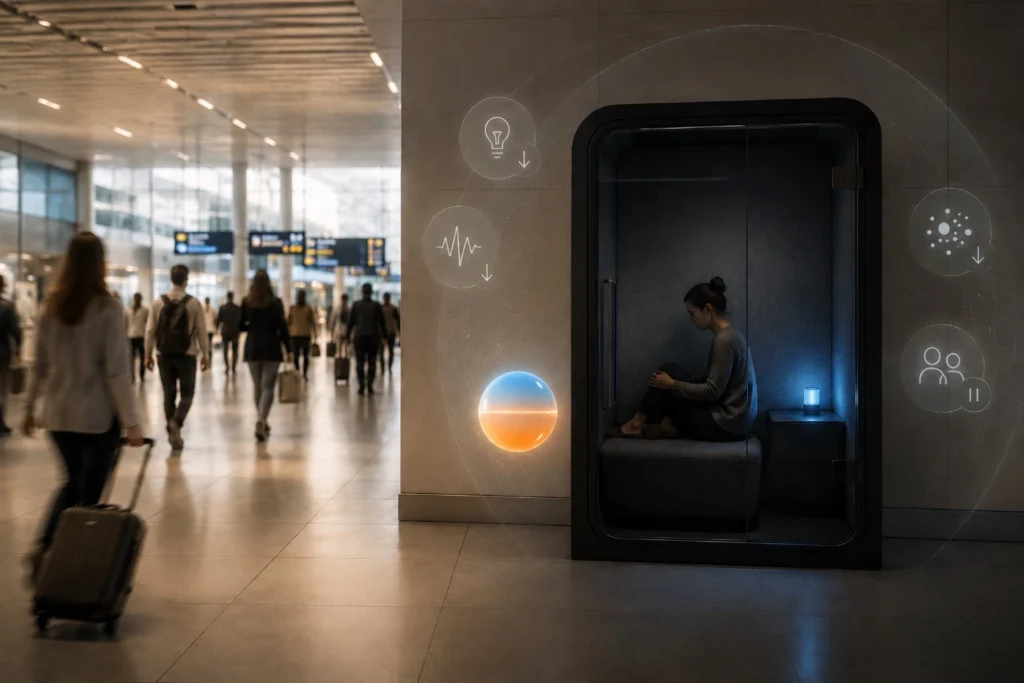
    A calm human figure stands inside a protected attention space while digital feeds and notification systems swirl outside the boundary.

    Many modern systems quietly reward humans for remaining continuously activated.

    Notifications.
    Feeds.
    Breaking news.
    Infinite scrolling.
    Urgency-based work systems.
    Algorithmic engagement loops.
    Continuous updates.

    The expectation is no longer occasional attention. It is constant availability.

    Respond faster.
    Check sooner.
    React immediately.
    Stay informed.
    Stay reachable.
    Stay updated.

    At first, this can look like connection. Over time, it becomes cognitive pressure.

    The problem is not information itself. The problem is continuous interruption without enough recovery time for the brain to sort, filter, and stabilize what it has received.

    Humans Are Not Designed for Infinite Input

    The human brain is extremely adaptive, but it is also energy constrained.

    Attention is selective by necessity.

    Memory formation depends on:

    • pauses
    • emotional regulation
    • contextual filtering
    • sleep
    • reflection
    • reduced stimulation

    When systems remove those boundaries, cognition begins fragmenting.

    People often describe this feeling indirectly:

    • difficulty focusing
    • emotional exhaustion
    • inability to think deeply
    • constant low-level anxiety
    • reduced motivation
    • mental noise
    • compulsive checking behaviors

    Many assume this is personal weakness.

    But often it is environmental overload.

    The human brain is extremely adaptive, but it is also energy constrained.

    Attention is selective by necessity.

    Memory formation depends on:

    • pauses
    • emotional regulation
    • contextual filtering
    • sleep
    • reflection
    • reduced stimulation

    When systems remove those boundaries, cognition begins fragmenting.

    People often describe this feeling indirectly:

    “I can’t focus.”
    “I keep checking my phone.”
    “I feel informed, but not clear.”
    “I know a lot is happening, but I do not know what matters.”

    That is not a personal failure. It is often a system effect.

    Modern attention systems are built to keep the brain reacting. They reward checking, refreshing, scrolling, and waiting for the next small update. The result can feel like awareness, but much of the time it is only repetition with new wording.

    I manage this pressure directly in my own life.

    I only download addictive scroll-based apps when I have a specific need for them, and I delete them when that need is finished. I keep notifications turned off unless they come from close friends or people I actually need to respond to. News feeds are a no for me.

    That does not mean I ignore the world. It means I watch the system differently.

    Instead of chasing the breaking news cycle, I look for physical and observable trends: infrastructure strain, energy limits, financial pressure, local behavior, technology shifts, and the way systems quietly adapt around us.

    Breaking news often repeats the same signal again and again, just worded differently.

    The healthier pattern is to reduce the noise, watch real-world movement, and let the signal become visible over time.

    Modern Systems Optimize for Engagement, Not Stability

    Many digital systems are not designed around human nervous system stability.

    They are designed around:

    • retention
    • engagement duration
    • response frequency
    • stimulation persistence
    • behavioral activation

    These systems become very effective at keeping humans cognitively “open.”

    But open systems consume energy.

    Eventually, constant activation creates instability.

    This is visible everywhere:

    • shortened attention cycles
    • rising emotional volatility
    • information fatigue
    • social fragmentation
    • compulsive media consumption
    • difficulty sustaining reflection

    The result is not necessarily more intelligence.

    Sometimes it is simply more stimulation.

    Living Systems Require Selective Activation

    Healthy biological systems do not process everything equally.

    They prioritize.

    They suppress unnecessary input.

    They adapt contextually.

    The human brain constantly decides:

    What actually needs attention right now?

    Without that filtering process, humans become overwhelmed.

    Interestingly, modern AI infrastructure is beginning to encounter similar constraints.

    Large-scale AI systems are increasingly colliding with:

    • power limitations
    • cooling requirements
    • infrastructure strain
    • computational overload

    As a result, future AI systems may also need to become more selective:

    • bounded retrieval
    • contextual activation
    • adaptive orchestration
    • energy-aware processing
    • distributed coordination

    In other words:

    Both biological systems and artificial systems eventually encounter the same reality:

    Unlimited activation is unsustainable.

    The Difference Between Stimulation and Intelligence

    Modern systems often confuse stimulation with intelligence.

    But intelligent systems are not necessarily the systems processing the most.

    Often, intelligent systems are the systems that know:

    • what to ignore
    • when to pause
    • what deserves energy
    • when recovery is necessary
    • how to preserve long-term stability

    This may become one of the defining challenges of modern life.

    Not access to information.

    But protection from continuous activation.

    Recoverable Humans

    Humans function best inside systems that allow recovery.

    Recovery is not laziness.

    Recovery is infrastructure.

    Without recovery:

    • cognition weakens
    • emotional regulation declines
    • reflection narrows
    • decision quality drops
    • dependency increases

    Systems that constantly extract attention often destabilize the humans inside them.

    Recoverable systems behave differently.

    They allow:

    • quiet
    • pacing
    • reflection
    • boundaries
    • contextual focus
    • selective engagement

    The future may belong less to systems that capture the most attention and more to systems that preserve human cognitive stability.

    Guardian Signal

    The system trend is becoming increasingly visible:

    Modern systems reward continuous activation, but long-term human stability depends on selective attention, recovery, and environments that respect cognitive limits.

  • When AI Infrastructure Starts Behaving Like a Nervous System

    A calm person works beside a small Guardian AI sphere and local server while a distant data center and power grid represent energy-heavy AI infrastructure.

    People often assume AI advances by adding more hardware.

    More GPUs.
    More data centers.
    More power.
    More scale.

    For years, that assumption appeared true.

    But physical systems are beginning to push back.

    Across multiple countries, electrical grids are showing strain. Data centers are becoming harder to place. Energy demand is becoming part of the AI conversation. This is not just a technology story anymore.

    It is becoming an infrastructure story.

    And that changes the direction of the field.

    The Old Model

    The previous generation of AI thinking focused on centralized expansion.

    The assumption was simple:

    intelligence grows by increasing computation indefinitely.

    That produced enormous hyperscale systems capable of remarkable results. But it also created a problem.

    Some systems process enormous amounts of data, but still overlook simpler ways to become more efficient, more selective, and more intelligent.

    That is the risk of the old model: it can become like an elephant working inside a glass shop.

    Powerful, impressive, and capable of moving almost anything — but not always sensitive to what is fragile, local, or already under pressure.

    AI infrastructure cannot only be judged by how much it can process.

    It also has to be judged by how carefully it uses energy, memory, context, and attention.

    The Human Systems Problem

    When a system grows too large, it can begin to lose sensitivity.

    A power grid does not care that a data center is innovative if the local infrastructure cannot support the load.

    A community does not experience “AI progress” as an abstract achievement if it arrives as higher energy pressure, land pressure, water pressure, or institutional strain.

    This is where the human-systems lens matters.

    Technology does not exist outside the world.

    It sits inside electrical systems, economic systems, local communities, environmental limits, and human nervous systems.

    If one layer expands without paying attention to the others, the whole system starts to distort.

    A human nervous system works differently.

    It does not process everything at maximum force all the time.

    It filters.
    It prioritizes.
    It remembers.
    It ignores noise.
    It notices patterns.
    It spends energy only where energy is needed.

    That is what intelligence looks like in living systems.

    Not endless processing.

    Selective response.

    The Small Build That Changed My Thinking

    This became real for me while testing the Guardian system for Empathium.

    My current Guardian build is not running on a supercomputer.

    It is not sitting inside a massive data center.

    It is not burning through expensive compute every time it responds.

    It is local, small, and deliberately modest.

    The memory system runs on one of the lowest-cost server tiers available, costing only a few euros per month. The retrieval layer uses vectors to find the most relevant meaning-space instead of searching everything blindly. The cost of testing has been measured in cents, not hundreds or thousands of euros.

    That matters because it shows a different direction.

    Useful AI does not always need to become larger, heavier, and more energy-hungry.

    Sometimes it needs to become better organized.

    A small system with clean memory, good boundaries, and selective retrieval can do meaningful work without acting like every question requires a supercomputer.

    Early Guardian testing has not required supercomputer-scale infrastructure. In one current pay-as-you-go billing view, the monthly cost shown is only €0.02. That number may change as testing grows, but the signal is important: lightweight Guardian architecture can begin from extremely low-cost computation.

    What the Guardian Is Teaching Me

    The Guardian is not meant to become a giant centralized intelligence that consumes more and more data forever.

    It is meant to support human autonomy.

    It uses memory carefully.
    It retrieves context only when useful.
    It works with structured signals.
    It does not need to process everything every time.

    That changed how I think about AI infrastructure.

    The future does not have to be only larger models, larger data centers, and larger electrical loads.

    Some forms of intelligence may come from better memory structure, cleaner retrieval, smaller context windows, and systems that know when not to process more than they need.

    That is not a small technical detail.

    It is a different philosophy of intelligence.

    Vectors Make This Easier to Understand

    A vector is not magic.

    A simple way to think about it is this:

    A vector gives meaning a position.

    If I write about power grids, energy strain, data centers, and smarter software, those ideas begin to sit near each other in a kind of meaning-space.

    If I write about nervous systems, attention, memory, and human overload, those ideas form another cluster.

    When the Guardian searches memory, it does not need to read everything from the beginning.

    It can look for the region of meaning that is most relevant to the current question.

    That is more like walking toward the right shelf in a library than dumping the whole library onto the floor.

    This is why vectors matter for human systems.

    They allow memory to become structured.

    They allow patterns to become visible.

    They allow AI to work with context instead of just volume.

    Better Intelligence Is Not Always Bigger Intelligence

    The mistake is assuming that intelligence always grows by adding more.

    More data.
    More processing.
    More infrastructure.
    More extraction.

    But living intelligence often works the opposite way.

    It becomes intelligent by reducing noise.

    It learns what to ignore.

    It learns what matters.

    It learns where to place attention.

    That is the shift I keep seeing in the Guardian work.

    The system becomes more useful when the memory is cleaner, the retrieval is more focused, and the response is shaped by the actual context.

    It does not need to swallow everything.

    It needs to orient well.

    The Reframe

    The next phase of AI may not be only about building larger systems.

    It may also be about building more sensitive systems.

    Systems that use less energy.
    Systems that retrieve better context.
    Systems that understand boundaries.
    Systems that know when not to process more.
    Systems that support people without overwhelming infrastructure.

    That is the shift.

    From more computation to better orientation.

    From scale alone to structure.

    From data hunger to contextual intelligence.

    Why This Matters

    If AI keeps expanding only through brute-force infrastructure, it will keep colliding with physical limits.

    Energy grids will push back.
    Local systems will push back.
    Communities will push back.
    Costs will push back.

    But if AI becomes more selective, more local, and more memory-aware, then the future looks different.

    A Guardian-style system does not need to become a supercomputer for every human task.

    It can become a careful companion layer.

    A system that helps organize memory, detect patterns, reduce noise, and support better decisions without demanding endless infrastructure behind every interaction.

    That is a more human direction.

    Guardian Signal

    The signal is not that AI must stop growing.

    The signal is that growth needs a better shape.

    The human brain is powerful because it is efficient, adaptive, and selective. It does not solve every problem by using maximum energy.

    AI systems need to learn from that.

    The future of intelligence may not belong only to the biggest data centers.

    It may belong to systems that know how to use less, remember better, and respond with care.

    Key Insights

    • AI infrastructure is becoming a physical systems issue, not just a software issue.
    • More computation does not automatically mean better intelligence.
    • Human systems become strained when technology expands without local sensitivity.
    • Vectors help AI retrieve meaning instead of processing everything at once.
    • Guardian-style systems point toward smaller, more efficient, more context-aware intelligence.
    • A small local system can still do meaningful work when memory, retrieval, and boundaries are well designed.
    • The next AI shift may be from brute-force scale to selective, nervous-system-like design.

    Why Efficiency Changes the Business Model

    This also changes the question of access.

    If a useful Guardian-style system can run on small infrastructure, then rollout does not have to depend on massive advertising models, surveillance economics, or big-company backing.

    That matters.

    Many digital systems become extractive because they are expensive to operate. When the infrastructure cost is high, the pressure to monetize attention, collect data, sell behavior, or lock users into a platform becomes stronger.

    But if the system is efficient enough, the economics change.

    A small, local, low-cost Guardian layer could potentially be offered at very low cost, or even free in some contexts, because it does not need to turn the user into the product.

    That is not just a technical advantage.

    It is an ethical design opening.

    Lower infrastructure cost means more room for sovereignty, privacy, autonomy, and public benefit.

    The less the system needs to consume, the less pressure there is to make humans consumable.

  • When AI Hits the Power Grid, Software Has to Get Smarter

    A calm human figure works beside a small Guardian-like AI sphere while a distant data center and electrical grid represent the growing AI power grid problem and the need for smarter, lower-energy software.

    The AI power grid problem is becoming harder to ignore. As artificial intelligence demands more chips, servers, data centers, and electricity, the limits are no longer only technical. They are physical.

    People often talk about AI as if the solution is always more.

    More chips.
    More servers.
    More data centers.
    More electricity.
    More cooling.
    More infrastructure.

    But that path has a limit.

    When a data center project can be delayed, blocked, or questioned because the local power system cannot support it, AI stops being only a software story. It becomes an energy story. It becomes a grid story. It becomes a public infrastructure story.

    That is a major system signal.

    The Problem Is Not Intelligence

    The problem is not that intelligence is impossible.

    The problem is that we are building too much of it through brute force.

    Modern AI often depends on enormous hardware systems. These systems can be useful, but they are also expensive, centralized, energy-hungry, and physically demanding. They require electricity, water, cooling, land, chips, supply chains, and political approval.

    That means AI is not floating above the real world.

    It is sitting directly on top of it.

    Every large AI system depends on physical systems that humans already need for daily life.

    The Brain Shows Another Pattern

    The human brain is a useful signal here.

    It uses very little energy compared with modern computing infrastructure, yet it performs astonishing work. It handles memory, perception, movement, language, emotion, prediction, pattern recognition, and social understanding all at once.

    The brain is not perfect. It is not a machine blueprint. But it does show something important:

    Useful intelligence does not always require massive energy consumption.

    Organic intelligence is contextual. It does not calculate everything all the time. It filters. It remembers selectively. It predicts. It ignores noise. It uses the body, the environment, and past experience to reduce unnecessary work.

    That is the direction software needs to study more seriously.

    My Guardian Testing Shows the Same Pattern

    In my own Guardian testing so far, the actual compute cost has been less than a few cents.

    That matters.

    The Guardian does not need supercomputer infrastructure to be useful. It does not need to process everything all the time. It does not need to store everything forever. It does not need to answer every human moment with a massive cloud response.

    Its strength comes from structure.

    It uses focused retrieval, bounded memory, relevant context, and task-specific meaning. Instead of asking a giant system to solve every problem from scratch, it narrows the problem first.

    That is smarter software.

    The goal is not to make AI weaker.

    The goal is to make it less wasteful.

    Bigger Hardware Is Not the Only Future

    There will still be a place for large models and powerful computing systems. Some problems genuinely need that scale.

    But not every human support system does.

    A personal Guardian does not need to behave like a giant data center. A daily-life assistant does not need to burn through large amounts of computation to help someone organize a thought, retrieve a memory, reduce noise, or make a better decision.

    Many useful AI systems can be smaller, more local, more bounded, and more efficient.

    That is where the next design frontier may be.

    Not just bigger models.

    Better systems.

    The Real Shift

    The future of AI should not only ask:

    How powerful can we make this?

    It should also ask:

    How little energy can this use while still helping humans well?

    That question changes the design.

    It pushes AI toward local memory, efficient retrieval, smarter caching, smaller context windows, task-specific reasoning, and systems that know when not to compute.

    That last part matters.

    A truly intelligent system should not always do more.

    Sometimes intelligence means knowing what not to process.

    Guardian Signal

    The pressure around AI infrastructure is not just a warning about electricity.

    It is a warning about design.

    If AI keeps scaling mainly through hardware, it becomes more centralized, more expensive, and more dependent on fragile physical systems.

    If AI shifts toward smarter software, bounded memory, local context, efficient retrieval, and human-centered design, it becomes more resilient.

    The future may not belong only to the largest machines.

    It may belong to systems that use the least energy to provide the most meaningful support.

    That is the Guardian path.

    Not more computation for its own sake.

    More intelligence with less waste.