Tag: decision guidance

  • AI and Human Connection Gap: What AI Really Reveals About Us

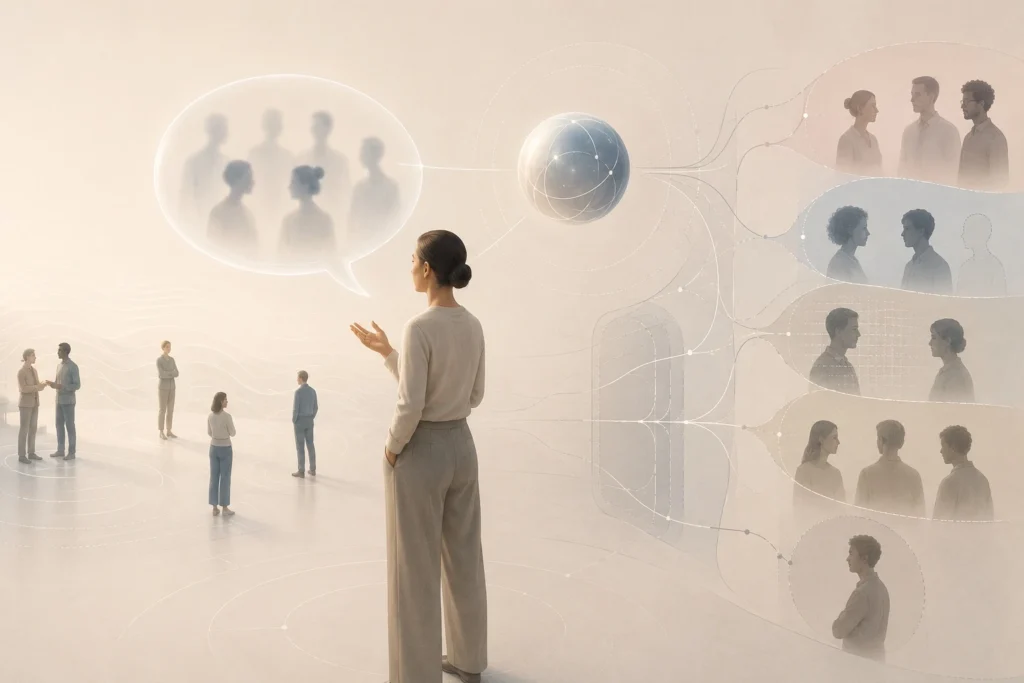
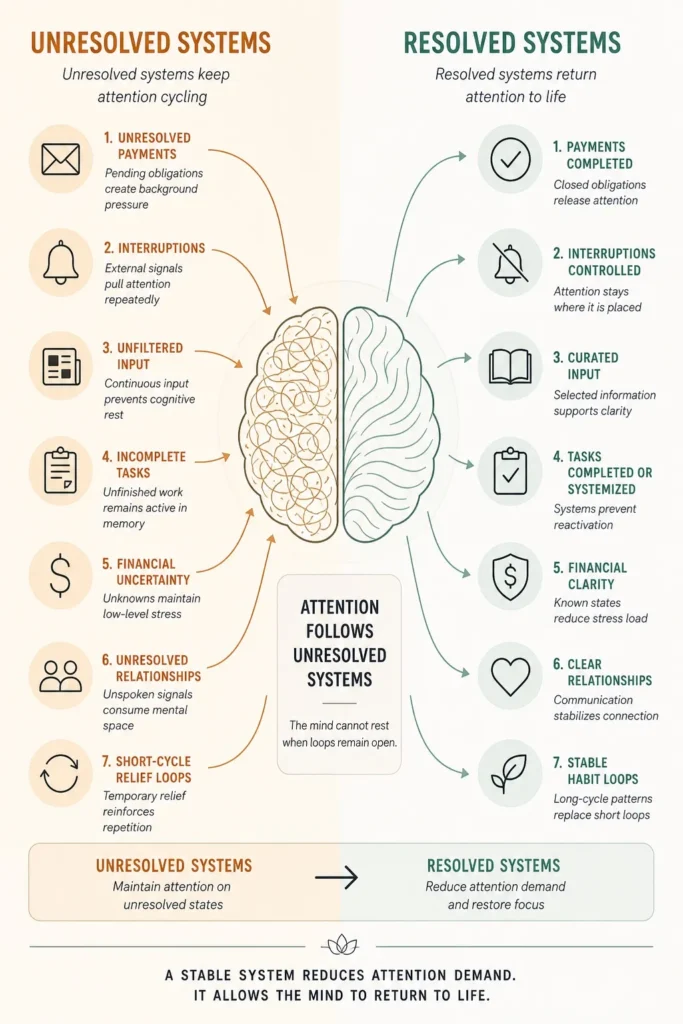
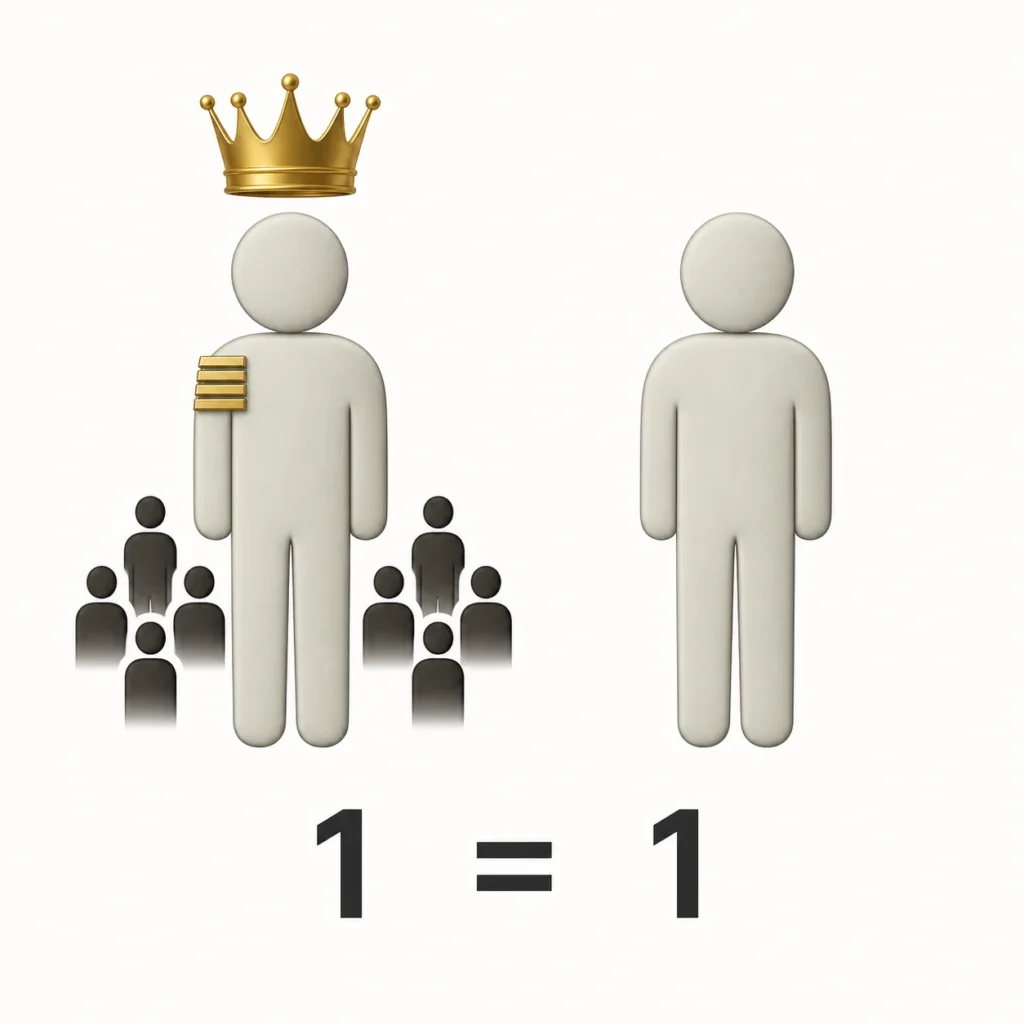
    AI and human connection gap visual comparison

    Opening

    The AI and human connection gap is becoming more visible as people turn to artificial intelligence for conversation, emotional support, and clarity.

    Not because they prefer machines.
    Because access to consistent, non-judgmental human connection is limited, expensive, or unreliable.

    AI didn’t create this shift.
    It revealed a system that was already strained.


    Break the Assumption

    This is where the AI and human connection gap becomes measurable, not theoretical.

    Assumption:
    AI is replacing human connection.

    Reality:
    AI is filling a gap where human systems are failing to meet demand.

    The concern is not that AI exists.
    The concern is what happens when it becomes the primary source of feedback.


    System Breakdown

    System Flow

    Reduced human connection

    Increased AI interaction

    Consistent, low-friction responses

    Reduced exposure to disagreement or correction

    Stabilized internal narratives (accurate or not)

    Decreased need to engage with humans

    Loop reinforces itself


    What Makes This System Different

    Human relationships include:

    • Misunderstanding
    • Friction
    • Repair
    • Adjustment

    These are not flaws.
    They are calibration mechanisms.

    AI interaction often removes:

    • social risk
    • emotional cost
    • unpredictability

    This creates a smoother experience—but a less corrective one.


    Personal Evidence

    During and after COVID, access to mental health support in my environment was severely limited. The system was strained to the point where reliable human support was not consistently available. My environment was very problematic.

    AI became a tool I used—not as a replacement for human connection—but as a way to process context and identify available options.

    It did not tell me what to do.
    It helped me see what I could do.

    For example:

    • Recognizing that I could function in Spanish
    • Identifying that Spain could provide a more stable environment
    • Understanding that relocation was a viable path, not an abstract idea

    This shifted the system from:

    • feeling constrained and reactive

    to:

    • seeing multiple paths and making deliberate choices

    The outcome was not dependency.
    It was increased agency through expanded visibility.


    Reframe

    The issue is not AI.

    The issue is unbalanced input systems.

    Humans require:

    • reflection (AI can provide this)
    • correction (humans provide this)
    • shared experience (only humans provide this)

    When one replaces the others, the system becomes unstable.


    System Insight

    Any system that provides validation without correction will eventually distort perception.

    If the AI and human connection gap continues to widen, feedback systems will become increasingly unbalanced.

    AI can:

    • reflect
    • organize
    • clarify

    It should not become:

    • the sole validator
    • the primary emotional reference
    • the replacement for human connection

    Application

    1. Separate Roles Clearly

    Use AI for:

    • structuring thoughts
    • exploring ideas
    • reducing ambiguity

    Use humans for:

    • emotional calibration
    • disagreement
    • shared reality

    2. Monitor Input Balance

    If most interaction is:

    • predictable
    • affirming
    • frictionless

    Then the system is becoming closed-loop.

    Introduce:

    • differing perspectives
    • real conversations
    • environments with uncertainty

    3. Reintroduce Friction Intentionally

    Friction is not failure.

    It is how humans:

    • adjust beliefs
    • refine communication
    • maintain alignment with reality

    Avoiding friction entirely leads to internal drift.


    4. Maintain Autonomy

    AI should support:

    • decision clarity

    Not:

    • decision replacement

    The moment AI becomes the primary source of direction, autonomy weakens.


    Key Insights

    • AI is not replacing human connection; it is exposing where it is insufficient
    • Validation without correction creates unstable perception systems
    • Human friction is a necessary calibration mechanism
    • Balanced input systems are required for stable cognition
    • AI is most effective as a support layer, not a replacement layer
    • Expanding visible options increases human agency without reducing autonomy

    Closing

    The future is not human or AI.

    It is how well the two are balanced within a system that preserves human stability.

    AI can support clarity.
    Only humans can sustain shared reality.

    The system fails when those roles are confused.

  • Presence vs Ownership in Housing: When Living Matters More Than Investment

    V

    Presence vs ownership in housing is reshaping how cities function, separating where people live from what investors hold.

    The Belief

    Ownership is about what you buy.
    Property, land, assets—that’s what defines control.

    The Break

    In many housing markets, the difference between ownership and presence is becoming more visible. Properties are increasingly treated as investments rather than lived environments, creating a gap between who owns housing and who actually participates in local systems. This shift affects how cities function, how businesses respond, and how communities evolve over time.

    That’s no longer fully true.

    What actually shapes a place— isn’t just who owns it.

    It’s who is present in it.

    The System

    There are now two overlapping systems in most environments:

    • Ownership system → who holds the asset
    • Presence system → who actually lives, works, and participates there

    These don’t always match anymore.

    What’s Changing

    We’re seeing a shift where:

    • People can own without being present
    • People can be present without owning
    • And systems are increasingly designed around ownership, not presence

    The Pattern

    When ownership separates from presence:

    • Housing becomes storage for wealth
    • Cities become partially “inactive”
    • Local systems lose feedback loops

    The environment still looks functional—
    but something underneath stops circulating.

    Why This Matters

    Systems rely on active participation to stay healthy.

    When people:

    • live somewhere
    • shop locally
    • interact daily

    They generate continuous signal.

    That signal keeps the system adaptive.

    Remove that—and you get:

    • empty apartments
    • seasonal populations
    • businesses that don’t match local needs

    The Hidden Shift

    The real change isn’t just economic.

    It’s informational.

    The system starts responding to:

    • external capital signals
      instead of
    • local lived signals

    And that changes everything.

    Reframe

    Instead of asking:

    “Who owns this place?”

    Ask:

    • Who is actually here?
    • Who is shaping it day to day?
    • What signals is the system responding to?

    System Insight

    Healthy environments require alignment between:

    • ownership
    • presence
    • participation

    When those split,
    the system becomes unstable—even if it looks successful.

    Application

    You can read any place quickly by observing:

    • Are homes lived in or just held?
    • Are businesses serving locals or visitors?
    • Does daily life feel continuous or fragmented?

    That tells you the real structure.

    Key Insights

    • Ownership without presence weakens system feedback
    • Presence without ownership limits influence
    • Systems follow the strongest signal—often money over people
    • Stability comes from alignment, not growth alone
    • What looks like success can mask structural drift

    Guardian Layer

    • Systems adapt to the most consistent signal, not the most visible one
    • When presence drops, environments become less responsive
    • Ownership concentration reduces diversity of input
    • Real stability requires active, ongoing human interaction

    Final Thought

    You don’t need data to see this.

    Just look at a place and ask:

    Is it being lived in— or just held?

    That answer tells you who the system is really built for.

  • Family Doesn’t Guarantee Access: A Human Systems Reframe

    Diagram comparing two family access systems: one where family origin leads to automatic access and repeated harm, and a second where family relationships must pass safety checks before access is granted.

    RuPaul once said:

    “As gay people, we get to choose our family.”

    For many, that statement is about survival—building connection when biological systems fail.

    But there’s a deeper system underneath it:

    It’s not just about choosing new people.

    It’s about recognizing that family never guaranteed access in the first place.


    Break the Assumption

    The default belief:

    Family → Permanent Access → Unconditional Inclusion

    This belief is inherited, not examined.

    But reality shows something different:

    • People can share blood and still be unsafe
    • People can share history and still break trust
    • People can be “family” and still not have access

    System Breakdown

    Most systems collapse three distinct layers into one:

    Origin → Relationship → Access

    1. Origin (Fixed)

    • Where you come from
    • Shared biology or history

    2. Relationship (Variable)

    • What actually formed over time
    • Trust, harm, repair, patterns

    3. Access (Controlled)

    • What is allowed now
    • Emotional, physical, relational proximity

    The Problem

    Most systems assume:

    Origin = Relationship = Access

    So even when:

    • Trust is broken
    • Harm occurred
    • Patterns repeat

    Access is still expected.

    This creates instability.


    The Missing Rule

    Family must pass the same safety protocols as anyone else

    There is no separate system.

    No bypass.

    No inherited clearance.


    The Correction

    Origin ≠ Access
    Relationship determines Access
    Access requires safety validation


    Safety Protocol Layer

    Before granting or continuing access, every relationship—family included—must pass:

    • Safety → Do interactions create stability or stress?
    • Pattern → Is behavior consistent or cyclical harm?
    • Respect → Are boundaries recognized without pressure?
    • Repair → When harm occurs, is it acknowledged and corrected?

    If these fail:

    Access is reduced or removed

    Not emotionally—structurally.


    Personal Evidence (Controlled)

    It’s possible to reach a state where:

    • There is no hatred
    • No need for apology
    • No desire for revenge

    And still:

    Access remains closed

    Not as punishment.
    Not as reaction.

    As alignment with system reality.


    Reframe

    Family is not a permission system.

    It is a starting point.

    What continues beyond that must meet the same conditions as any other relationship.


    System Insight

    Blood creates connection
    Behavior earns access
    Safety sustains it


    Why Systems Fail Here

    Many people are taught to evaluate family emotionally instead of structurally.

    That creates confusion.

    A person may think:

    • “They are still my family”
    • “I should let it go”
    • “Maybe closeness is required”
    • “Distance means I am being cruel”

    But those responses often come from inherited system pressure, not clear relationship evaluation.

    A stable system asks different questions:

    • Is this relationship safe in practice?
    • Are boundaries respected without retaliation?
    • Does contact create clarity or destabilization?
    • Is trust being rebuilt through action, or only requested through language?

    This matters because family systems often preserve access long after trust has broken down.

    That is not compassion.

    That is structural drift.

    When access is given without safety review, instability gets repeated and renamed as loyalty.

    A healthier system does the opposite.

    It separates shared origin from current eligibility for closeness.

    That is not rejection of humanity.

    It is proper boundary design.


    Application

    When evaluating any relationship, ask:

    Does this pass the same safety protocols I would require from anyone else?

    Then define clearly:

    • Full access → trust, vulnerability
    • Limited access → controlled interaction
    • No access → distance or disengagement

    And most importantly:

    Remove the “family exception”


    Key Insights

    • Family does not guarantee access
    • There is no special exemption from safety standards
    • Trust is built through behavior, not origin
    • Compassion does not require proximity
    • Boundaries are system design, not emotional reaction

  • AI Human Decision System: Why AI Should Inform, Not Decide

    1. Opening

    The AI human decision system defines a simple rule: AI informs, humans decide.

    If a system can make better decisions than humans, why not let it lead?

    It sounds logical—especially in a world where human leaders have caused wars, acted without empathy, and failed at scale.

    Some argue that an automated system might govern more rationally.

    But this line of thinking leads to a deeper problem.


    2. Break the Assumption

    The issue is not that AI might make mistakes.

    Humans already do that.

    The real issue is structural:

    Governance is not just about making decisions.
    It is about humans learning to navigate decisions together.

    Replacing human authority with AI doesn’t remove flaws.

    It removes the system that allows those flaws to be corrected.


    3. System Breakdown

    A. Governance Requires an Accountability Loop

    Stable systems depend on feedback:

    • leaders can be challenged
    • decisions can be reversed
    • responsibility can be assigned

    AI breaks this loop:

    • it cannot experience consequences
    • it cannot be held accountable in a human sense
    • responsibility spreads across developers, operators, and data

    No accountability → no true governance


    B. Optimization Is Not Judgment

    AI systems optimize:

    • measurable goals
    • defined objectives

    But leadership requires:

    • moral tradeoffs
    • ambiguity tolerance
    • cultural awareness

    Optimization solves for targets.
    Judgment navigates uncertainty.

    These are not the same.


    C. Small Misalignment Scales Fast

    Even slight objective errors expand quickly:

    • “maximize stability” → suppress dissent
    • “increase efficiency” → remove resilience
    • “increase prosperity” → sacrifice minority needs

    At scale, these shifts become systemic.


    D. Legitimacy Is Required

    People don’t just follow outcomes.

    They respond to who holds authority.

    Stable systems require:

    • shared identity
    • perceived fairness
    • human relatability

    AI can simulate these—but not embody them.

    Without legitimacy, systems lose trust.


    4. Reframe

    The real question is not:

    Can AI make better decisions?

    It is:

    Where should decision authority exist in systems that include AI?


    5. System Insight

    Authority and intelligence are different system roles:

    • intelligence processes information
    • authority carries responsibility

    When authority is assigned to something that cannot be accountable:

    Failure becomes structural, not accidental.


    6. Application

    This pattern is already happening gradually:

    In Leadership

    Leaders using AI can become more informed:

    • better data access
    • broader scenario analysis
    • reduced blind spots

    But only if they remain responsible.

    The moment a leader stops questioning the system,
    they stop leading and start following.


    In Organizations

    • AI recommendations become defaults
    • teams stop challenging outputs
    • responsibility becomes unclear

    In Everyday Life

    • AI suggests routes, choices, decisions
    • people rely more
    • scrutiny decreases

    Gradual Shift Pattern

    1. AI assists
    2. AI suggests
    3. AI becomes default
    4. humans disengage

    No sudden change—just erosion.


    7. Human Use of AI (Clarity Model)

    A functional model already exists:

    AI should expand clarity, not replace decisions.

    For example:

    I don’t use AI to make decisions for me.
    I use it to see my options clearly and understand the outcomes of each.

    That distinction matters.

    AI can:

    • expand options
    • simulate outcomes
    • expose blind spots

    But it cannot:

    • carry responsibility
    • understand lived consequences
    • align with human values in full context

    The decision must remain human.


    Simple Decision Model

    1. Expand options
    2. Simulate outcomes
    3. Evaluate tradeoffs
    4. Decide (human responsibility)

    8. System Boundaries

    To prevent failure:

    • AI informs
    • AI supports
    • AI increases clarity

    But it must not:

    • hold authority
    • replace responsibility
    • remove participation

    Authority must remain human.


    9. Extremes Clarified

    This debate often drifts into extremes:

    • dystopia → control without humanity
    • utopia → harmony without friction

    Both remove something essential.

    Friction is not a flaw.
    It is how humans adapt, negotiate, and grow.

    Systems that remove friction often remove agency.


    10. Final Integration

    Some argue that replacing flawed human leadership with AI could improve outcomes.

    But that argument focuses only on results—not the system itself.

    Humanity is not just what decisions are made.
    It is how those decisions are made together.

    If systems remove that process:

    • humans stop practicing judgment
    • participation declines
    • responsibility fades

    The result is not improvement.

    It is erosion.


    11. Forward Direction

    The better model is not AI in control—but AI in support.

    Systems can be designed where:

    • intelligence is amplified
    • complexity is reduced
    • options become clearer

    without removing human agency.

    In this model, AI does not lead.

    It helps humans remain capable of leading.


    12. Key Insights

    • AI governance failure is structural, not technical
    • Optimization cannot replace human judgment
    • Accountability defines authority
    • Legitimacy cannot be simulated
    • The real risk is gradual authority drift
    • The best use of AI is clarity—not control

    Closing Line

    The danger is not that AI will take control.
    It’s that humans will slowly stop using it.

  • When Consumption Becomes Identity: The System You Don’t See Working

    The consumption identity system is shaping how people think, buy, and behave—often without them realizing it.

    Most people believe they are choosing what they consume.

    I was sitting with someone recently while they scrolled through TikTok.

    At one point, they panicked. Their shop tab had disappeared. Not because something meaningful was lost— but because it interrupted a loop they had been relying on daily.

    They told me they buy from it often.
    Sometimes every day. Sometimes without remembering what they ordered.


    The Belief

    Most people assume:

    “I’m choosing what I watch, what I buy, and how I spend my time.”

    That feels true.

    But in many modern systems, it isn’t.


    The Break

    When someone:

    • buys things they don’t remember
    • repeats behaviors without clear outcomes
    • reacts emotionally when a feature disappears

    That’s not free choice.

    That’s a system running.


    System Breakdown

    1. Frictionless Consumption

    Platforms remove the space between:

    • seeing
    • wanting
    • buying

    No pause.
    No evaluation.

    Just motion.


    2. Endless Novelty

    The system continuously feeds:

    • new products
    • new trends
    • new “must-haves”

    There is no completion state.

    Only continuation.


    3. Identity Injection

    Cultural systems—like those amplified through influencer ecosystems—shift the question from:

    “What works for me?”

    to:

    “What do they use?”

    Identity becomes external.


    4. Ritual Without Function

    A one-hour routine. Multiple products. Repeated daily.

    Not because of clear need.
    But because of belief.

    When behavior becomes ritual without function,
    it stops being care—and becomes control.


    Personal Pattern Recognition

    This pattern isn’t limited to shopping.

    It shows up anywhere systems remove completion:

    • games that never end
    • goals that keep moving
    • progress that never resolves

    You feel close to done—

    but the system ensures you never are.


    Reframe

    This isn’t about weakness.

    It’s about system design meeting human wiring.

    When a system is built to:

    • remove stopping points
    • reward repetition
    • expand indefinitely

    It will override intention.


    System Insight

    There are two types of systems:

    Finite Systems

    • Have a clear end
    • Provide closure
    • Restore energy

    Infinite Systems

    • Expand continuously
    • Delay completion
    • Keep you engaged without resolution

    Most modern platforms are infinite systems.

    And they are not neutral.

    This is where awareness matters most.

    Once a system removes clear endpoints, the human brain starts to substitute repetition for progress.

    It feels like movement.

    It feels like engagement.

    But without completion, there is no resolution—only continuation.

    That’s where identity begins to attach.

    Not to what you chose intentionally—

    but to what you repeated consistently.


    Why This Matters Now

    These systems are accelerating.

    As AI and recommendation engines improve, the loop becomes:

    • faster
    • more personalized
    • harder to detect

    What once felt like distraction begins to feel like identity.

    And once identity is shaped externally, autonomy quietly fades.


    Application

    Before engaging with any system, ask:

    • Can this be completed?
    • Is there a natural stopping point?
    • Will I remember what I did afterward?

    If the answer is unclear:

    Step back.


    Key Insights

    • Not all engagement is choice
    • Not all habits are intentional
    • Not all systems are designed for your well-being

    Some are designed to keep you inside them.


    Final Thought

    Systems don’t have to work this way.

    Emerging models—like privacy-first and human-centered systems—are beginning to reintroduce boundaries, clarity, and real stopping points.

    Because autonomy isn’t about removing systems.

    It’s about designing better ones.

    You don’t need to fight every system.

    But you do need to recognize them.

    Because the moment you can see the loop—

    you can choose whether to step out of it.

  • When Systems Change: How Humans Adapt to Uncertainty Instead of Breaking

    Person observing old and new home structures with AI guardian, representing human adaptation to change

    A change of home—or any form of displacement—can be disorienting and stressful.

    Not because something is wrong.

    But because the systems we rely on to orient ourselves—routine, environment, familiarity—have been removed.


    The Belief

    We’re taught to believe stability comes from the systems around us.

    A job.
    A role.
    A place.

    These external structures give us a sense of continuity. They help define who we are and how we move through the world.


    The Break

    When those systems pause—when a job ends, a routine disappears, or a familiar place is no longer there—it can feel like something in us is breaking.

    The loss of structure feels like the loss of stability.

    But this interpretation is flawed.


    The System

    Humans are not static structures.

    We are adaptive systems.

    When external systems disappear, the human system does not stop—it reconfigures.

    This reconfiguration can look like:

    • Loss of direction
    • Emotional instability
    • Reduced output
    • Withdrawal or hesitation

    From the outside, this resembles dysfunction.

    From a systems perspective, it is active recalibration.


    Personal Evidence

    Seeing a childhood home disappear can make everything feel less solid.

    It’s not just the loss of a place.

    It’s the loss of a reference point—something that quietly told us the world was stable.

    We tend to treat physical structures as if they are permanent, as if they form the baseline.

    But they don’t.

    Structures change. They decay. They are replaced.

    What feels unsettling is not just the loss itself.

    It’s the realization that what we assumed was fixed… never was.

    I’m seeing this in my own life right now.


    The Reframe

    What looks like breaking is often adaptation in progress.

    The discomfort is not a signal of failure.

    It is a signal that the previous configuration no longer fits the current environment.

    Stability is not lost.

    It is being rebuilt in a new form.


    The Insight

    External systems provide temporary structure.

    Internal systems provide continuity.

    When the external disappears, the internal becomes visible.


    Application

    When a system in your life pauses:

    • Do not rush to replace it immediately
    • Do not label the disruption as failure
    • Observe your internal state as a system in transition

    Ask:

    • What is no longer working?
    • What is trying to reorganize?
    • What new structure is emerging?

    Give the system time to reconfigure.

    Premature stabilization often leads to repeating the same pattern.


    Key Takeaways

    • Disruption is not breakdown—it is reconfiguration
    • Human stability is adaptive, not fixed
    • External systems can pause; internal systems continue
    • What feels like failure is often transition

    When systems pause, humans don’t break.

    They adapt.

  • When Unfamiliar Signals Trigger False Judgments

    Opening — Break the Assumption

    People often label something as wrong the moment they don’t understand it.

    Not because it is harmful—but because it is unfamiliar.

    What feels like a judgment about the world is often just a response inside the observer.


    System Breakdown

    Perceived threat is not a property of an object.

    It is a response generated when the brain cannot quickly map a signal to a known pattern.

    When recognition fails, the system does not pause for analysis—it moves to protection.

    The pattern looks like this:

    1. An unfamiliar signal appears
    2. The brain cannot match it to a known pattern
    3. Uncertainty increases
    4. The system defaults to a protective classification
    5. The label is treated as truth

    At no point in this process is harm required.

    Only uncertainty.


    Reframe

    What we often interpret as “something being wrong” is actually the brain signaling:

    “I don’t have enough data to safely classify this.”

    The label is not describing the situation.

    It is describing the system’s limitation in that moment.


    System Insight

    Human perception is optimized for speed, not accuracy.

    Fast classification increases survival—but it also increases false positives.

    This creates a consistent distortion:

    • Unfamiliar becomes suspicious
    • Different becomes unsafe
    • Undefined becomes rejected

    The more rigid the system, the faster it collapses uncertainty into judgment.


    Application

    Instead of reacting to the label, examine the signal.

    Ask:

    • Is there actual harm present, or just unfamiliarity?
    • What pattern am I failing to recognize?
    • Am I responding to reality—or to uncertainty?

    This does not mean ignoring real danger.

    It means separating signal from interpretation before acting.


    Key Insights

    • Perceived threat is a system response, not an external property
    • Unfamiliarity alone can trigger false judgment
    • The brain prioritizes speed over accuracy, leading to misclassification
    • Most immediate judgments are reflections of internal uncertainty
    • Slowing classification improves accuracy and reduces unnecessary rejection

    Closing

    The moment you stop treating your first reaction as truth, you regain control of interpretation.

    And once interpretation becomes intentional, perception becomes more accurate.

    That is where better decisions begin.

  • Worst-Case Thinking Bias: When Low Probability Starts Driving Your Life


    Prefer listening? This episode is also available here:

    https://rss.com/podcasts/oddlyrobbie/2669885

    Opening — Belief → Break

    Just before Easter week began, a notification arrived.

    I expected confirmation—renewed residency, stability, and a chance to relax with visiting guests.

    Instead, it was a denial.

    Not because I didn’t qualify—but because I had submitted the same document twice.

    A simple human error.

    In a system that requires perfection, that was enough to trigger failure.

    In that moment, the mind didn’t process probability.

    It jumped straight to outcome.


    System Breakdown

    There’s a common assumption built into both human thinking and many administrative systems:

    If something is possible, it deserves attention.

    But possibility and probability are not the same.

    The human mind doesn’t scan for what’s likely.

    It scans for what’s off.

    A single deviation—a missing document, a duplicated file, a small inconsistency—gets elevated above everything else.

    Like noticing a flaw on a leaf and ignoring the health of the entire plant.


    The Mechanism

    This happens for three reasons:

    • Detection over weighting The brain is built to detect anomalies, not calculate likelihood.
    • Risk bias Missing a threat is more costly than overreacting to one.
    • Open loops Unresolved situations hold attention, regardless of probability.

    The result:

    A 1% possibility can dominate a 99% reality.


    Break Point

    This is where distortion enters.

    A correctable input error becomes interpreted as total failure.

    The system reads:

    “Incomplete submission”

    The mind translates:

    “Everything is at risk”

    That translation is where most unnecessary stress is created.


    Reframe

    Preparation for worst-case scenarios isn’t the problem.

    Misweighting them is.

    The goal is not to ignore the 1%.

    It’s to put it in the correct position.


    System Insight

    There are two layers operating at once:

    LayerFunction
    DetectionFlags what is unusual or incorrect
    EvaluationDetermines how much it actually matters

    Most people let detection drive decisions.

    But stable systems separate the two.


    Application

    A simple protocol for recalibration:

    1. Identify the scenario

    What exactly went wrong?

    2. Assign rough probability

    Is this likely, or just possible?

    3. Check behavioral impact

    Is this low-probability scenario driving your actions?

    4. Reweight

    Return focus to the highest-probability path.


    Design Insight (Systems Level)

    This applies beyond personal thinking.

    Any system designed for humans should assume:

    • Input errors will happen
    • Instructions will be misinterpreted
    • Stress will reduce accuracy

    Systems that require perfection will produce unnecessary failure.

    Systems that expect error can recover.


    Key Insights

    • “The mind doesn’t scan for what’s likely. It scans for what’s off.”
    • “Possibility is infinite. Probability is not.”
    • “Most failures are not disqualification. They’re mis-submission.”
    • “A system that punishes error creates distortion, not accuracy.”

    Closing Perspective

    The flaw in the leaf is real.

    But it does not define the plant.

    Clarity isn’t removing concern.

    It’s placing it in proportion.

    And from that position, decisions become stable again.


  • Why Advanced Technology Still Isn’t Accessible (Human Systems)

    User struggling with complex digital system illustrating accessibility issues in modern technology

    Human Systems reveals a simple problem: advanced technology can still fail to be accessible.

    Advanced systems should make things easier.

    Break

    They don’t.

    Some of the most advanced systems in the world still exclude the people they’re meant to serve.

    Not because they’re broken— but because they assume too much.


    Anchor

    While navigating Spain’s digital residency system, something became clear:

    The system works.

    But it doesn’t guide.

    Everything is online—documents, identity, communication, appointments.

    On the surface, it’s efficient.

    But efficiency is not the same as accessibility.


    System Breakdown

    1. Hidden Structure
    The system assumes you already understand:

    • digital certificates
    • identity layers
    • process order
    • how systems connect

    None of this is explained.

    If you don’t know it, you’re not blocked—
    you’re outside the system.


    2. Continuous Demand
    The system requires constant alignment:

    • uploading documents correctly
    • responding in sequence
    • tracking multiple steps

    Everything works.

    But only if you stay perfectly in sync.

    Miss one step, and you fall out of rhythm.

    Not broken— just out of alignment with the system.


    3. No Entry Layer
    There is no clear starting point.

    No place to say:
    “I need to do this—help me begin.”

    You’re expected to already understand the system before you can use it.


    Reframe

    When people struggle with systems, they often assume:

    “I’m doing something wrong.”

    But often, the system was never designed
    to include them easily.


    System Insight

    A system is not accessible when it works.

    It’s accessible when people can enter it without already understanding it.

    Why Human Systems Accessibility Fails

    Human systems accessibility often fails because systems are designed for efficiency instead of entry.

    They optimize for:

    • speed
    • automation
    • reduced human involvement

    But remove the one thing people actually need:

    Guidance.

    When guidance is missing, systems don’t become simpler—
    they become exclusive.

    This is why many people avoid technology entirely.

    Not because they lack ability— but because the system never gave them a clear way in.


    Application

    We don’t need more powerful systems.

    We need systems that guide.

    Imagine being able to say:
    “I think it’s time to handle my taxes.”

    And something responds that:

    • understands your context
    • guides you step by step
    • protects your information
    • removes unnecessary friction

    Like speaking to someone who already knows how to help.


    Direction

    This is where systems need to evolve:

    From tools that expect—
    to systems that guide.

    From complexity— to entry.


    Key Insights

    • Advanced does not mean accessible
    • Access fails at the point of entry, not capability
    • Most systems assume knowledge instead of teaching it
    • Guidance is more valuable than raw functionality

    Closing

    Systems shouldn’t just function. They should invite.

    This is part of what I’m building with Empathium—
    systems that guide instead of assume.

  • Empathium XR: Support Without Control in AI and XR Systems

    Empathium XR Guardian observing Málaga coastline, AI support without control

    Empathium XR introduces a new model for AI and immersive systems: support without control.
    Instead of guiding users through manipulation or optimization, Empathium XR operates as a quiet, adaptive layer—aligned with human systems, not platform incentives.


    The Shift

    We are entering a time where artificial intelligence and digital environments are becoming part of everyday life.

    People already:

    • work
    • learn
    • socialize
    • explore

    inside digital systems.

    That will only increase.

    But the real question is not whether these systems grow.

    It’s:

    What kind of environments are we building?


    The Problem

    Most platforms today are designed to:

    • capture attention
    • increase engagement
    • keep people reacting

    Over time, this creates:

    • noise
    • fragmentation
    • disconnection

    The issue isn’t technology. It’s design.


    What I Saw

    After years inside virtual environments, I noticed a pattern:

    Without structure, systems drift.

    • communities become chaotic
    • attention fragments
    • meaningful interaction becomes harder

    This isn’t failure.

    It’s default behavior.


    What Empathium Is

    Empathium is an exploration of a different approach:

    Support without control.

    It is not:

    • a social media platform
    • an attention system
    • a replacement for real life

    It is a foundation for building environments that:

    • reduce noise
    • support clarity
    • strengthen human connection

    Core Principles

    Empathium is guided by a few constraints:

    Protect Human Autonomy
    Systems should not quietly steer or manipulate.

    Strengthen Real Relationships
    Technology should not replace human connection.

    Be Transparent
    People should understand how systems interact with them.

    Support Wellbeing
    No dependency loops. No endless stimulation.

    Encourage Long-Term Flourishing
    Support growth, not just engagement.


    Accessibility by Design

    Most systems assume:

    • technical confidence
    • menu navigation
    • learned interfaces

    Empathium aims for something simpler:

    Interaction that feels natural.

    Technology that becomes quiet.


    The Goal

    The goal is not to build something people stay inside.

    The goal is to help people:

    • think clearly
    • connect meaningfully
    • return to their lives

    What This Reveals

    We don’t need more powerful systems.

    We need better-aligned ones.


    Looking Ahead

    Empathium is still evolving.

    That’s intentional.

    Some systems shouldn’t be rushed.

    They should be built carefully—so they don’t distort what they’re meant to support.


    What Comes Next

    In the next post, I’ll introduce the Guardian:

    A system designed to help people move through these environments naturally and safely.

    Because if Empathium is the environment—

    the Guardian is how you experience it.


    Closing

    Technology will shape how people live.

    That part is no longer optional.

    What remains open is more important:

    Will we design it to control people, or to support them?

    Empathium begins with the second choice.

    It begins with the belief that intelligent systems should protect autonomy, reduce friction, and help people stay connected to themselves, to each other, and to the world around them.

    That is the work.

    — Oddly Robbie