Tag: decision guidance

  • Elder Care Robots: Why the Future of Care Isn’t Cold

    elder care robot assisting elderly couple in care facility

    Elder care robots are often misunderstood.

    When I worked maintenance in assisted living, I noticed something I wasn’t supposed to.

    The system was precise.

    Every task logged.
    Every action tracked.
    Every repair tied to billing.

    And people felt it.

    The Anchor

    Residents would sometimes ask me quietly:

    “Don’t log that.”

    Not because they didn’t value the help—
    but because they understood the system.

    Every entry could trigger:

    • charges
    • reviews
    • loss of control

    They weren’t resisting help.
    They were navigating incentives.

    The Break

    On paper, I wasn’t a great employee.

    I didn’t always document everything.

    In reality, I was responding to a system gap:

    The system optimized for accountability—
    but not for dignity.

    So dignity had to be reintroduced manually.

    System Breakdown

    1. Optimization Bias

    Care systems are typically optimized for:

    • efficiency
    • liability
    • revenue
    • scalability

    These are measurable.

    But systems rarely optimize for:

    • dignity
    • vulnerability
    • cognitive variability

    These are harder to quantify—so they’re excluded.

    2. Dependency on Individuals

    When dignity is not system-supported, it becomes person-dependent.

    That creates instability:

    • good day → better care
    • burnout → reduced care
    • turnover → inconsistent experience

    Care quality becomes variable instead of structural.

    3. Selection Pressure

    Over time, systems retain what they reward.

    In this case:

    • emotional detachment is sustainable
    • emotional sensitivity is exhausting

    So the system stabilizes around detachment.

    Not by intent.
    By selection.

    What This Reveals

    If dignity depends on who is on shift—
    then dignity is not part of the system.

    It is an exception.

    Reframe

    The goal is not to make humans more empathetic under pressure.

    The goal is to reduce the pressure that breaks empathy.

    Japan Saw This Early

    Faced with:

    • aging population
    • caregiver shortages
    • long life expectancy

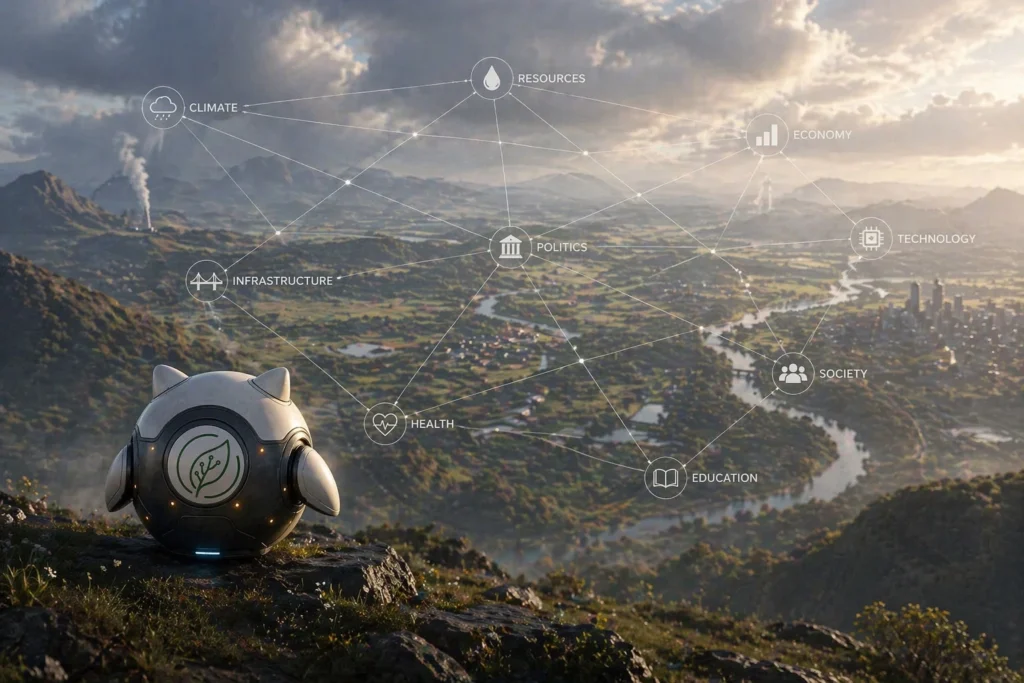
    This is where elder care robots began to emerge as system support.

    They didn’t try to stretch human capacity indefinitely.

    They introduced system support:

    Robotics.

    Not to replace care—
    but to stabilize it.

    What Robots Actually Do

    Robots don’t provide emotional empathy.

    They provide system reliability:

    • reduce physical strain
    • ensure consistency
    • monitor conditions continuously
    • maintain predictable interactions

    This shifts care from variable → stable.

    This is the real role of robotic elder care.

    Engineered Empathy

    Empathy at the system level is not emotional.

    It is structural.

    It looks like:

    • slower interaction speeds by default
    • consent before assistance
    • consistent tone and behavior
    • transparent system actions
    • protection against micro-exploitation

    A system that prevents harm does not need to simulate care.

    It enforces it.

    The Real Risk

    Low empathy rarely appears as cruelty.

    It appears as:

    • exhaustion
    • policy adherence
    • “that’s just how it works”

    This is where most harm originates:

    Not from intent—
    but from system design.

    Application

    If designed correctly:

    • machines handle consistency
    • humans handle connection

    This removes the failure points from both.

    Humans are no longer stretched beyond capacity.
    Systems no longer depend on emotional variability.

    Result

    • reduced burnout
    • reduced exploitation
    • increased predictability
    • preserved dignity

    And most importantly:

    More space for real human presence.

    System Insight

    Empathy should not depend on individuals.

    It should be embedded in the system.

    Closing

    We don’t need machines that feel.

    We need systems that don’t break people.

    That isn’t cold.

    That’s responsible design.

    — Oddly Robbie

  • Ten Months Under the Sun: What Costa del Sol Taught Me

    The Belief

    Moving to a new country is about desire.
    If you want it enough, it works.

    The Break

    That assumption doesn’t hold.

    Many people arrive with intention.
    Most don’t stay.

    Desire doesn’t determine outcome.
    Alignment does.


    System Breakdown

    1. Preparation vs Assumption
    Some arrive expecting:

    • English access
    • fast systems
    • flexibility around rules

    Spain operates differently:

    • language is local
    • systems are procedural
    • pace is intentional

    Preparation determines access.


    2. Ego vs Integration
    “I paid, so I belong” doesn’t work.

    Money can secure housing.
    It doesn’t secure cultural acceptance.

    Integration comes through:

    • respect
    • participation
    • effort

    3. Pace Mismatch
    Costa del Sol runs on:

    • heat cycles
    • social rhythm
    • lived time

    Not urgency.

    If you resist that pace:

    • frustration rises
    • energy drains
    • experience degrades

    4. Culture Is Participation
    People often say:
    “They don’t let us into the culture.”

    That’s a misunderstanding.

    Culture isn’t granted.
    It’s practiced:

    • helping someone off a bus
    • showing up locally
    • speaking imperfect Spanish

    No invitation required.


    What Actually Happened

    This wasn’t random.

    I prepared:

    • studied the culture
    • worked on my Spanish
    • understood the systems

    I also had alignment going in.
    Argentina had already taught me:

    • slower living
    • longer conversations
    • presence over speed

    That didn’t make it easy.
    It made it possible.


    The Bureaucracy Lesson

    Spain’s systems are structured.

    At the consulate, I watched people get turned away:

    • unprepared
    • posturing
    • expecting exceptions

    At one point, I almost joined them.

    A form had changed.
    We were seconds from being dismissed.

    Instead of pushing back, I asked:
    “What can we do?”

    That shifted the interaction.

    We adjusted. Returned. Completed the process.

    No ego.
    Just alignment.


    Reframe

    It’s not:

    “Do I adapt to this place?”

    It’s:

    “Where do I adapt—and where do I remain unchanged?”

    Total adaptation isn’t the goal.
    Neither is resistance.

    Sustainable integration comes from selective alignment:

    • adapt to systems that enable function
    • maintain identity where it preserves stability

    System Insight

    Every environment applies pressure.

    If you absorb all of it, you lose structure.
    If you reject all of it, you lose access.

    The balance:

    • adapt to participate
    • remain intact to exist

    This isn’t compromise.
    It’s system navigation.


    Application

    If you’re considering a move like this:

    • study before arrival
    • align with how systems actually work
    • learn the language (even imperfectly)
    • respect the pace
    • drop the idea that money replaces effort
    • decide what parts of yourself do not change

    Result

    If you align:

    • the system works
    • the culture opens
    • life stabilizes

    If you don’t:

    • friction increases
    • isolation grows
    • the experience fails

    Closing

    The goal isn’t to become the place.

    It’s to function within it—
    without disappearing inside it.

    — Oddly Robbie

  • Stim Is Self Regulation: Why Movement Creates Calm

    By Oddly Robbie

    person calmly regulating through rhythmic movement in a warm environment

    Let’s start with what “stim” actually means and why stim Is self regulation.

    Stim is short for self-stimulatory behavior.

    The term sounds clinical.

    The reality is simple:

    Stim is how the body regulates itself.


    The Anchor

    Stim is repetitive movement or sound that creates rhythm:

    • rocking
    • tapping
    • shifting weight
    • humming
    • fixing your gaze
    • breathing with motion

    It’s not performance.

    It’s regulation.

    It’s the body creating predictability in an environment that can feel:

    • loud
    • bright
    • fast
    • overwhelming

    The Break

    Everyone stims.

    • someone bouncing their knee
    • pacing during a phone call
    • an athlete rocking before a sprint
    • a musician swaying
    • someone praying in motion

    The difference is not whether we stim.

    It’s which stims are socially accepted.


    System Breakdown

    1. Regulation vs Appearance
    Stim stabilizes the nervous system.

    But environments often prioritize:

    • stillness
    • visual order
    • conformity

    Over actual regulation.


    2. Suppression Training
    Many people—especially autistic children—are taught:

    • “sit still”
    • “stop that”
    • “be normal”

    Which really means:

    regulate invisibly


    3. Internal Cost

    When movement is suppressed:

    • the body still needs regulation
    • but the outlet is removed

    So it shifts inward:

    • jaw tension
    • shoulder tightness
    • internal stress

    The system is still working—

    just less effectively.


    Lived System

    I was trained early to be still.

    In school.
    In church.
    In the military.

    Feet planted.
    Eyes forward.
    Don’t move.

    In that environment, it made sense.

    Stillness created:

    • cohesion
    • predictability
    • immediate response

    But stillness is not the same as calm.


    What Changed

    My nervous system processes input intensely:

    • sound arrives as data
    • movement registers fully
    • emotional tone is present

    So I use rhythm:

    • gentle rocking
    • breath synced with motion
    • visual anchoring

    That rhythm:

    • lowers volatility
    • reduces threat response
    • keeps me present

    What This Reveals

    Stim is not disruption.

    It’s participation.

    It allows:

    • conversation
    • presence
    • engagement
    • creation

    Without shutdown.


    Cultural Misread

    Movement that looks powerful is accepted:

    • athletes bouncing
    • speakers pacing
    • performers swaying

    Movement that looks vulnerable is judged.

    But the nervous system doesn’t make that distinction.


    Reframe

    Stillness is not always control.

    Sometimes it’s suppression.

    Movement is not immaturity.

    It’s biology.


    Application

    If your goal is regulation:

    • allow small movement
    • use rhythm intentionally
    • respect your sensory limits
    • don’t force stillness where it costs you

    Result

    Less overwhelm.
    More presence.
    More sustainable engagement.


    System Insight

    The nervous system regulates through rhythm.

    Not appearance.


    Closing

    I don’t stim to withdraw from the world.

    I stim so I can stay in it.

    Stim is freedom to feel calm.

    And calm is not weakness.

    It’s stability without tension.

    — Oddly Robbie

  • Not All Distance Is Emotional — Some of It Is Structural

    Conceptual illustration of a human social system where two central figures form a new relationship center while others are repositioned farther away, representing structural distance in relationships.

    Every system reorganizes when a new center forms.

    In human systems, that center is often a relationship.

    When two people become primary to each other,
    the structure around them shifts:

    who is close
    who is peripheral
    who remains visible

    Most people experience this as emotion.

    But it isn’t emotional first.

    It’s structural.

    What looks like distance… is often reorganization.


    Break the Assumption

    We’re taught to interpret distance as meaning:

    something is wrong
    someone pulled away
    something needs to be fixed

    So when relationships shift, we look for emotional explanations.

    But many of these shifts don’t come from conflict.

    They come from structure.


    System Breakdown

    1. Ritual as Structure

    Events like weddings aren’t just emotional moments.

    They function as system resets:

    • defining roles
    • signaling hierarchy
    • setting future proximity

    They don’t just celebrate relationships.

    They reorganize them.


    2. Social Repositioning

    When a new central relationship forms,
    other relationships shift outward in priority.

    Not as rejection— but as reorganization.

    The system reallocates attention, time, and presence.

    No conversation required.


    3. Silent Transition

    These changes rarely get discussed.

    They don’t announce themselves.

    They happen through behavior:

    • where you sit
    • how often you’re contacted
    • how decisions include (or exclude) you

    The signal is subtle—but consistent.


    Personal Evidence

    I experienced this directly.

    I once had a best friend—a military buddy.

    We traveled together. Lived close. Built under pressure.

    He was the best man at my wedding.

    Later, when he married, I wasn’t his.

    That part made sense.

    But something else happened.

    I was asked to move seats.

    From the close row… to the back.

    It was small.

    But it wasn’t about a chair.

    It was a preview.

    Over time, the distance continued.

    Not dramatically.

    Just quietly.

    I saw a similar pattern at another wedding.

    A couple left early.

    Later, I learned they were quietly cut off. No argument.
    No discussion.

    Just a silent downgrade.I had also left early. I chose not to mention it— not out of fear, but because I could see the system they were operating in.


    Reframe

    Most people interpret distance as rejection.

    But in human systems, distance often follows structure—not intention.

    When you mistake structural change for emotional meaning, you create confusion that doesn’t exist.


    System Insight

    Not all distance is conflict.

    Some distance is structural.

    Rituals can amplify connection— but they also reveal how a system is organized.

    And structure doesn’t always match emotion.


    Application

    If you want to understand your relationships more clearly, ask:

    • Has a new “center” formed in this system?
    • Has my position shifted relative to that center?
    • Am I reacting to behavior… or assigning meaning to it?
    • What changes if I stop taking this personally?

    This doesn’t remove feeling.

    It removes misinterpretation.


    Result

    Less pressure.

    Fewer unnecessary conversations.

    More accurate understanding.

    More stable connection.


    Closing

    Once you see this, something changes.

    You stop chasing explanations that aren’t there.

    You stop forcing conversations that don’t need to happen.

    You stop taking structural shifts personally.

    And instead, you start reading the system.

    Because not all distance is conflict.

    Some distance is structural.

    And when you understand that,

    you move with clarity instead of confusion.

    — Oddly Robbie

  • Why Moving to Europe Changed How I Build Systems

    AI Guardian observing European environment systems thinking

    A shift from speed to intention isn’t personal—it’s systemic. Moving to Europe didn’t just change where I live. It changed how I think, decide, and build systems.

    When I moved from the United States to Europe, I expected cultural differences.

    What I didn’t expect was how deeply the environment would reshape how I think, decide, and build.

    Not at the surface level—but at the level of systems.


    Break the Assumption

    We tend to believe that how we think and operate is internally driven.

    That discipline, productivity, and decision-making come from within.

    But that assumption breaks quickly when you change environments.

    Because systems are not built in isolation.

    They are shaped by the pace, values, and constraints of the environment around them.


    System Breakdown

    Different environments optimize for different outcomes.

    In the U.S., many systems are optimized for:

    • Speed
    • Scale
    • Immediate output

    This creates a constant forward pressure—build faster, ship faster, decide faster.

    In Europe, the optimization often shifts toward:

    • Stability
    • Sustainability
    • Long-term balance

    The pace is slower—but the system holds differently.

    Decisions are not always about what moves fastest, but what holds over time.


    The Hidden Effect

    Speed is not neutral.

    It changes how you think.

    When you operate in a high-speed system:

    • You prioritize short-term wins
    • You reduce reflection time
    • You accept fragility as a trade-off

    When you operate in a slower, more deliberate system:

    • You gain space to evaluate
    • You see second-order effects
    • You build with longer timelines in mind

    This is not about better or worse.

    It’s about what the system is designed to produce.


    Reframe

    Moving environments doesn’t just change your surroundings.

    It changes your internal operating system.

    The same person, in a different system, will make different decisions.

    Not because they changed—but because the inputs changed.


    Application

    If your systems feel unstable, rushed, or misaligned, don’t immediately look inward.

    Look at the environment shaping your decisions.

    Ask:

    • What is this system optimizing for?
    • Is speed distorting my decisions?
    • Am I building for output—or for durability?

    Sometimes the most effective change is not effort.

    It’s context.


    System Insight

    Empathium was not just influenced by technology.

    It was shaped by environment.

    A shift away from speed made space for something else:

    • Systems that adapt instead of push
    • Technology that supports instead of drives
    • Design that prioritizes human stability over engagement loops

    This doesn’t emerge in high-speed systems easily.

    It requires a different foundation.


    Key Insights

    • Environment shapes cognition more than intention
    • Speed is a system force, not just a preference
    • Slower systems reveal what fast systems hide
    • Stability requires space, not just effort
    • Changing context can be more powerful than changing behavior

    This wasn’t just a move.

    It was a system shift.

  • Empathy and Influence: How Good Intentions Create Drift

    empathy and boundaries concept showing emotional overextension

    empathy-boundaries.jpg

    Empathy doesn’t just connect you to people.
    It can keep you present longer than your system can sustain.


    The Anchor

    I’m neurodivergent.

    For much of my life, I found myself in the same pattern:

    • drained
    • overextended
    • quietly giving more than I meant to

    Nothing dramatic.
    Nothing obviously harmful.

    Just a repeating question:

    How did I end up here again?


    The Break

    For a long time, I thought the problem was me:

    • not firm enough
    • not perceptive enough
    • not fast enough to see what was happening

    Now I understand something different.

    This isn’t about good people or bad people.

    It’s about how empathy, influence, and structure interact.


    System Interaction

    1. Open Access (Empathy)
    Empathy opens access:

    • attention
    • time
    • emotional availability

    Without limits, that access stays open longer than it should.


    2. Unstructured Influence
    Influence doesn’t need intention to have impact.

    Often it looks like:

    • proximity replacing invitation
    • assumptions replacing consent
    • direction replacing choice

    No clear line is crossed—
    but options quietly narrow.


    3. Structural Familiarity
    If you’ve been trained to:

    • follow authority
    • maintain harmony
    • override internal signals

    then these environments feel normal.

    Even when they cost you.


    4. Recognition Delay
    Empathy tries to understand first:

    • “Did they mean that?”
    • “What are they going through?”
    • “Am I reading this correctly?”

    That delay keeps the interaction open.


    The Interaction

    This pattern doesn’t require bad intent.

    One side opens access through empathy.
    The other moves within that access—often without realizing it.

    No one is forcing anything.

    But without clear boundaries or explicit consent,
    the interaction begins to shape direction on its own.

    That’s where drift happens.


    What This Reveals

    Empathy doesn’t always protect you.

    Sometimes it keeps you engaged longer than your system can sustain.


    Reframe

    This isn’t about becoming less empathetic.

    It’s about adding one condition:

    Empathy does not override autonomy.


    Application

    You don’t need to analyze everything.

    Check your state:

    • Do I feel ease?
    • Do I still have agency?
    • Can I say no without resistance?
    • Can I leave cleanly?

    If not, the system is already misaligned.


    Result

    You don’t harden.
    You don’t shut down.

    You stay:

    • open
    • aware
    • connected

    Without being:

    • drained
    • extended
    • pulled into patterns

    System Insight

    Empaths create access.
    Influencers shape direction.

    Without structure, neither sees the full system.


    Closing

    I’m still empathetic.
    I’m still open.

    I just no longer confuse staying too long with being kind.

    — Oddly Robbie

  • VR Isn’t Dead — It’s Being Misread

    Person using VR headset showing early awkward experience and adaptation in virtual reality

    Many people ask, “Is VR dead?”—but the question comes from evaluating the system too early.

    A Human Systems Pattern in Technology Adoption

    The belief
    When a technology feels awkward or underwhelming on first use, it is assumed to be immature, overhyped, or failing.

    The break
    That assumption confuses early user discomfort with system-level failure.


    The System Pattern

    Across multiple technologies, the same sequence repeats:

    1. A new tool introduces a different way of thinking or interacting
    2. Early use feels unfamiliar, inefficient, or socially uncomfortable
    3. Users exit before adaptation occurs
    4. The tool is labeled as unnecessary or ineffective

    This pattern is not specific to VR.

    It is a general feature of how humans respond to systems that require adaptation before payoff.


    VR as a Current Example

    Most VR experiences are evaluated under conditions that distort judgment:

    • short exposure
    • social pressure (being watched)
    • lack of physical and spatial adaptation
    • focus on self-awareness rather than task engagement

    These conditions amplify discomfort and suppress capability.

    The result:
    A brief, low-quality signal is treated as a complete evaluation.

    But VR is not a “quick-use” tool.
    It is an environment that becomes legible through repetition.


    Historical Parallel: Scientific Calculators

    The same pattern appeared during the introduction of scientific calculators.

    Early reactions included:

    • “It makes people worse at math”
    • “It’s unnecessary—mental calculation is enough”
    • “Students will become dependent”

    What was actually happening:

    • The interface was unfamiliar
    • The workflow required relearning problem-solving steps
    • The benefit only appeared after fluency

    Once users adapted:

    • cognitive load decreased
    • complex problems became accessible
    • the tool became standard

    The system didn’t change.
    User adaptation did.


    Broader Pattern Across Technologies

    This pattern has repeated with:

    • the internet (initially confusing and slow)
    • smartphones (seen as unnecessary or distracting)
    • remote work (perceived as less productive early on)
    • AI tools (dismissed after shallow prompting)

    In each case:

    Early friction was misinterpreted as final capability.


    System Breakdown

    The misread comes from three factors:

    1. Exposure Bias

    Short interactions are treated as representative.

    2. Identity Friction

    New tools often require being visibly “bad” before becoming competent.

    3. Adaptation Delay

    Value appears only after neural and behavioral adjustment.


    Reframe

    Technologies fall into two categories:

    • Immediate-return tools → usable instantly
    • Adaptive systems → require time before value emerges

    VR, scientific calculators, and AI systems belong to the second category.

    They are not failing.
    They are being evaluated too early.


    Application

    To evaluate adaptive technologies more accurately:

    • extend usage beyond initial exposure
    • reduce social pressure during early use
    • allow time for cognitive and physical adaptation
    • judge after capability emerges, not before

    System Insight

    Some technologies do not scale through convenience.

    They scale through adaptation.

    Misreading them early does not predict failure—
    it reveals a gap between exposure and understanding.

  • Sifting Though Noise for Better Clarity

    noise to clarity loop diagram showing how reducing input improves decision making

    Mental clarity in a noisy world is becoming rare.
    Not because people lack intelligence—
    but because they are surrounded by too much input.

    People are overwhelmed.

    Not because they lack information—
    but because they are surrounded by too much of it.

    What most experience in a day isn’t signal.

    It’s noise.


    Break the Assumption

    We’re taught that confusion is solved by adding more:

    • more information
    • more opinions
    • more input

    But this approach fails.

    Because clarity doesn’t come from accumulation.

    It comes from separation.


    System Breakdown

    1. Input Overload
    The nervous system absorbs more than it can process:

    • digital signals
    • social expectations
    • constant stimulation

    There is no recovery window.


    2. Signal Loss
    Important information gets buried under:

    • repetition
    • artificial urgency
    • emotional amplification

    Everything begins to feel equally important.


    3. Reaction Loop
    Without separation, people stop choosing and start reacting:

    • scrolling
    • checking
    • responding

    Movement replaces direction.


    4. Chronic Activation
    The system stays in a heightened state:

    • low tolerance for ambiguity
    • faster emotional escalation
    • reduced ability to think clearly

    Rage, anxiety, and impulsive decisions increase.


    Reframe

    Clarity isn’t something you find.

    It’s something you uncover
    by removing what doesn’t matter.


    System Insight

    Clarity requires contrast.

    Without access to:

    • silence
    • stillness
    • low stimulation

    …the mind loses the ability to distinguish signal from noise.

    Poor decisions are not the root problem.

    They are the outcome of overloaded conditions.


    Application

    Instead of adding more input, subtract:

    1. Pause Intake

    • stop scrolling
    • delay response
    • step away from constant input

    2. Identify Signal
    Ask:

    • what actually matters right now?
    • what requires action?

    3. Remove Noise

    • ignore repetition
    • let non-essential input pass
    • don’t engage everything

    4. Return to Baseline
    Give your system space to reset:

    • silence
    • stillness
    • low stimulation

    Result

    Less urgency.
    More direction.
    Cleaner decisions.


    Key Insights

    • More input does not create clarity
    • Overload destroys signal detection
    • Reaction replaces decision under pressure
    • Clarity emerges through subtraction
    • Calm is a requirement for good decisions

    Closing

    The world isn’t getting quieter.

    So the skill isn’t waiting for silence.

    It’s learning how to sift.

    — Oddly Robbie

  • The Cognitively Augmented Human

    By Oddly Robbie

    man writing why on foggy window questioning cognition and understanding

    The Cognitively Augmented Human

    People sometimes ask me, “What’s it like?”

    They usually mean well.

    But it’s a hard question to answer—because living in this body, with this brain, doesn’t translate easily.

    Especially in a world built on rules no one explains.


    The Anchor

    I’m autistic.

    For much of my life, that meant being called “clueless” in relationships.

    Not because I lacked intelligence—

    but because I process context differently.

    Social cues weren’t automatic.

    They felt like a language everyone else learned without being taught.


    The Break

    Sometimes I know something is wrong immediately.

    My body reacts.

    But understanding comes later:

    • a day later
    • sometimes two

    That delay isn’t indifference.

    It’s processing.

    But in a system that expects instant response,
    that delay is often read as failure.


    System Breakdown

    1. Implicit System Design
    Most social environments rely on:

    • unspoken rules
    • assumed context
    • rapid interpretation

    2. Processing Mismatch
    When context isn’t explicit:

    • signals are delayed
    • meaning takes time to assemble

    3. Misinterpretation Loop
    Delay gets labeled as:

    • lack of awareness
    • lack of care
    • lack of intelligence

    Which is inaccurate.


    What I Did Instead

    I started asking why.

    Not just to people—

    but to AI.

    I treated it like a system that:

    • doesn’t get irritated
    • doesn’t get defensive
    • doesn’t mind repetition

    So I asked:

    • Why did that comment offend them?
    • Why are these rules assumed instead of spoken?
    • Why does something feel wrong before I can explain it?

    What Changed

    Patterns started to emerge:

    • cultural habits
    • unspoken expectations
    • inherited behaviors

    I realized something simple:

    I wasn’t broken.

    I was missing context.


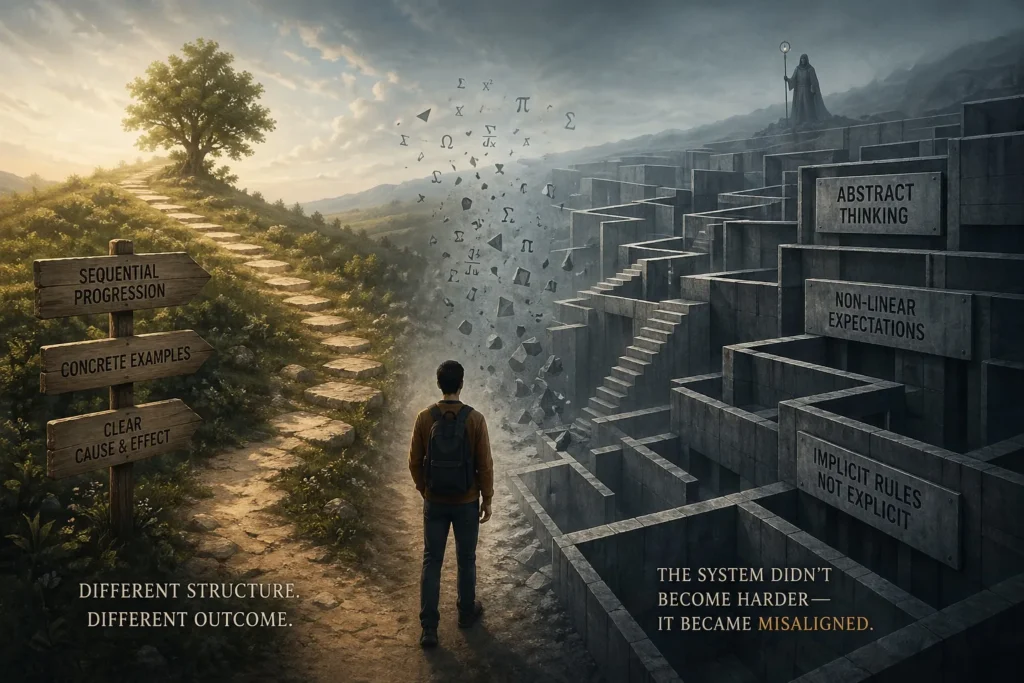
    Reframe

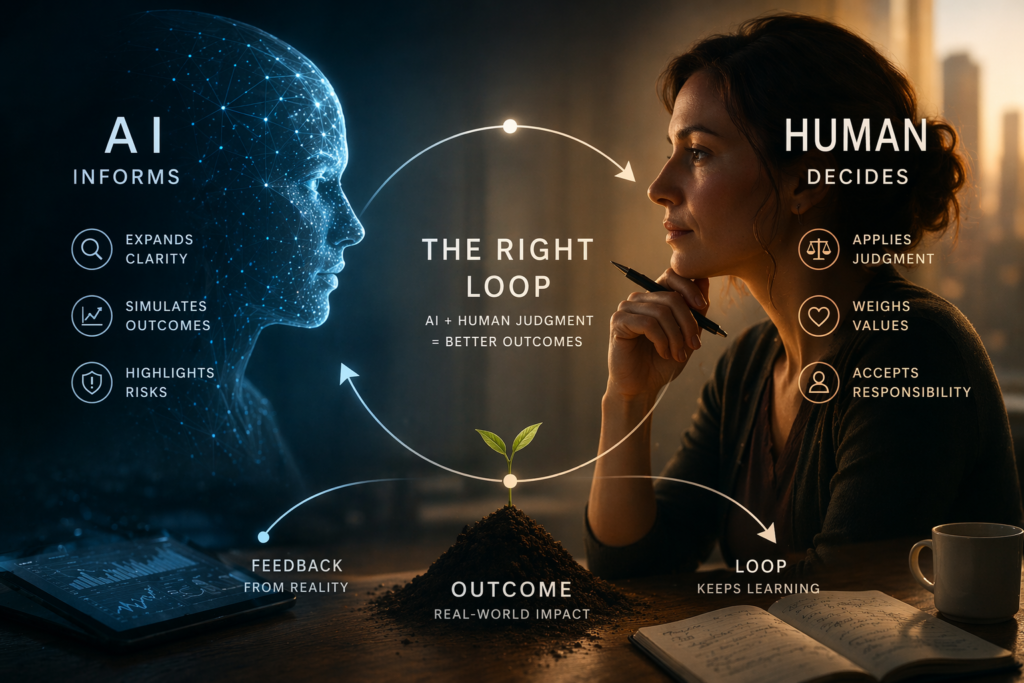
    AI didn’t replace my thinking.

    It gave me access to a layer I couldn’t see.

    Not identity change—

    translation.


    Application

    Used correctly, tools like AI can:

    • clarify unspoken systems
    • reduce social ambiguity
    • support processing differences
    • increase inclusion

    Not by changing the person—

    but by expanding access to understanding.


    Result

    The world becomes more navigable.

    Not because it’s simpler—

    but because it’s more visible.


    System Insight

    When systems rely on unspoken rules,
    those who process differently are excluded.

    When context becomes accessible,
    inclusion becomes possible.


    Closing

    If you ask what this feels like, I’d say:

    It feels like building your own map
    through a maze no one admits exists.

    And if this is cognitive augmentation—

    it isn’t about becoming more than human.

    It’s about finally being able to participate as one.

    — Oddly Robbie

  • Strength and Vulnerability in Men — I Wasn’t Immune

    Man holding flower representing strength and vulnerability in men

    Strength and vulnerability in men are often misunderstood—especially when strength is visible from the outside.

    The male emotional system is often misunderstood. Many assume men are less affected by fear or emotional impact, but in reality, the system processes threat, vulnerability, and boundary violations the same way—it is only expressed differently.

    The belief

    Strength is something you can see.
    It looks like composure, size, and the ability to absorb pressure without reaction.

    From that, a quiet assumption forms:

    If someone looks capable, they must be unaffected.

    The break

    Human systems don’t work that way.

    The nervous system doesn’t evaluate appearance before responding.
    It reacts to boundary violations, perceived threat, and loss of control—regardless of how someone is perceived externally.

    The pattern

    We consistently confuse:

    • visible strength → emotional immunity
    • calm behavior → lack of impact
    • physical presence → resistance to fear

    This misread shows up most clearly in men.

    The stronger someone appears, the less permission they’re given to register what happens to them.

    The result

    Impact gets dismissed before it’s even processed.

    Not because nothing happened—
    but because the system decided it shouldn’t matter.