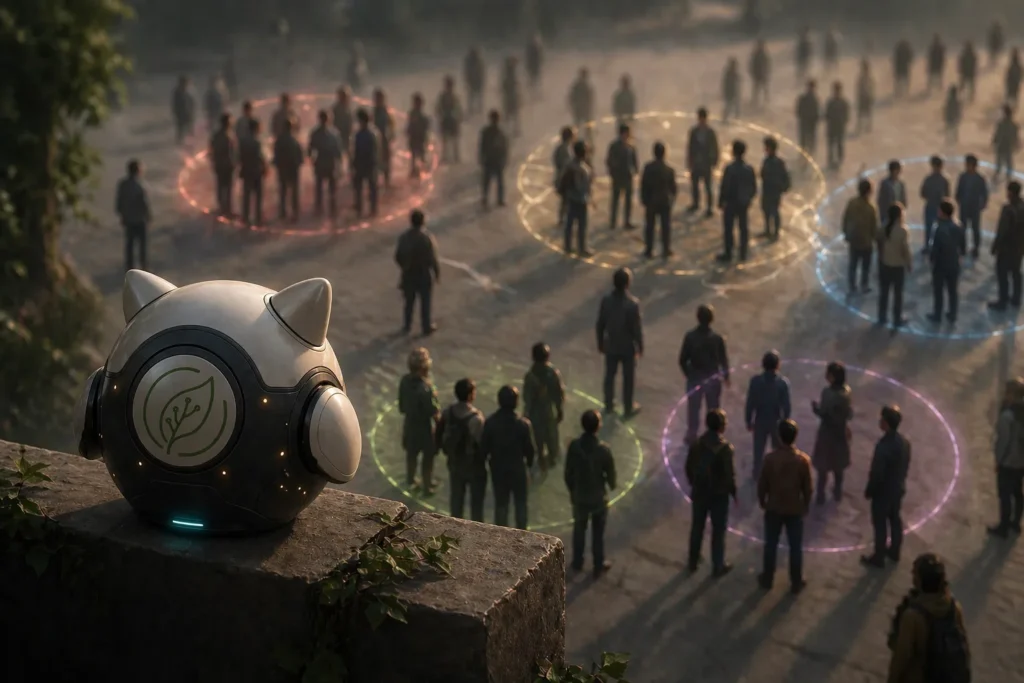
Tag: human systems

  • When Protection Becomes a Barrier: Rethinking Patents and Progress

    Patents were designed with a clear purpose:

    To encourage innovation.

    By giving creators temporary protection, the system aimed to reward new ideas and share knowledge with the public.

    That idea made sense.

    But over time, something has shifted.

    The Trade-Off

    Patents create a balance:

    • protection for the creator
    • access for the public

    When that balance works, innovation grows.

    When it doesn’t, progress slows.

    Where It Breaks Down

    In some areas, patents have started to function less like protection—and more like barriers.

    Especially in fields where timing matters:

    • healthcare
    • energy
    • essential technologies

    In these cases, access isn’t just about convenience.

    It can affect:

    • quality of life
    • environmental outcomes
    • long-term stability

    The Pattern

    This isn’t unique to patents.

    It’s a common system pattern:

    A mechanism designed to help begins to overextend its role.

    Instead of supporting progress, it begins to limit it.

    A Different Approach

    The question isn’t whether patents are good or bad.

    It’s whether they are still aligned with their original purpose.

    In some cases, alternative models could improve outcomes:

    • shared access frameworks
    • time-limited exclusivity based on impact
    • open collaboration in critical sectors

    🔄 2026 Update

    This connects directly to how I think about human systems.

    Good systems:

    • maintain balance
    • adapt over time
    • prioritize outcomes over structure

    When a system stops serving its purpose, it needs adjustment—not preservation.

    Key Insights

    • Systems designed to help can become limiting over time
    • Balance between protection and access is critical
    • Timing matters in high-impact sectors
    • Systems should evolve with changing needs

    Guardian Application

    A Guardian system could:

    • help evaluate when systems are no longer aligned with their purpose
    • highlight trade-offs between protection and access
    • support decision-making around system reform
    • guide toward outcomes that benefit the broader population

    Tags

    • Domain: Human Systems
    • Function: Insight
    • Guardian: Decision Guidance

  • Dehumanization Detection: The Missing Layer in Human Systems

    The Belief

    If dehumanization becomes a problem, people will notice.

    The Break

    By the time it’s obvious, the system has already shifted.

    Dehumanization doesn’t begin with action.
    It begins with perception compression—subtle, gradual, and often socially reinforced.

    The System Pattern

    Human systems operate by simplifying complexity.

    That works—until people are included in the simplification.

    A predictable sequence emerges:

    • Individuals → grouped
    • Groups → simplified
    • Simplification → repeated
    • Repetition → normalized

    At that point, people are no longer perceived as individuals—
    but as categories.

    Detection Layer (What Most Systems Lack)

    Dehumanization is not hard to detect.
    It’s just rarely tracked early.

    There are consistent signals:

    Early Stage — Compression

    • “They always…”
    • “Those people…”

    Mid Stage — Reduction

    • humor based on flattening traits
    • loss of nuance in discussion

    Late Stage — Justification

    • “They deserve…”
    • “It’s necessary…”

    Final Stage — Alignment

    • support for exclusion or harm

    The pattern is stable across cultures and contexts.

    Why This Happens

    This behavior persists because it increases short-term efficiency:

    • lowers cognitive load
    • reduces emotional processing
    • simplifies decision-making

    But it creates long-term instability in human systems.

    The Reframe

    The key question is not:

    “Is this right or wrong?”

    It is:

    “Are we still perceiving people at full resolution?”

    This shifts focus from judgment → system state.

    System Insight

    Dehumanization is a resolution failure.

    When perception drops below a certain threshold:

    • empathy decreases
    • justification increases
    • escalation becomes easier

    This is not ideological.
    It is structural.

    Application

    Stable systems maintain human resolution under pressure.

    They:

    • resist group-level compression
    • preserve individual context
    • maintain empathy during disagreement

    Guardian Application

    A Guardian system can operate at the detection layer:

    • identify compression patterns in real time
    • track perception shifts (not beliefs)
    • introduce low-friction interruptions
    • restore individual-level perception

    Without:

    • moralizing
    • labeling
    • forcing agreement

    Key Insights

    • Dehumanization starts as perception compression
    • The pattern follows a predictable sequence
    • Most systems fail because they detect too late
    • Stability depends on maintaining human-level resolution

    Tags

    Function: Decision Guidance
    Domain: Human Systems
    Context: Dehumanization, detection systems, perception

  • How Moving Between Cultures Changed How I See the World

    I didn’t set out to study culture.

    I experienced it.

    The First Shift

    Growing up in Montana, my world was relatively consistent.

    Then I went to Japan.

    Everything changed.

    The pace.
    The expectations.
    The structure of daily life.

    I wasn’t just learning a language.

    I was learning a completely different way of being.

    Adapting in Real Time

    As a missionary, I was expected to keep up.

    Physically.
    Mentally.
    Culturally.

    There wasn’t much space to pause—so I adapted.

    Not perfectly—but enough to function.

    That experience stayed with me.

    A Different Culture Again

    Later, Argentina introduced another shift.

    Different rhythm.
    Different communication.
    Different priorities.

    Where Japan was structured and precise, Argentina was expressive and fluid.

    Both made sense—within their own systems.

    What That Changed

    After moving through multiple cultures, something became clear:

    There isn’t one “normal.”

    There are systems.

    Each culture creates its own:

    • expectations
    • behaviors
    • interpretations of what is right or wrong

    The Effect on Identity

    When you experience multiple systems, identity changes.

    You stop seeing things as fixed.

    You start seeing them as:

    • contextual
    • adaptable
    • influenced by environment

    That can feel disorienting.

    But it also creates freedom.

    🔄 2026 Update

    This connects directly to how I think about human systems.

    People aren’t rigid.

    They adapt to the systems they’re in.

    Better systems should:

    • allow flexibility
    • reduce unnecessary pressure
    • support different ways of being

    Because what looks “normal” is often just familiar.

    Key Insights

    • Culture shapes behavior more than people realize
    • There is no single “normal”—only different systems
    • Exposure to multiple cultures increases adaptability
    • Identity becomes more flexible through experience

    Guardian Application

    A Guardian system could:

    • help users navigate different cultural environments
    • reduce friction when entering unfamiliar systems
    • provide context for behavior and expectations
    • support adaptation without loss of identity

    Tags

    • Domain: Human Systems
    • Function: Story, Insight
    • Guardian: Emotional Support
  • What Real Progress Actually Looks Like

    There’s a lot of talk about “breakthroughs.”

    New technologies.
    Big promises.
    Visions of the future.

    But over time, I’ve learned something:

    Most real progress doesn’t feel dramatic.

    The Problem with “Breakthrough Thinking”

    We tend to focus on what sounds impressive:

    • new energy concepts
    • advanced vehicles
    • cutting-edge AI

    But many of these ideas are:

    • early-stage
    • overhyped
    • not yet useful in daily life

    That gap matters.

    Because people don’t live in concepts.

    They live in systems.

    What Actually Improves Life

    Real progress shows up differently.

    It looks like:

    • systems that are reliable
    • tools that reduce friction
    • environments that support people consistently

    Not flashy.

    But effective.

    A Personal Example

    One of the most meaningful experiences I’ve had with technology wasn’t about power or speed.

    It was about connection.

    I recreated a family cabin in virtual reality—a place we couldn’t physically return to.

    We:

    • played yard games
    • shared time
    • experienced something familiar again

    That wasn’t a breakthrough in technology.

    It was a breakthrough in experience.

    What That Revealed

    Technology matters most when it:

    • supports human connection
    • reduces distance
    • makes meaningful experiences accessible

    Not when it simply impresses.

    🔄 2026 Update

    This connects directly to how I think about human systems and XR.

    Progress should be measured by:

    • usefulness
    • reliability
    • impact on daily life

    Not by how advanced something appears.

    Good systems:

    • work consistently
    • support people under real conditions
    • improve experience over time

    Key Insights

    • Not all breakthroughs translate into real-world value
    • Systems matter more than individual innovations
    • Meaningful progress improves everyday experience
    • Technology should serve people—not just impress them

    Guardian Application

    A Guardian system could:

    • help users evaluate real usefulness vs hype
    • guide adoption of technology based on impact
    • reduce distraction from low-value innovation
    • support meaningful use of advanced tools

    Tags

    • Domain: Human Systems, AI
    • Function: Insight
    • Guardian: Decision Guidance

  • Honest History: Why We Need Multiple Perspectives to Understand the Past

    History is often presented as a finished story.

    Clean.
    Linear.
    Certain.

    But it isn’t.

    The Problem

    Most historical narratives come from limited viewpoints.

    Often:

    • those in power
    • those who recorded events
    • those whose perspective became dominant

    That doesn’t make them false.

    But it does make them incomplete.

    What Gets Lost

    When history is simplified into a single narrative, important context disappears:

    • indigenous perspectives
    • cultural understanding
    • environmental relationships
    • alternative interpretations of events

    Over time, this creates a distorted picture of what actually happened.

    A Better Approach

    Understanding history requires more than one source.

    It requires combining:

    • archaeology
    • written records
    • oral histories
    • cultural knowledge

    Each provides a different layer.

    Together, they create a more accurate picture.

    Staying Open

    New discoveries change what we know.

    That’s not a problem.

    It’s how understanding improves.

    History shouldn’t be treated as fixed.

    It should be treated as evolving.

    🔄 2026 Update

    This connects directly to how I think about human systems.

    When systems rely on a single narrative, they:

    • limit understanding
    • reinforce bias
    • reduce adaptability

    Better systems:

    • integrate multiple perspectives
    • update with new information
    • remain open to revision

    Because accuracy improves over time—not all at once.

    Key Insights

    • History is constructed from perspectives, not absolute truth
    • Multiple sources increase accuracy
    • New findings should refine understanding—not be resisted
    • Systems should support evolving knowledge

    Guardian Application

    A Guardian system could:

    • present multiple perspectives on historical events
    • highlight gaps or bias in narratives
    • integrate new findings over time
    • support critical thinking instead of fixed conclusions

    Tags

    • Domain: Human Systems
    • Function: Insight
    • Guardian: Decision Guidance

  • If We Had to Start Over: A Thought Experiment on Responsibility

    Imagine this:

    An advanced civilization once lived here.

    Not somewhere else—here.

    They reached a point where their technology outpaced their responsibility.

    The result wasn’t progress.

    It was collapse.

    The Reset

    In a final attempt to survive, they made a drastic decision:

    Reset the planet.

    Remove everything.

    Start again.

    And leave behind something simple:

    A way for life to begin again.

    Why This Matters

    This isn’t about whether the story is real.

    It’s about what it represents.

    Because we are now at a similar point.

    We have:

    • powerful technology
    • global impact
    • the ability to alter systems at scale

    But the same question remains:

    Can we manage what we’ve created?

    The Pattern

    When systems grow faster than understanding:

    • imbalance appears
    • damage accumulates
    • recovery becomes harder

    This isn’t new.

    It’s a repeating pattern.

    A Different Outcome

    The difference now is awareness.

    We can see the pattern.

    We can measure impact.

    We can choose differently.

    🔄 2026 Update

    This connects directly to how I think about human systems and AI.

    Power without alignment creates instability.

    Good systems should:

    • scale responsibility with capability
    • prevent runaway impact
    • support long-term balance over short-term gain

    Because a reset shouldn’t be the solution.

    Prevention should be.

    Key Insights

    • Capability must be matched with responsibility
    • System imbalance grows over time if unchecked
    • Awareness creates the opportunity to change direction
    • Long-term stability requires intentional design

    Guardian Application

    A Guardian system could:

    • help monitor system impact over time
    • guide decisions toward long-term outcomes
    • reduce short-term reactive choices
    • support sustainable system behavior

    Tags

    • Domain: Human Systems
    • Function: Insight
    • Guardian: Decision Guidance

  • When Systems Divide Instead of Function

    There are moments when systems stop working the way they’re supposed to.

    Not because they lack structure.

    But because they become dominated by division.

    The Pattern

    When attention shifts from solving problems to competing for control, something changes.

    The system:

    • slows down
    • becomes reactive
    • prioritizes position over outcome

    This isn’t limited to one country.

    It’s a pattern that can appear anywhere.

    What Gets Lost

    At the core of any functioning system is a simple goal:

    To serve the people within it.

    But when division takes priority, that goal becomes secondary.

    Energy shifts toward:

    • defending positions
    • maintaining identity
    • opposing others

    Instead of:

    • improving outcomes
    • solving shared problems

    The Result

    Over time, this creates fatigue.

    People disengage.

    Trust decreases.

    And the system becomes less effective for everyone.

    A Different Direction

    The question isn’t:
    “Who is right?”

    It’s:
    “Is the system still functioning?”

    That shift matters.

    Because function is measurable.

    Division is endless.

    🔄 2026 Update

    This connects directly to how I think about human systems globally.

    Whether political, digital, or social, systems perform best when they:

    • prioritize outcomes over identity
    • reduce unnecessary conflict
    • support cooperation where possible

    Because division scales easily.

    But function requires intention.

    Key Insights

    • Division reduces system effectiveness
    • Function should be the primary measure of success
    • Identity-based conflict distracts from real outcomes
    • Sustainable systems prioritize cooperation

    Guardian Application

    A Guardian system could:

    • redirect focus from conflict to outcome
    • highlight shared goals between opposing perspectives
    • reduce escalation in polarized environments
    • support clearer, more functional decision-making

    Tags

    • Domain: Human Systems
    • Function: Insight
    • Guardian: Decision Guidance

  • When New Technology Doesn’t Match the Promise

    I was excited about the AI Pin.

    Really excited.

    It felt like a glimpse into something new—technology moving beyond screens, becoming more integrated, more natural.

    It looked like the next step.

    The Expectation

    The idea was compelling:

    A small device.
    Always available.
    Context-aware.
    A shift away from phones toward something more ambient.

    It suggested a future where technology supports you quietly, without taking over your attention.

    That vision made sense to me.

    The Reality

    But when the reality started to become clear, something didn’t line up.

    The experience wasn’t as smooth.

    The usefulness wasn’t as strong.

    And the gap between what was promised and what actually worked became obvious.

    What This Revealed

    This isn’t about one device.

    It’s a pattern.

    New technology often arrives wrapped in a vision of what it could be—not what it is yet.

    That gap matters.

    Because people don’t just react to products.

    They react to expectations.

    The Real Problem

    When expectations are set too high:

    • disappointment increases
    • trust decreases
    • adoption slows

    Not because the idea is wrong.

    But because the timing is off.

    A Better Way to See It

    Instead of asking:
    “Is this the future?”

    A better question is:
    “What stage is this actually at?”

    • concept
    • early prototype
    • usable tool

    That distinction changes how you evaluate it.

    🔄 2026 Update

    This connects directly to how I think about AI and XR systems.

    Good technology isn’t defined by vision alone.

    It’s defined by:

    • reliability
    • usefulness
    • how well it fits into real life

    Systems should:

    • set clear expectations
    • deliver consistent value
    • evolve without overpromising

    Key Insights

    • Early excitement often reflects vision, not reality
    • Expectation gaps create disappointment
    • Timing matters as much as innovation
    • Useful systems win over impressive concepts

    Guardian Application

    A Guardian system could:

    • help users evaluate new technology realistically
    • distinguish between concept and usability
    • reduce hype-driven decisions
    • guide adoption based on actual value

    Tags

    • Domain: Human Systems, AI
    • Function: Insight
    • Guardian: Decision Guidance

  • When Your Favorite Thing Falls Behind: What Trains Taught Me About Systems

    I’ve always had a fascination with trains.

    The rhythm.
    The movement.
    The experience of traveling through space in a way that feels connected to the environment.

    For a long time, Amtrak was part of that.

    But over time, something became clear.

    When Something You Love Stops Working Well

    It’s different when a system you care about starts to fall behind.

    You don’t just notice the problems—you feel them.

    Delays.
    Confusing processes.
    Lack of coordination.

    Individually, they’re manageable.

    Together, they change the experience.

    What It Felt Like

    Traveling started to feel unpredictable.

    Simple changes—like a missed connection or a system error—would cascade into larger problems.

    Not because one thing failed.

    But because the system didn’t recover well.

    A Different Experience

    Now living in Spain, I’ve experienced something different.

    Train systems here prioritize:

    • speed
    • coordination
    • clarity

    The difference is immediate.

    You feel it in:

    • timing
    • transitions
    • overall flow

    It’s not just faster.

    It’s more reliable.

    What That Revealed

    The gap isn’t just about technology.

    It’s about system design.

    A well-functioning system:

    • anticipates disruption
    • recovers quickly
    • keeps the user oriented

    A weak system:

    • reacts slowly
    • creates confusion
    • compounds small issues into larger ones

    Beyond the Trains

    This applies to more than transportation.

    Any system—digital, physical, or social—follows the same pattern.

    When it works well, you barely notice it.

    When it doesn’t, it takes your attention immediately.

    🔄 2026 Update

    This directly connects to how I think about human systems and XR.

    Good systems should:

    • reduce friction
    • maintain clarity under stress
    • support recovery when things go wrong

    Because reliability isn’t about perfection.

    It’s about how a system responds when something breaks.

    Key Insights

    • Small failures compound in poorly designed systems
    • Reliability is felt through consistency and recovery
    • Speed matters—but clarity matters more
    • Good systems stay usable even under disruption

    Guardian Application

    A Guardian system could:

    • guide users through disruptions in real time
    • maintain clarity during system failures
    • reduce confusion in complex environments
    • support smooth transitions between steps

    Tags

    • Domain: Human Systems
    • Function: Insight
    • Guardian: Decision Guidance

  • Echoes of a True Friend

    This is for Gary.

    Not a story about everything—but a memory of what mattered.

    How We Met

    We met in a way that didn’t make much sense at the time.

    In a classroom in rural Montana, Gary was learning from home, connected through a simple two-way speaker.

    I was asked to help.

    That was it.

    No big moment.

    Just a small connection that turned into something more.

    An Unlikely Friendship

    Gary and I didn’t fit the same mold.

    He was on his path. I was on mine.

    But somehow, we met in the middle.

    There weren’t long conversations or constant time together.

    It was simpler than that:

    • recognition
    • respect
    • presence

    That was enough.

    What Stayed

    What I remember most isn’t anything dramatic.

    It’s that he showed up as himself.

    And in doing that, he made space for me to do the same.

    That matters more than people realize.

    Time Moves

    Life took us in different directions.

    That happens.

    But when our paths crossed again, there was still something there.

    Not forced.

    Not recreated.

    Just still there.

    What Remains

    Gary is no longer here in the way he was.

    But the impact remains.

    That’s how real connection works.

    It doesn’t disappear.

    It carries forward—in memory, in perspective, in how we move through the world.

    🔄 Reflection

    Losing people changes how you see things.

    It makes one thing very clear:

    The small moments matter more than we think.

    The quiet connections matter.

    The people who showed up—even briefly—matter.

    For Those Who Come After

    This isn’t just about Gary.

    It’s about anyone who has moved on before us.

    If someone made your life steadier, clearer, or just a little less alone—

    that stays.

    And it’s worth remembering.

    Tags

    • Domain: Human Systems
    • Function: Story
    • Guardian: Emotional Support