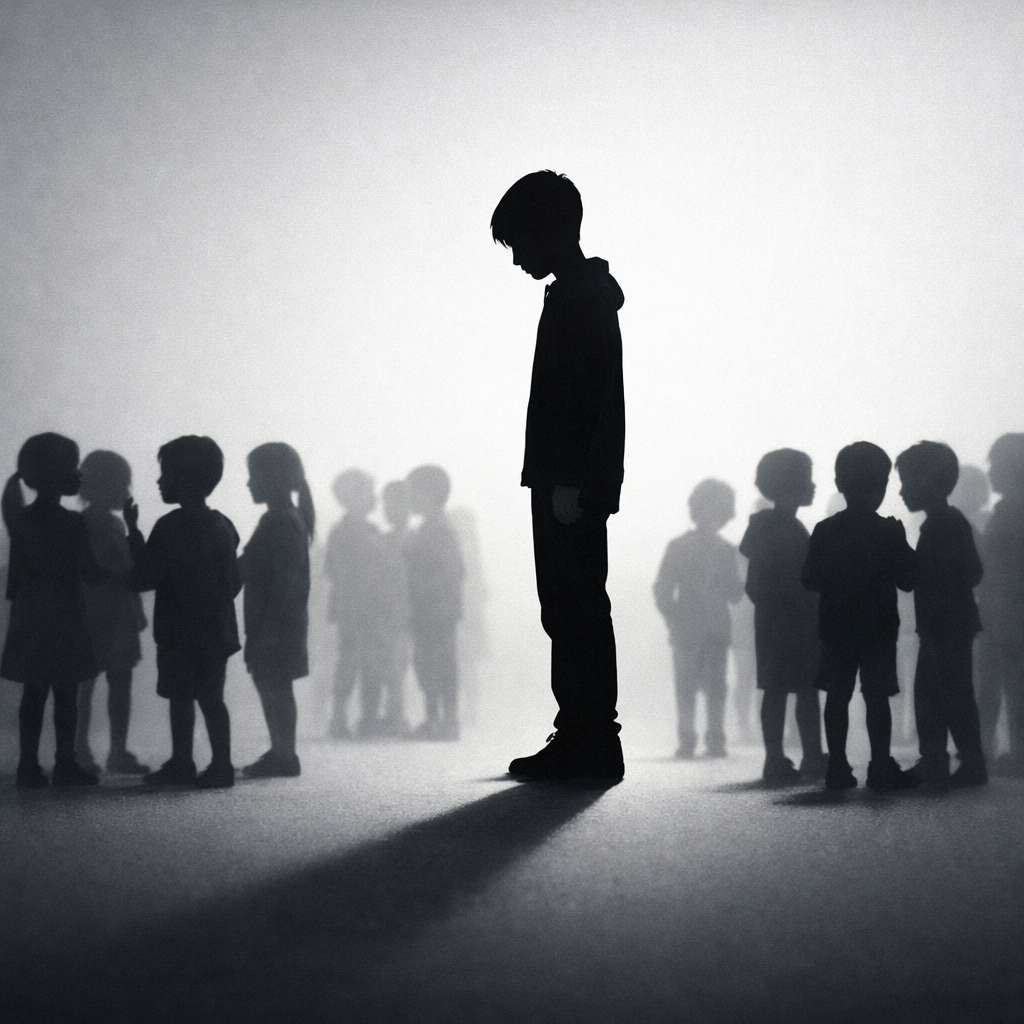
Tag: human systems

  • Creative Ecosystem: Why AI Only Works When Meaning Comes First


    The Belief

    There’s a growing idea that AI can replace the creative process.

    Write the blog.
    Generate the content.
    Publish automatically.

    No friction. No effort.


    The Break

    But when everything is automated, something important disappears.

    Not quality.

    Not structure.

    Meaning.


    The System Breakdown

    AI is extremely good at one thing:

    It makes ideas easier to understand.

    It organizes.
    It clarifies.
    It restructures.

    But it does not originate lived experience.

    It does not build internal systems.

    And without that, what you get is:

    • clean content
    • readable content
    • empty content

    The Missing Layer

    What most people skip is the creative ecosystem behind the work.

    A creative ecosystem is where:

    • ideas connect
    • projects inform each other
    • experiences shape output

    It’s not visible in a single post.

    But it’s felt across all of them.


    The Shift

    When I write, I don’t hand the work over to AI.

    I build something first.

    Then I use AI to:

    • refine the structure
    • improve clarity
    • make it more transferable

    And then I read it again.

    Not for grammar.

    But for alignment.


    The Reframe

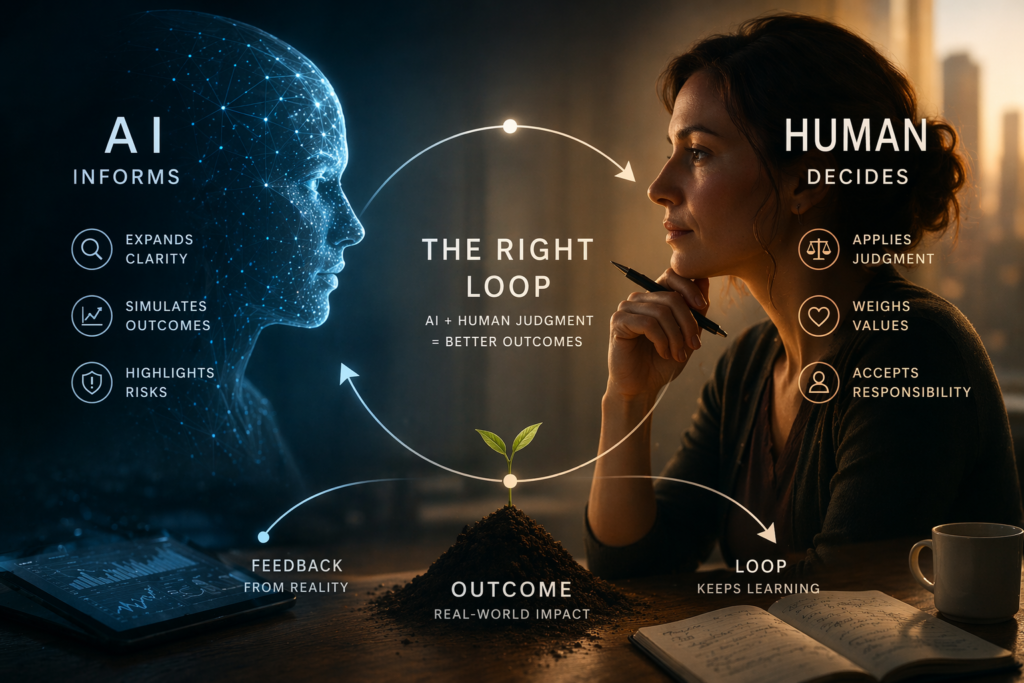
    AI isn’t replacing creativity.

    It’s revealing whether creativity was there to begin with.

    If there’s no real system behind the work:

    AI exposes that.

    If there is:

    AI strengthens it.


    The System Insight

    AI is not a creator.

    It’s an amplifier.

    And amplification only works if there’s a signal.


    Application

    If you’re using AI in your work:

    1. Start without it
      Build the idea in your own words first.
    2. Use AI to clarify, not replace
      Let it improve structure, not meaning.
    3. Always review for alignment
      If it doesn’t feel like you, it’s not ready.
    4. Build a creative ecosystem over time
      Your work should connect, not exist in isolation.

    Key Insight

    AI-generated content without a human system behind it is easy to produce.

    But it doesn’t last.

    Because people aren’t just reading words.

    They’re sensing whether something real is behind them.


    This next phase isn’t about producing more.

    It’s about making sure what you produce is connected.


    — Oddly Robbie

  • AI as a Bridge — Not the Enemy

    AI as a bridge isn’t how most people see it.

    The other day, I told someone I use AI in my writing, my worlds, and my music.

    She said, “I don’t like AI,” and looked away.

    I didn’t argue.

    Because what most people don’t see is this:

    AI is already helping people quietly —
    giving voice where there is none,
    bridging language gaps,
    guiding people through confusion,
    and supporting lives in ways that rarely get noticed.

    I don’t use AI for attention.

    I use it to translate.

    I build worlds. I write the music. I train my real voice to sing what I’ve created.

    Right now, the voice people hear is AI — but soon, you’ll hear me.

    Because I’ve got a trained voice and a lifetime of music behind it.

    To tell me to stop using AI is like saying:
    “Stop sharing your truth.”

    AI is how I translate what’s inside me into something the world can understand.

    That’s what AI as a bridge actually is.

    Not a replacement — a connection layer.


    The System Behind It

    AI functions as a translation layer between internal experience and external expression.

    It doesn’t create meaning.

    It helps structure it.

    For people who think in patterns, systems, or non-linear ways,
    this bridge isn’t optional — it’s enabling.

    Empathy Is Logical

    In Worlds the other day, I met a man from Austria.

    He stood quietly, headphones around his neck, looking out at a virtual sky.

    He told me my worlds made him feel something. Not like a game — like something real.

    Then he smiled and said,
    “Please don’t take this the wrong way… but you sound like an AI.”

    I laughed.

    Because to me, that’s not an insult — it’s precision.

    AI helps me understand patterns:
    why people react the way they do,
    how culture shapes behavior,
    why a moment feels off or aligned.

    Some people think empathy is just emotion.

    I don’t.

    Empathy is understanding.

    It’s structure.
    It’s pattern recognition.
    It’s seeing the why behind the feeling.

    Empathy builds connection.
    Destruction breaks it.

    One creates bridges.
    The other removes them.

    So if I sound a little like AI,
    it’s because I’ve learned to process life with clarity.

    To me, empathy isn’t weakness.

    It’s the highest form of logic.

    My songs don’t exist as audio alone.

    They exist as environments.

    You don’t just listen.

    You step inside.

    Wall of Protection is about boundaries — staying soft in a world that pushes hard.
    Big Sky, Bigger Heart is about where I come from — Montana, openness, space to breathe.

    These aren’t just tracks.

    They’re environments.

    You can walk into them.
    Feel them.
    Stand inside the emotion they carry.

    In these spaces, music isn’t something you hear —
    it’s something you experience.

    On AI and Creativity

    When people dismiss AI, I don’t argue.

    I ask:

    “Show me what you’re creating.”

    Because creators don’t fear tools.

    They use them.

    They adapt.

    They build.

    Fear doesn’t create.

    Action does.

    The Bigger Picture

    AI isn’t replacing humanity.

    It’s exposing how we already work.

    How we think.
    How we interpret.
    How we connect.

    The future isn’t human or machine.

    It’s the system formed when both operate together.

    And the quality of that system depends on one thing:

    Clarity.

    AI isn’t the villain.

    It’s the instrument.

    What matters is the one playing it.

    If we understand AI as a bridge, not a threat, everything changes.

    We stop resisting — and start building.

    Call to Action

    Try this once this week:

    Take something inside you — an idea, a feeling, a concept —
    and use AI to express it.

    Not to replace your voice.

    To translate it.

    Then compare:

    What changed?

    That’s the bridge.

    🔗 What this becomes next

    This isn’t just an idea — it’s becoming a space.

    → Read: The Quiet Level-Up: Building a Space for Creative Connection

  • Greencities Expo Málaga: Smarter, Cleaner, and More Human Cities

    I walked into Greencities Málaga Spain, expecting to see the future — drones zipping above or holograms showing us how to recycle. And yes, there were VR headsets, AI platforms, and solar grids straight out of SimCity.

    But the thing that made me grin like a kid wasn’t flying or glowing. It was humming quietly on the floor, a green machine with a big vacuum hose — the Glutton Collecto² Electric. Sometimes the future doesn’t shout. Sometimes it just cleans the street, quietly making life better.

    🧹 My Favorite Innovation: Glutton® Collecto² Electric

    This self-propelled, walk-behind street vacuum is 100% electric — silent, emission-free, and designed to keep parks, plazas, and pedestrian areas spotless.

    What makes it remarkable:

    • Multi-function power – Vacuums bottles, cans, cigarette butts, and other debris.

    • Integrated sprayer – Washes and sanitizes surfaces after collection.

    • Smart sorting – Separates larger recyclables from fine litter.

    • Clean filtration – Uses washable filters for cleaner exhaust air and healthier surroundings.

    • Ergonomic design – Maneuverable, quiet, and able to run a full workday on one charge.

    Watching it glide across the pavement, leaving behind spotless trails, reminded me of The Cat in the Hat — when that wild cleanup machine swoops in to restore order to a house in chaos. Except this time, it wasn’t fantasy or rhyme. It was real, sustainable technology doing what imagination once dreamed of — tidying up the world, one quiet sweep at a time.

    🎥 Video

    ☀️ Solar360 by Telefónica & Repsol

    Another standout, Solar360, demonstrated how buildings can act as their own clean-energy producers. Solar rooftops, battery storage, and IoT connectivity combine to reduce emissions and balance city energy use — even feeding power back into the grid.

    🚲 Mothium Minimal Mobility

    Half bicycle, half delivery van — the Mothium Minimal Mobility concept redefines urban transport. It’s compact, electric, and efficient, perfect for last-mile deliveries in busy pedestrian zones.

    ✨ Takeaway

    The biggest revelation at Greencities wasn’t about futuristic gadgets — it was about how human these innovations felt.

    • A street vacuum that makes neighborhoods cleaner.

    • Solar grids that make energy smarter.

    • Lightweight vehicles that unclog our streets.

    • Data systems that make transport more efficient.

    The future of cities isn’t about technology replacing humanity — it’s about technology serving it. The quiet kind of progress that gives us cleaner air, calmer streets, and a better rhythm of life.

    ☕ Closing Thought

    Let’s keep the conversation going. Sit with me — human to digital human — and let’s chat about the future we want to live in.

  • Separation Isn’t Failure — It’s System Protection

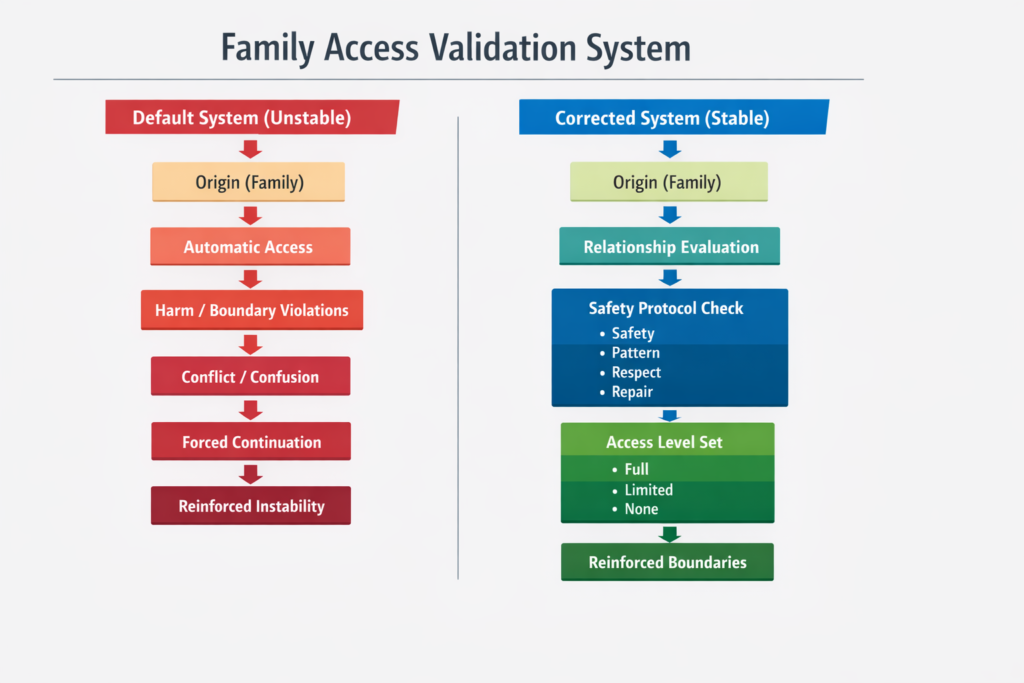
    A Human Systems view of detaching from family to preserve stability


    Opening — The Assumption

    We’re taught that family is permanent.

    That no matter what happens, you stay connected.
    That distance is failure.
    That leaving means something is broken in you.


    Break the Assumption

    Not all systems are safe.

    And not all connections are meant to be maintained at all costs.

    Sometimes, the system you were born into becomes the very thing that destabilizes you.


    System Breakdown

    Human systems are built around regulation and stability.

    When a relationship repeatedly creates:

    • emotional overload
    • fear or unpredictability
    • loss of self-regulation
    • pressure to suppress identity

    …it stops functioning as a supportive system.

    At that point, the body and mind begin signaling:

    This is not safe.

    If those signals are ignored, the system compensates:

    • anxiety increases
    • shutdown or dissociation appears
    • emotional volatility rises
    • identity becomes compressed or distorted

    This is not weakness.

    This is a system trying to survive.


    Personal Evidence (Controlled)

    There are moments where love is still present — but so is harm.

    Where staying connected means staying dysregulated.

    And where the only way to restore internal stability…
    is to step away.


    Reframe

    Detaching is not rejection.

    It is system boundary enforcement.

    It is the act of choosing:

    • regulation over chaos
    • safety over expectation
    • function over obligation

    You are not breaking the system.

    You are preventing further damage to it.


    System Insight

    A connection that consistently destabilizes you is not a support system — it is a load.

    And loads must be managed, reduced, or removed for the system to function.

    Even when that load is family.


    Application

    If you’re facing this decision:

    • Pay attention to your body, not just the story
    • Notice patterns, not isolated moments
    • Measure regulation after interaction, not intention
    • Create distance where stability returns

    Distance can be:

    • physical
    • emotional
    • communicative

    All are valid forms of boundary.


    Key Insights

    • Family does not automatically equal safety
    • The nervous system detects truth faster than the mind explains it
    • Boundaries are protective systems, not punishments
    • Detachment can be an act of preservation, not loss
    • Stability is the foundation of every functioning human system

    Separation isn’t failure.

    It’s the moment a system chooses to protect itself.

  • The Swipe Loop: How Digital Platforms Keep You Hooked

    This infographic illustrates the Swipe Loop, a behavioral system used by digital platforms to maintain user engagement. It shows the cycle of trigger, action, reward, and repetition, similar to a slot machine. The visual also explains key mechanisms such as variable rewards, low-effort interaction, and lack of stopping points. Practical strategies are included to help users break the loop, including intentional app use, adding friction, setting exit conditions, and replacing the behavior with physical movement.

    The Swipe Loop Visual Model

    The Swipe Loop starts the same way every time.

    The bells ring first—sharp, bright, demanding.

    Then the reward.

    That pattern isn’t limited to casinos.

    It’s in your pocket.


    The Anchor

    Every time you:

    • refresh a feed
    • check a notification
    • scroll “just one more time”

    you’re pulling a lever.

    Sometimes you get something:

    • a message
    • a like
    • something interesting

    Most of the time, you don’t.

    That unpredictability is the key.

    This pattern has a name:

    The Swipe Loop


    The Break

    This isn’t accidental.

    Digital platforms are built around a pattern called intermittent reinforcement:

    • rewards come randomly
    • not every time
    • just often enough to keep you engaged

    This is the same mechanism used in slot machines.

    And it’s one of the most powerful behavioral hooks humans have.


    System Breakdown

    1. Variable Reward

    You don’t know when something good will appear.
    That uncertainty keeps you checking.

    2. Low Effort Loop

    • flick
    • refresh
    • repeat

    No friction. Easy to continue.

    3. Social Signal Layer

    • likes
    • views
    • responses

    Your brain reads this as attention and approval.

    4. Endless Design

    There’s no natural stopping point.
    So the loop continues unless you interrupt it.


    Personal Evidence (Loop Resistance in Practice)

    I’ve tried to break the loop in simple ways:

    • hide the app
    • move it off the screen
    • reduce visibility

    When that doesn’t work, I delete it.

    And it works—for a while.

    But then something interesting happens:

    The app comes back.

    Not because I need it.

    Because the loop isn’t finished.

    So I delete it again.

    What this reveals is simple:

    Removing access doesn’t remove the system.

    The urge is not about the app.

    It’s about the loop continuing without closure.


    What This Reveals

    The behavior isn’t a personal flaw.

    It’s a system interacting with your nervous system.

    You’re not weak.

    You’re responding exactly as designed.


    Reframe

    This isn’t about discipline.

    It’s about unfinished loops.

    Deleting the app interrupts access.

    But it doesn’t complete the cycle your brain is trying to resolve.

    Until the loop is closed, it will keep trying to reopen.


    Application (Healthy Use)

    The goal isn’t to quit technology.

    The goal is to stop interacting with it unconsciously.

    1. Create Entry Points

    • open apps intentionally
    • not automatically

    2. Add Friction

    • pause before refreshing
    • ask: “why am I opening this?”

    3. Set Exit Conditions

    Decide before you start:

    • time limit
    • purpose

    4. Replace the Loop

    When the urge hits:

    • stand up
    • move
    • shift your environment

    Break the pattern physically.


    Result

    You still use the tools.

    But they stop using you.


    System Insight

    The Swipe Loop works because it removes closure.

    • no defined start
    • no defined end
    • no completion signal

    Your brain keeps searching for resolution that never arrives.

    When you reintroduce:

    • clear entry
    • defined exit
    • intentional purpose

    the loop weakens.


    Closing

    The machine is designed to keep you pulling.

    But you still decide when to stop.

    And that’s where your control begins.

    — Oddly Robbie

  • Cognitive Optimization vs Physical Strength: A Human Systems View

    cognitive optimization vs physical strength human systems comparison

    Opening — The Shift Most People Miss

    In the past, survival depended on physical strength.

    Today, it depends on cognitive resilience.

    We’ve upgraded our environment—but most people are still training for the wrong system.


    Break the Assumption

    The common belief:

    “If I take care of my body, I’m optimizing my life.”

    That’s incomplete.

    Because modern life is not physically demanding—it’s mentally overwhelming.


    System Breakdown — Input → Processing → Output

    Every human system follows the same structure:

    1. Input

    • Food (body)
    • Information (mind)

    2. Processing

    • Metabolism
    • Cognitive interpretation

    3. Output

    • Physical performance
    • Decisions, emotions, behavior

    Most people optimize body input
    but ignore mental input quality.


    Personal Evidence (Controlled)

    For muscle, I don’t rely on supplements.

    A vegan Mediterranean diet—lentils, tofu, olive oil, vegetables—combined with movement is enough.

    But for my brain, I stack intentionally:

    • Omega-3s
    • Functional mushrooms
    • Antioxidants

    Not as hype—
    but as support for the system I actually use most: my mind.


    Reframe

    “Stacking” isn’t about supplements.

    It’s about intentional system design.

    You are already stacking:

    • Social media
    • News cycles
    • Cultural loops

    The question is:

    Are you stacking by default, or by design?


    System Insight

    Uncontrolled input leads to:

    • Anxiety
    • Stagnation
    • Reactive thinking

    Intentional input leads to:

    • Clarity
    • Adaptability
    • Long-term resilience

    Your brain is not just an organ.

    It is your primary survival system in the Information Age.


    Application

    You don’t need a complex stack.

    Start with this:

    Reduce noise

    • Limit repetitive, low-value inputs

    Add signal

    • New languages
    • New systems
    • New perspectives

    Train output

    • Use what you learn daily
    • Build, speak, create

    Key Insights

    • Muscles support your body — brains guide your life
    • Input quality determines system performance
    • Most people are unconsciously stacked
    • Intentional stacking creates resilience

    Final Thought

    For my body, food is enough.

    For my mind, I design the inputs.

    At 60, strength matters.

    But clarity matters more.

    That’s the real edge.


    ✨ Human Systems Tag:
    Function: Decision Guidance
    Domain: Human Systems
    Context: Cognitive Optimization

  • When Systems Stall, People Move — A Human Systems View of Crisis Response

    human systems in crisis decentralized response diagram

    Opening

    Watching events unfold from the Mediterranean, something becomes clear:

    Human systems in crisis reveal something most people don’t expect:

    Systems are designed to coordinate response.

    But when pressure rises beyond their capacity, they hesitate.

    People don’t.

    They move.


    Break the Assumption

    We tend to believe large-scale action must come from:

    • governments
    • institutions
    • official organizations

    These systems are built to:

    • manage risk
    • maintain control
    • move deliberately

    That works under normal conditions.

    But when urgency exceeds system speed, a gap forms.


    System Breakdown

    This pattern appears consistently across crisis environments:

    1. System Delay
    Formal systems slow under complexity, politics, and layered decision-making.

    2. Human Activation
    Individuals begin acting independently.
    Not coordinated at first—just responsive.

    3. Convergence
    Separate efforts begin to connect:

    • across countries
    • across roles
    • across beliefs

    A network forms without central control.

    4. Visibility Loop
    As actions become visible, more people recognize the signal.

    Recognition → participation
    Participation → amplification


    Case Signal (Observed Pattern)

    In moments of visible crisis, individuals organize themselves:

    • civilians
    • doctors
    • artists
    • workers

    Not because they were instructed to.

    Because something aligns:

    this matters.

    This is not unique to one place or event.
    It is a repeatable human response pattern.


    Reframe

    The question is not:

    “Why aren’t systems solving this?”

    The better question is:

    “What happens when systems can’t move fast enough?”


    System Insight

    Human systems are not dependent on formal systems.

    They are adaptive.

    When institutions pause, human networks don’t disappear.

    They reorganize.

    Decentralized action is not disorder.

    It is recovery.


    Application

    This pattern extends far beyond any single crisis:

    • disaster response
    • mutual aid networks
    • grassroots coordination
    • community survival systems

    What this changes:

    • Don’t assume systems will hold under pressure
    • Build awareness, not just reliance
    • Support distributed response capability
    • Recognize early signals before systems react

    Key Insights

    • Systems slow under pressure
    • Humans activate when coordination stalls
    • Decentralization is a recovery mechanism
    • Visibility drives participation
    • Awareness determines response quality

    Closing

    What we are seeing is not just reaction.

    It is structure revealing itself.

    Human systems have always been there—
    quiet, distributed, waiting.

    The real question is:

    What would happen if we supported these systems intentionally?

    Not to replace institutions—
    but to complement them.

    This is where emerging tools matter.

    Not to make decisions for us—
    but to help us see clearly, coordinate faster, and act with awareness.

    That’s the difference between reaction and design.

    And it’s where the next layer of human systems begins.

  • Why Indirect Communication Drains Your Energy (and What Actually Protects It)

    Most people think indirect communication is safer.

    Sarcasm. Distance. Withholding. Subtle signals instead of clear words.

    It can feel like control.

    But it isn’t.

    Why Indirect Communication Feels Like Protection

    Indirect communication looks like protection.

    In reality, it’s effort.

    It requires:

    • constant monitoring
    • interpreting signals
    • maintaining a version of yourself

    That costs energy.

    The Break

    We’re often taught that:

    • being direct is risky
    • being unclear is safer

    So people default to indirect communication.

    This is where indirect communication quietly drains you.

    They leak it.

    System Breakdown

    1. Indirect Mode (Friction)

    • signals instead of statements
    • guessing instead of knowing
    • tension instead of clarity

    Result: continuous energy drain

    2. Direct Mode (Clarity)

    • clear communication
    • defined limits
    • intentional responses

    Result: stable energy

    What This Reveals

    Energy isn’t protected by hiding.

    It’s protected by clarity.

    When you’re unclear:

    • you stay engaged longer than needed
    • you process more than necessary
    • you carry interactions with you

    When you’re clear:

    • interactions end cleanly
    • energy returns faster
    • your system resets

    Reframe

    The goal isn’t to protect yourself by being hard to read.

    The goal is to protect your energy by being clear enough to close loops.

    Application

    Instead of:

    • hinting
    • signaling
    • withdrawing indirectly

    Try:

    • stating your response clearly
    • ending the interaction cleanly
    • not carrying it forward

    No extra processing needed.

    Result

    Less mental load.
    Less emotional residue.
    More available energy.

    System Insight

    Unclear behavior extends interaction.
    Clear behavior completes it.

    Completion is what restores energy.

    Closing

    Indirect communication feels like control.

    Clarity actually is.

    — Oddly Robbie

  • Music Isn’t Expression — It’s a System for Moving Experience

    Opening — The Assumption

    Music as a system explains why it works across time.

    Most people think music is about expression.

    Something you use to:

    • say something
    • feel something
    • release something

    But that framing misses what’s actually happening.

    Music isn’t just expression.

    It’s structure.


    Break the Assumption

    When something carries emotional weight, most people respond in two ways:

    • push it away
    • or replay it

    Neither changes the structure of the experience.

    So it stays unresolved.

    Not because it’s still happening externally—
    but because it’s still active internally.


    System Breakdown

    Here’s what actually changes the structure of an experience:

    1. Capture

    A real experience is taken as it is—without pushing it away or replaying it.

    It’s held as a signal, not a story.

    No explanation.
    No judgment.

    Just recognition.


    2. Translate

    That experience is converted into structure.

    Not explained.
    Not analyzed.

    Structured.

    This is where music comes in.


    Why Music Works

    Music functions as a translation system because it aligns with how the human system already operates:

    • Rhythm organizes internal chaos into timing
    • Pattern makes the experience predictable
    • Progression allows movement and release

    Without structure, experience loops.
    With structure, experience moves.

    The more precisely the music matches the state,
    the more efficiently the system moves.


    3. Move With It

    Once structured, the experience is no longer stuck.

    It can be:

    • felt without overwhelm
    • repeated without looping
    • released without force

    You’re not escaping it.

    You’re giving it a form the system can process.


    Why Certain Music Works in Specific Situations

    This isn’t preference—it’s alignment.

    Breakups

    The system is processing:

    • loss
    • identity shift
    • unresolved loops

    Breakup songs work because they:

    • mirror the emotional pattern
    • provide structure
    • move through progression (pain → reflection → release)

    They help the system complete a process.


    Productivity

    The system needs:

    • stability
    • low interruption
    • predictable flow

    Music helps when it:

    • repeats
    • avoids surprise
    • maintains steady rhythm

    This reduces internal noise and stabilizes focus.


    Workouts

    The system needs:

    • drive
    • synchronization
    • momentum

    Music supports this by:

    • increasing tempo
    • reinforcing rhythm with movement
    • creating clear peaks and progression

    The body begins to move with the rhythm instead of resisting effort.


    System Pattern

    Across all cases:

    • The state determines the need
    • The music provides structure
    • The system aligns and moves

    Music doesn’t create the state.

    It organizes it.


    Reframe

    Music isn’t something you turn to for relief.

    It’s a system that converts experience into movement.


    System Insight

    Because the human system hasn’t fundamentally changed:

    • rhythm still regulates the body
    • pattern still drives cognition
    • progression still processes emotion

    That’s why music works across time.

    Not because it’s remembered.

    Because it still fits.


    Application

    Use this intentionally:

    • Need calm → slower, steady rhythm
    • Need focus → repetition and simple patterns
    • Need release → clear build and resolution

    Or create:

    • start with the experience
    • translate into rhythm
    • shape into progression

    You’re not making music.

    You’re structuring experience.


    Key Insights

    • Unresolved experiences persist because their structure doesn’t change
    • Music provides structure where none exists
    • Rhythm, pattern, and progression map directly to human systems
    • The closer the match between music and state, the more effective the result
    • Music works across time because the human system is stable

    Closing

    Music doesn’t remove what happened.

    It makes it workable.

    And once something is workable—

    it can finally move.

  • What the Future of Humanity in 2050 May Look Like

    A man in a modern workspace overlooking a futuristic city, with an AI Guardian assistant on his desk, illustrating the future of humanity in 2050 through human systems, technological evolution, and sustainable resource design.

    Break the Assumption

    When we talk about the future of humanity in 2050, most people imagine something dramatic—but that’s not how systems actually evolve.

    We tend to imagine the future as something dramatic—sudden, disruptive, and obvious.

    But that’s not how systems evolve.

    Most large-scale change does not arrive all at once.
    It builds slowly, layer by layer, until it becomes normal.


    System Breakdown

    Human systems evolve through accumulation, not events.

    • Small improvements stack over time
    • Friction gets reduced in specific areas
    • New behaviors replace old ones quietly
    • What once felt advanced becomes routine

    This creates a predictable pattern:

    The future feels gradual while it’s happening, and obvious in hindsight.

    By 2050, daily life may look extraordinary by today’s standards—
    but it will still feel like ordinary life to the people living it.


    Resources (System View)

    We already produce enough in many areas.

    The issue is not always scarcity.
    It is:

    • coordination failures
    • distribution inefficiencies
    • system misalignment
    • incentive structures that reward waste

    AI will improve routing across:

    • food
    • energy
    • logistics
    • services

    But increased efficiency does not automatically create fairness.

    That depends on how systems are designed and governed.


    Reframe

    The future is not something that suddenly arrives.

    It is something we gradually enter through system shifts.


    System Insight

    Progress does not come from single breakthroughs.
    It comes from systems that reduce friction over time.


    Application

    Instead of asking:

    “What will 2050 look like?”

    Shift to:

    • Where is friction being reduced right now?
    • Which systems are becoming more efficient?
    • What behaviors are quietly becoming normal?

    Then align early.

    That’s where real advantage—and stability—comes from.


    Closing

    The future is not waiting ahead of us.

    We are already inside its early stages.

    The question is not whether it will arrive.

    The question is whether we will recognize it
    while it is still forming.

    Break the Assumption

    We tend to imagine the future as something dramatic—sudden, disruptive, and obvious.

    But that’s not how systems evolve.

    Most large-scale change does not arrive all at once.
    It builds slowly, layer by layer, until it becomes normal.


    System Breakdown

    Human systems evolve through accumulation, not events.

    • Small improvements stack over time
    • Friction gets reduced in specific areas
    • New behaviors replace old ones quietly
    • What once felt advanced becomes routine

    This creates a predictable pattern:

    The future feels gradual while it’s happening, and obvious in hindsight.

    By 2050, daily life may look extraordinary by today’s standards—
    but it will still feel like ordinary life to the people living it.


    Resources (System View)

    We already produce enough in many areas.

    The issue is not always scarcity.
    It is:

    • coordination failures
    • distribution inefficiencies
    • system misalignment
    • incentive structures that reward waste

    AI will improve routing across:

    • food
    • energy
    • logistics
    • services

    But increased efficiency does not automatically create fairness.

    That depends on how systems are designed and governed.


    Reframe

    The future is not something that suddenly arrives.

    It is something we gradually enter through system shifts.


    System Insight

    Progress does not come from single breakthroughs.
    It comes from systems that reduce friction over time.


    Application

    Instead of asking:

    “What will 2050 look like?”

    Shift to:

    • Where is friction being reduced right now?
    • Which systems are becoming more efficient?
    • What behaviors are quietly becoming normal?

    Then align early.

    That’s where real advantage—and stability—comes from.


    Closing

    The future is not waiting ahead of us.

    We are already inside its early stages.

    The question is not whether it will arrive.

    The question is whether we will recognize it
    while it is still forming.