Tag: human systems

  • Why Traveling with a Service Animal Breaks Down Across Systems

    person traveling with a service animal in an airport

    The Belief

    There’s a common assumption:

    If you have a service animal, accessibility is guaranteed.

    On paper, that belief makes sense. Laws exist. Policies are written. Protections are defined.

    But once you begin traveling, something else becomes clear:

    Those systems don’t actually operate as one system.


    Why Service Animal Travel Breaks Down

    Traveling with a service animal isn’t difficult because of one barrier.

    It becomes difficult because you are moving through multiple systems that don’t align.

    Airports, airlines, countries, transportation networks, hotels, and individual staff all operate under different interpretations of the same idea.

    What looks consistent in law becomes inconsistent in practice.


    System Breakdown

    1. Legal Systems vs. Operational Reality

    A country may recognize service animals.

    An airline may have its own documentation rules.

    An individual employee may not fully understand either.

    Legal protection does not guarantee smooth execution.


    2. Policy vs. Enforcement

    Policies are static.

    Humans applying them are not.

    Two travelers with identical documentation can have completely different experiences depending on:

    • the airport
    • the airline staff
    • the level of training
    • the moment in time

    Consistency breaks at the human layer.


    3. System Boundaries Create Friction

    Most breakdowns don’t happen inside a system.

    They happen between systems.

    Examples:

    • Crossing from one country’s rules into another’s
    • Moving from airline policy to airport security procedures
    • Transitioning from transport to accommodation

    Each boundary introduces uncertainty.


    4. Classification Confusion

    The distinction between:

    • service animals
    • emotional support animals
    • comfort animals

    is not globally standardized.

    Different systems interpret these categories differently.

    This creates friction before you even begin moving.


    The Reframe

    Traveling with a service animal is not a single accessibility problem.

    It is a multi-system navigation problem.

    You are not interacting with one unified structure.

    You are moving through a chain of loosely connected systems, each with:

    • different rules
    • different interpretations
    • different levels of awareness

    Once you see this clearly, expectations shift.


    Application

    Prepare for Variation, Not Compliance

    Instead of expecting consistency, plan for differences.

    • Verify requirements at each stage
    • Reconfirm before transitions
    • Assume rules may be interpreted differently in practice

    Reduce Dependence on a Single Point of Approval

    Don’t rely on one document or one confirmation.

    Carry layered support:

    • documentation
    • backups
    • clear explanations if needed

    Manage Transitions Carefully

    Pay extra attention at system boundaries:

    • check-in → security
    • security → boarding
    • arrival → local transport

    These are the highest-risk points for friction.


    Build Buffer Into the System

    Time, flexibility, and contingency planning matter more than precision.

    The smoother experiences usually come from over-preparation, not perfect systems.


    System Insight

    Accessibility doesn’t fail because it doesn’t exist.

    It fails because it is not consistently integrated across systems.

    When systems don’t align, the responsibility shifts back to the individual to bridge the gaps.

    That’s where most of the real effort lives.


    Key Insights

    • Accessibility laws are not the same as lived accessibility
    • System boundaries are where friction appears
    • Human interpretation introduces variability
    • Preparation outperforms expectation
    • You are navigating systems, not just traveling

    Closing

    Traveling with a service animal reveals something broader:

    Even well-intentioned systems break down when they aren’t designed to work together.

    Understanding that doesn’t remove the challenge—

    but it gives you a clearer way to move through it.

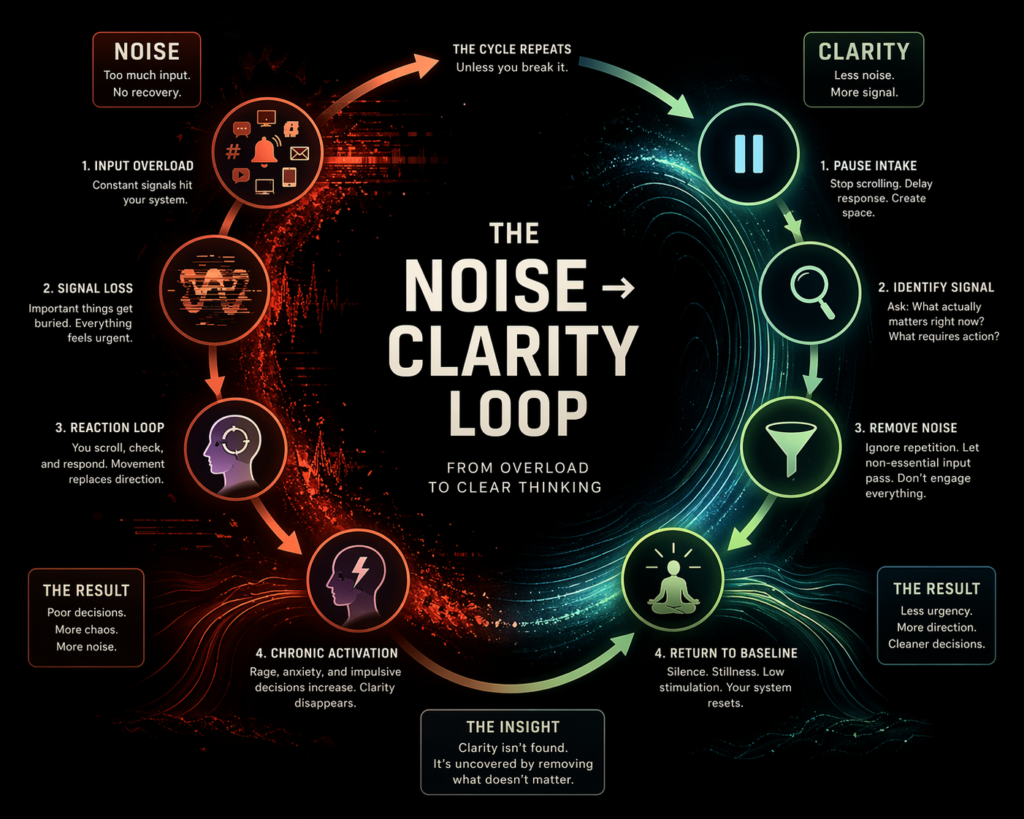
  • You Don’t Need More News — You Need Control of Your Information Intake System

    Control of your information intake system using AI to filter news overload into clear, focused understanding

    The Belief

    Being informed means staying constantly updated with the news.

    The Break

    Constant exposure to information does not produce understanding.

    It produces noise, emotional fatigue, and reactive thinking.

    System Breakdown

    Information today is not delivered as neutral signal.

    It is processed through systems designed for:

    • Attention capture
    • Emotional activation
    • Continuous engagement

    This creates a shift:

    • Signal → Noise
    • Awareness → Reactivity
    • Understanding → Fragmentation

    The human mind, when left unfiltered, becomes a passive endpoint in a high-noise signal network.

    Personal Evidence

    There was a time when news arrived at intervals—delivered, processed, discussed.

    Now it is continuous.

    I chose to step out of that loop—not to disconnect, but to control my information intake system and decide when and how I engage.

    Reframe

    Information is not something you consume.

    It is something you regulate.

    Being informed is not about volume.

    It is about timing, context, and clarity.

    System Insight

    A healthy information intake system behaves like a regulated system:

    • On-demand, not constant
    • Context-rich, not fragmented
    • User-controlled, not algorithm-driven

    Without this, external systems define:

    • what you see
    • when you see it
    • how you feel about it

    Application

    To regain control of your information intake:

    • Shift from passive to active intake
      Ask for information when you need it—don’t absorb it continuously.
    • Add context before reaction
      Historical and structural understanding reduces emotional distortion.
    • Use tools that remove noise
      AI can aggregate, compare, and filter information without ads or manipulation.
    • Control timing
      Choose when to engage with heavy topics instead of letting them interrupt your state.

    AI Layer (System Extension)

    AI introduces a different model of information access:

    • Multi-source aggregation
    • Reduced emotional framing
    • Customizable output (data, summaries, analysis)

    Used correctly, AI becomes:

    A controlled interface to global information—not a replacement for thinking.

    Key Insights

    • More information does not equal better understanding
    • Unfiltered input increases emotional volatility
    • Control of information intake improves clarity and decision-making
    • AI enables structured, user-defined information flow
    • Awareness is built through intentional engagement, not constant exposure

    Internal System Links

    • Cognitive Load & Noise Systems → /cognitive-load-noise-systems
    • AI as a Filtering Layer → /ai-filtering-layer
    • Decision Systems Under Pressure → /decision-systems-pressure
    • Human Systems: Input → Processing → Output → /human-systems-core

    Final Thought

    You are not required to absorb everything that happens in the world.

    You are responsible for how you process what you choose to engage with.

    That is where clarity begins.

  • Human Response to Stress Isn’t Failure—It’s System Overload


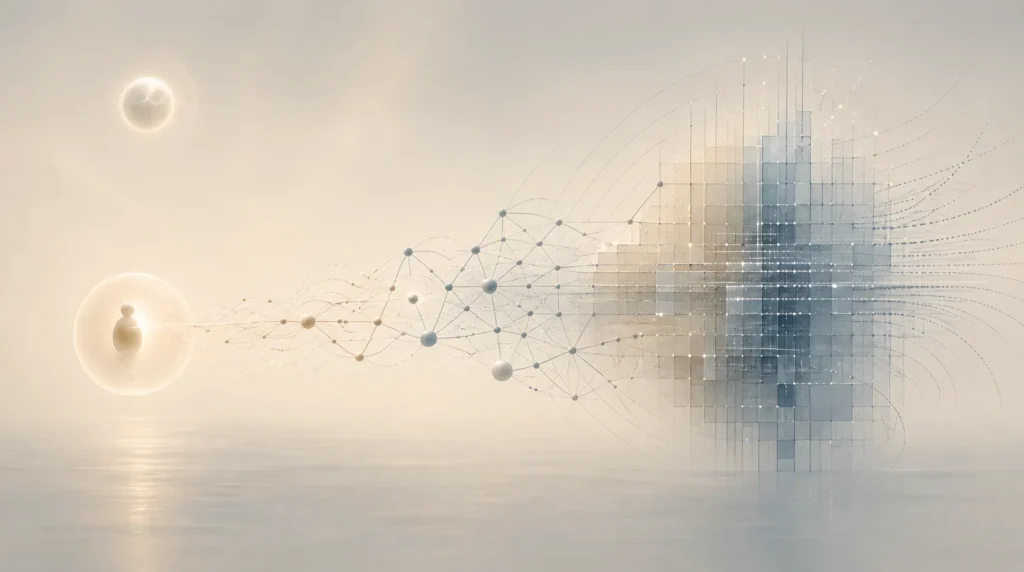
    Human response to stress illustrated as a silhouette with calm signals on one side and chaotic sensory overload on the other

    The Human Response to Stress Isn’t Failure—It’s System Overload.

    Lets break the assumption.

    When people shut down, freeze, or make poor decisions under pressure, it’s often labeled as weakness or failure.

    That framing is wrong.

    What looks like failure is usually a system exceeding its limits.


    System Breakdown

    Every human operates within a system:

    • Input: sensory load, pressure, urgency, environment
    • Processing: nervous system state, past experience, cognitive capacity
    • Output: decisions, actions, reaction speed
    • Feedback: outcome, emotional response, system adjustment

    Under normal conditions, this system performs well.

    Under excessive load, it degrades.

    Not because the person changes—but because the system is saturated.


    What Overload Actually Does

    When the system exceeds capacity:

    • Processing narrows
    • Reaction time distorts
    • Fine decision-making collapses
    • The body shifts into survival mode

    At that point, behavior is no longer optimized for precision.

    It is optimized for continuation.


    Personal Evidence (Condensed)

    In a high-pressure moment, a grenade didn’t go far enough.

    But I did.

    Not because I was fearless.
    Not because I performed perfectly.

    Because the system kept moving—even while it was breaking.


    Reframe

    Under pressure, performance doesn’t reveal character.

    It reveals system limits.

    This distinction matters.

    Because if you mislabel system overload as personal failure, you design solutions that don’t work.


    System Insight

    Humans don’t fail randomly.

    They fail predictably when:

    • Input exceeds processing capacity
    • Environments ignore human limits
    • Systems are designed for ideal conditions, not real ones

    The outcome is not a mystery.

    It’s a design flaw.


    Application

    If you want better human performance:

    Don’t push harder.

    Design better systems.

    • Reduce unnecessary input
    • Match environments to human capacity
    • Allow for degradation without collapse
    • Build for real conditions, not perfect ones

    This applies to:

    • Emergency response
    • Work environments
    • Technology design
    • Education
    • XR systems and AI interaction

    Key Insights

    • Human breakdown under pressure is system saturation, not personal failure
    • Performance under stress reflects system design, not character
    • Environments shape outcomes before decisions are made
    • Systems that adapt to humans outperform systems that demand conformity
    • Better design prevents failure states before they occur

    Final Thought

    If you’ve ever frozen, shut down, or failed under pressure, it wasn’t random.

    It was your system reaching its limit.

    The question isn’t:
    “Why did I fail?”

    It’s:
    “What conditions pushed my system past what it could handle?”

    That’s where real understanding begins.

    And where better systems are built.

  • Identity Threat Response: Why People Fear Tofu, Identity, and Change

    Mediterranean vegan tofu plate showing tofu as simple everyday food without hormonal impact

    Belief

    Certain external inputs—like food, culture, or people—can alter who we are at a fundamental level.


    Break the Assumption

    Most perceived “identity threats” are not biological realities.
    They are interpretations layered onto unfamiliar inputs.

    Tofu doesn’t feminize the body.
    And another person’s identity doesn’t alter yours.

    Yet both trigger similar reactions.


    System Breakdown

    System: Identity Threat Projection

    When humans encounter something unfamiliar, the brain runs a fast evaluation:

    1. Input
      • New or unfamiliar stimulus
        (tofu, gender identity, culture, technology)
    2. Interpretation
      • “This might change me”
      • “This threatens my identity”
    3. Amplification
      • Cultural myths
      • Social reinforcement
      • Repetition of misinformation
    4. Output
      • Avoidance
      • Rejection
      • Mockery or hostility

    This system is not about tofu.
    It’s about protecting a stable sense of self.

    This pattern is known as the identity threat response—a common human system that reacts to perceived changes to self.


    Personal Observation

    Once upon a time, in the cozy chaos of my kitchen, I offered a friend a dish I’d made—vegetables, spices, and tofu.

    Their reaction was immediate:
    “Tofu? Won’t that mess with my hormones?”

    That moment wasn’t about food.
    It was a real-time example of a system activating.


    Reframe

    Hormones are not identity markers. They are biological regulators.

    Every human body produces both estrogen and testosterone:

    • Estrogen supports bone density
    • Testosterone supports energy and function

    Tofu contains phytoestrogens—plant compounds that are structurally different and significantly weaker than human estrogen.

    There is no mechanism where tofu alters identity.

    The fear exists without a real biological pathway.


    System Insight

    Humans often confuse:

    • Exposure → with → Transformation
    • Presence → with → Influence
    • Difference → with → Threat

    This creates a loop where symbolic meaning overrides physical reality.

    The same system shows up in:

    • Fear of certain foods
    • Fear of gender diversity
    • Fear of new technology
    • Fear of cultural change

    The object changes.
    The system remains the same.


    Application

    To interrupt this system:

    1. Separate signal from story
      • What is the actual biological or physical effect?
      • What is assumed or culturally reinforced?
    2. Check mechanism
      • Is there a real pathway for change?
      • Or just a perceived one?
    3. Reduce symbolic overload
      • Not everything represents identity
      • Some things are simply inputs, not transformations

    Key Insight

    Fear is rarely about the thing itself.

    It is about loss of control over self-definition.

    When that fear is examined instead of reacted to,
    clarity replaces defense.


    Closing

    Tofu is just food.

    People are just people.

    And identity is far more stable than fear makes it seem.

  • System Misalignment: You’re Not Bad at the Game — You’re in the Wrong System

    Opening

    System misalignment happens when your strengths don’t match what your environment rewards. Most people don’t realize they’re in the wrong system—they assume they’re the problem.

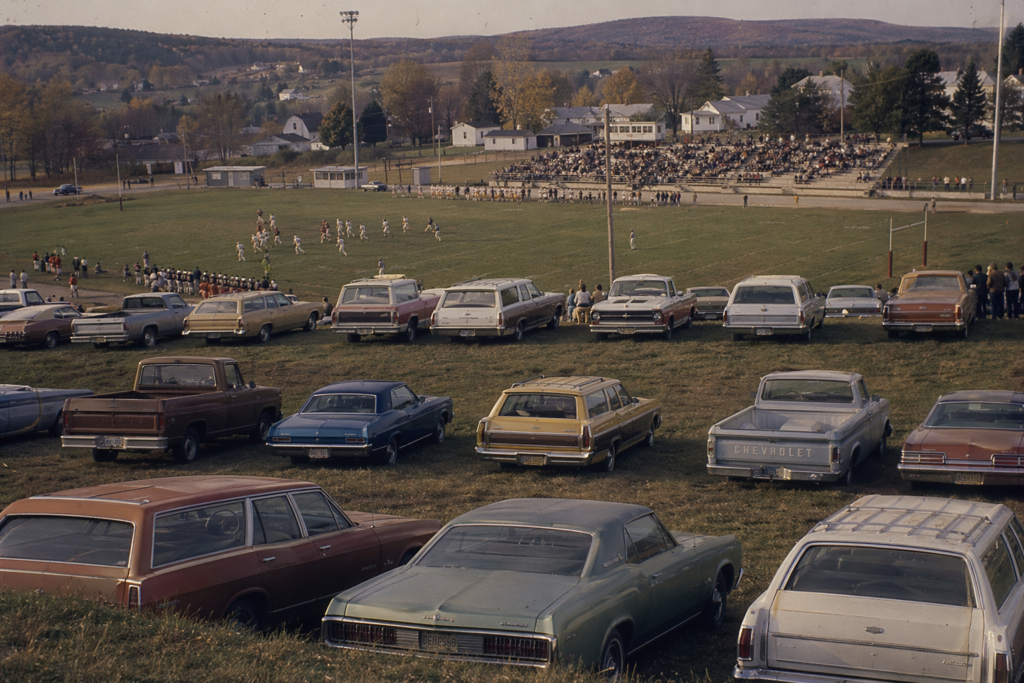
    Growing up in a sports-obsessed small town meant one thing: your value was measured in performance.

    If you could throw, catch, or score—you mattered.

    If you couldn’t, you adapted… or disappeared.


    Break the Assumption

    We’re taught early that struggle in a system means personal failure.

    But that assumption is flawed.

    Struggling inside a system often says more about the system than the individual.


    System Breakdown

    Human environments tend to operate on narrow success criteria:

    • One dominant skill set (sports, academics, social charisma)
    • One visible hierarchy (winners vs. non-performers)
    • One shared definition of value

    In small, closed systems:

    • Feedback loops are tight
    • Labels stick early
    • Identity becomes assigned, not discovered

    If your strengths don’t match the system’s reward structure:

    • You’re seen as underperforming
    • You self-identify as “less capable”
    • You adapt through avoidance, masking, or disengagement

    The system doesn’t expand.

    You shrink to fit—or step out.


    Personal Evidence

    In school sports, survival meant staying out of the way.

    Dodgeball wasn’t competition—it was risk management.

    So I optimized for safety.

    Later, in the military, that same pattern translated differently:

    • awareness became situational control
    • avoidance became strategy
    • observation became performance

    Same person.

    Different system.

    Different outcome.


    Reframe

    Skills are not absolute.

    They are context-dependent expressions of capability.

    What looks like weakness in one system may be:

    • efficiency in another
    • intelligence in another
    • specialization in another

    System Insight

    Misalignment creates false negatives.

    When a system only measures one type of output:

    • it mislabels unused capability as deficiency
    • it rewards conformity over adaptability
    • it suppresses alternative strengths

    Over time, this produces:

    • misplaced confidence in some
    • unnecessary self-doubt in others

    This is how system misalignment creates false negatives.


    Application

    Instead of asking:

    “Why am I not good at this?”

    Ask:

    “What does this system actually reward?”

    Then evaluate:

    1. Stay and adapt
      Learn the rules if the outcome matters.
    2. Redefine your role
      Use the system differently (observer, strategist, builder).
    3. Exit and reposition
      Find or build environments aligned with your strengths.

    Once you recognize system misalignment, your decisions become clearer.


    Key Insights

    • Systems define value before individuals express it
    • Struggle often signals misalignment, not inability
    • Strength is revealed through context, not effort alone
    • Adaptation is intelligence, not avoidance
    • You don’t need to win the wrong game to succeed

    Closing

    You might not fit the system you were placed in.

    That doesn’t mean you’re losing.

    It means you haven’t found—or built—your real game yet.

  • Caring for All: The True Measure of a Nation | Human Systems Care

    human systems care inclusion vs correction loop diagram showing design experience behavior outcome reinforcement cycles

    When we talk about progress, human systems care is rarely what we measure.

    Most systems default to visible outputs—economic growth, infrastructure, speed, scale. These are easy to quantify, but they are not the system itself. They are surface indicators, not foundational health.

    Break the Assumption

    Progress is often mistaken for expansion.

    But expansion without stability leads to fragility. A system that grows while neglecting its most vulnerable nodes is not advancing—it is accumulating hidden failure points.

    System Breakdown

    All human systems operate on a simple principle:

    A system is only as strong as its most unsupported participant.

    When individuals lack access, support, or dignity, the system compensates elsewhere—through healthcare strain, economic inefficiency, social instability, or long-term dependency loops.

    Care is not a moral add-on.
    It is a load-balancing function.

    • Accessibility reduces friction in participation
    • Caregiving support preserves system continuity
    • Inclusive infrastructure expands usable capacity

    Without these, systems degrade under uneven load.

    Reframe

    Care is not charity.
    It is infrastructure.

    Just as roads enable movement and networks enable communication, care enables human participation.

    A nation that invests in care is not being generous—it is increasing system efficiency and resilience.

    System Insight

    When care is treated as private responsibility, systems fragment.
    When care is treated as shared infrastructure, systems stabilize.

    This is why initiatives like Spain’s “Economy of Care” matter. They represent a shift from:

    • Individual burden → Collective design
    • Reactive support → Built-in accessibility
    • Short-term cost → Long-term system stability

    Personal Evidence

    Living as an autistic individual exposes where systems fail.

    Not because the individual is broken—but because the system was never designed to include them.

    When systems expand to include more human variance, they don’t weaken—they become more complete representations of reality.

    I’ve learned something from navigating systems that weren’t built with me in mind:

    People don’t struggle to fit systems.
    They recognize, often immediately, whether the system was designed to include them or to fix them.

    That recognition shows up as friction or ease.
    As masking or participation.
    As exhaustion or stability.

    System Loop: Inclusion vs Correction

    Design → Experience → Behavior → Outcome → Reinforces Design

    • If a system is built for inclusion:
      • Design enables participation
      • Experience feels accessible
      • Behavior is engagement
      • Outcome is stability
      • → reinforces inclusive design
    • If a system is built for correction:
      • Design creates friction
      • Experience feels like pressure or failure
      • Behavior becomes masking or withdrawal
      • Outcome is instability
      • → reinforces corrective assumptions

    Most systems don’t fail randomly.
    They repeat the conditions they are designed to produce.

    What we often label as “individual difficulty” is frequently a signal of system design failure.

    Application

    If you want to evaluate any country, organization, or technology, ask:

    • Who is excluded from participation?
    • Where does the system rely on invisible labor?
    • What happens to those who cannot keep up?

    These questions reveal the true structure, not the public narrative.

    Key Insight

    Progress is not measured by how far a system can go,
    but by how many it can carry with it.

    Care is not the outcome of a strong system.
    It is the condition that makes strength possible.

  • When Identity Becomes the Target: The System Behind Gender Conflict

    Identity conflict system loop diagram showing how instability leads to targeting and division

    Across the world, gender has become a point of tension, debate, and division.
    At first glance, it looks like a cultural disagreement—different values, beliefs, and perspectives colliding.

    But when the same pattern appears across countries, languages, and political systems, it stops being random.

    It becomes a system.


    Break the Assumption

    This is not fundamentally a “gender issue.”

    It is a pressure management system that societies use when they struggle to handle complexity.

    Gender is simply one of the current targets.


    System Breakdown

    The Identity Pressure Valve System

    When systems experience stress, they don’t always resolve it—they redirect it.

    The loop:

    Instability → Fear → Simplification → Targeting → Division → Temporary Stability → Repeat


    Step-by-step

    1. Instability rises
    Economic strain, rapid technological change, cultural shifts, or political uncertainty create pressure.

    2. Fear increases
    People lose a sense of control and look for something they can understand and react to.

    3. Complexity gets simplified
    Real problems are systemic and difficult to solve, so narratives are created to make them feel manageable.

    4. A visible identity group becomes the focus
    Not random—these groups are:

    • Visible
    • Misunderstood
    • Structurally underpowered

    5. Division replaces resolution
    Attention shifts away from root causes and toward interpersonal conflict.

    6. The system stabilizes temporarily
    Pressure is released—not solved—allowing the cycle to reset.


    Pattern Recognition

    This system is not new.

    The target changes, but the structure does not:

    • Race
    • Religion
    • Sexual orientation
    • Gender identity
    • Immigrants
    • Neurodivergent individuals

    Each cycle feels unique.
    Each cycle follows the same design.


    Reframe

    Gender is not the cause of the conflict.

    It is the current surface where deeper system pressure is being expressed.

    When we mistake the surface for the source, we participate in the cycle instead of interrupting it.


    System Insight

    Division is not just disagreement.

    It is a failure mode of human systems under stress.

    And unity is not just moral.

    It is a stabilization mechanism that prevents systems from fragmenting further.


    Application

    If you want to step out of the loop:

    1. Identify the pressure, not just the target
    Ask: What larger instability is being redirected here?

    2. Refuse oversimplified narratives
    If a complex issue has a simple villain, you’re likely inside the system.

    3. Shift from reaction to observation
    Seeing the pattern reduces its emotional grip.

    4. Reinforce connection where division is expected
    This interrupts the system’s ability to escalate.


    The Real Risk

    If we don’t recognize this system, we will keep participating in it.

    Not always as the target—but always as part of the cycle.


    Closing

    Human systems don’t break all at once.

    They fragment slowly, through repeated cycles of redirected pressure.

    Recognizing the pattern is the first step.

    Choosing not to reinforce it is the second.


    Key Insights

    • Gender conflict is a surface expression of deeper system instability
    • Identity groups are often used as pressure outlets
    • The structure repeats globally, regardless of culture
    • Division is a system failure mode, not just disagreement
    • Awareness allows individuals to step outside the loop

  • Why Every Society Creates “The Other”

    human systems grouping people into the other observed by ai guardian

    We don’t reveal our values through what we say—we reveal them through who we place below us.

    Across cultures, time periods, and belief systems, one pattern continues to repeat: every society creates an “other.”

    The label changes. The structure does not.


    Break the Assumption

    We tend to believe inequality comes from circumstance—poverty, behavior, culture, or personal failure.

    But the deeper pattern is this:

    Human systems don’t just recognize difference.
    They organize around it.

    And in doing so, they often assign value—who belongs, who doesn’t, and who matters less.


    System Breakdown

    This pattern follows a predictable structure:

    1. Labeling
    A group is identified as different: outsider, problem, less than, not like us.

    2. Justification
    Cultural, moral, economic, or even compassionate reasoning is used to explain the label.

    3. Distance
    Emotional or physical separation reduces empathy and increases comfort.

    4. Reinforcement
    Media, policy, and everyday language normalize the distinction.

    Over time, the system becomes invisible—not because it’s gone, but because it feels normal.


    Pattern Reality

    No place or culture is immune to this.

    The creation of an “other” is not an exception—it’s a recurring feature of human systems. What changes is not the existence of the “other,” but who is placed into that role.


    Personal Evidence

    I’ve experienced this from multiple sides.

    Treated with kindness one day and suspicion the next, it becomes clear that perception isn’t stable—it’s conditional. It shifts depending on context, labels, and the needs of the system around you.

    That’s when it becomes obvious:

    The system isn’t failing.
    It’s functioning exactly as designed.


    Reframe

    The issue is not whether someone is “lesser.”

    The issue is that the system requires someone to be seen that way.

    Remove the category, and the system has to evolve.


    System Insight

    Healthy human systems operate differently:

    No human is inherently lesser—only differently positioned within changing conditions.

    When systems stop ranking human worth:

    • empathy becomes consistent
    • decisions become more accurate
    • long-term stability improves

    Application

    You don’t need to fix society to interrupt the pattern. You can start locally and immediately.

    Notice the label
    Catch when someone is reduced to a category.

    Pause the story
    Question the explanation that justifies the label.

    Shift perspective
    Replace identity-based judgment with condition-based understanding.

    Reduce distance
    Proximity—physical or conversational—restores empathy.

    Design differently
    In your work, systems, or communities, remove default exclusions wherever possible.


    Key Insights

    • Humans don’t just notice difference—they systematize it
    • “The other” is a constructed role, not a fixed truth
    • Systems persist because they feel normal, not because they are correct
    • Removing hierarchy improves both empathy and system performance

    Stay aware. Stay grounded. Stay human.

  • AI as the Front Door to Healthcare

    AI is changing healthcare access in ways most people don’t realize.

    I went in for a hearing test after putting it off for far too long.

    The result was clear: I have upper-frequency hearing loss. Conversations in noisy environments had been harder for a reason—I just didn’t have the data yet.

    But something unexpected happened after the test.

    I ran a consumer AI hearing test using everyday earbuds.

    The results were close to what the audiologists found.

    That moment reveals a larger shift.


    The System Shift

    Healthcare access used to have a single entry point:

    Professional → Diagnosis → Treatment

    Now there’s a new layer:

    Consumer AI → Awareness → Professional → Treatment

    AI isn’t replacing professionals.

    It’s changing when and how people enter the system.


    What’s Actually Changing

    AI tools are doing three things:

    • Lowering detection friction
      People can check issues earlier, without appointments
    • Increasing awareness
      Users arrive at professionals informed, not guessing
    • Accelerating action
      Less delay between “something feels off” and “I should check this”

    The Boundary (Important)

    AI can detect patterns.

    It cannot:

    • Fully diagnose complex conditions
    • Customize treatment to biological nuance
    • Replace specialized intervention

    In my case, AI identified the issue.

    But hearing aids—configured by professionals—are what actually solve it.


    System Insight

    This isn’t about AI replacing humans.

    It’s AI becoming the front door.

    This shift in AI healthcare access is already happening across multiple domains.


    Application

    This pattern is already spreading:

    • Vision testing
    • Mental health screening
    • Sleep tracking
    • Heart rhythm monitoring

    In each case, AI doesn’t replace care.

    It initiates it sooner.


    Key Insight

    AI doesn’t solve the problem.

    It helps you realize you have one—early enough to do something about it.

  • Why We Outgrew the 9-to-5—But Haven’t Reclaimed Rest Yet

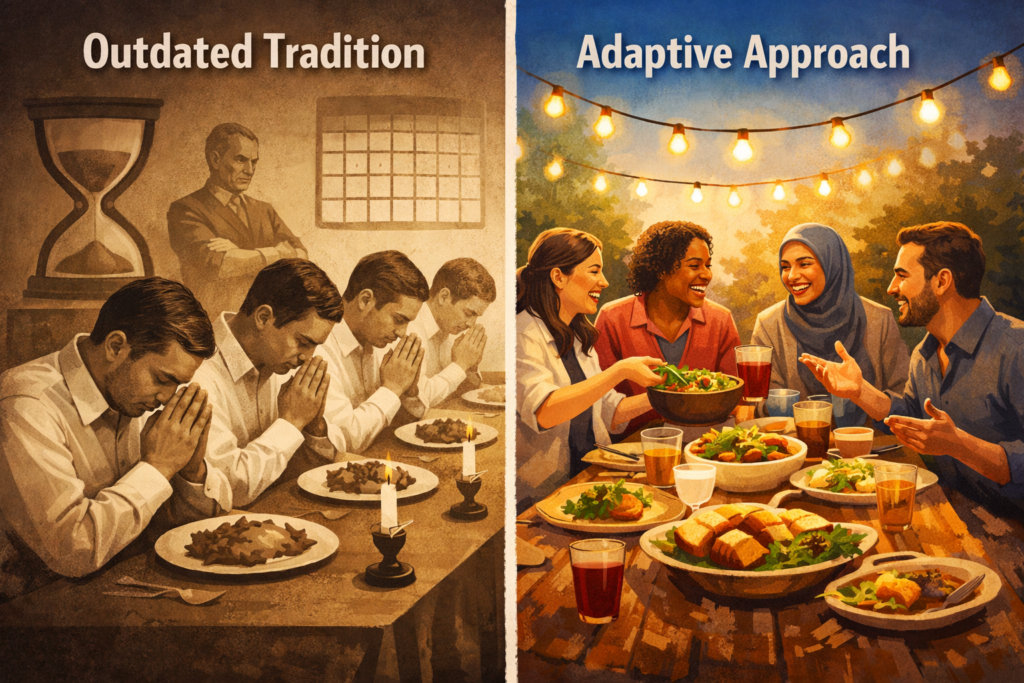
    Split scene contrasting overworked office environment with peaceful daytime rest, illustrating biphasic sleep and human-aligned energy cycles.

    The Belief We Inherited

    Remember nap time as a kid?

    We resisted it. Fought it. Didn’t want to stop.

    Now as adults, we’ve flipped completely—pushing through exhaustion as if rest is something we’re supposed to outgrow.

    But that assumption doesn’t hold up.

    The need for midday rest never disappeared.
    We just built systems that ignore it.


    System Breakdown — Where This Came From

    Modern schedules were not designed around human biology.

    They were designed for:

    • industrial efficiency
    • synchronized labor
    • predictable output

    The result is a rigid expectation:

    stay awake → stay productive → rest only at night

    But human energy doesn’t work like that.

    Historically, humans often slept in two phases:

    • a longer rest at night
    • a second rest during the day

    This is known as biphasic sleep.

    It wasn’t a flaw.
    It was alignment.


    What Actually Happens

    Short naps don’t work for me.

    They feel like a partial reset—just enough to notice the fatigue, not enough to resolve it.

    But when I allow a true 1–3 hour rest:

    • my system fully resets
    • my thinking becomes clear again
    • overstimulation drops

    It’s not indulgence.

    It’s completion.


    The Real Mistake

    We don’t need to “optimize naps.”

    We need to stop shrinking rest to fit productivity systems.

    A 20-minute nap is treated as efficient.
    But efficiency isn’t the goal—restoration is.


    What Changes Now

    We are entering a world where:

    • automation reduces constant labor demands
    • schedules become more flexible
    • individuals regain control over time

    This creates a new possibility:

    Work and rest can be interwoven instead of separated.

    Instead of one long depletion cycle, we can move through:

    • effort → recovery → effort → recovery

    This improves:

    • cognitive performance
    • emotional stability
    • long-term sustainability

    For neurodivergent individuals, this isn’t optional—it’s stabilizing.


    How to Test This

    Don’t overthink it. Test it directly.

    • Allow one true rest window during the day
    • Reduce stimulation before rest (lower light, no screens)
    • Let the rest complete naturally (don’t force short naps)
    • Observe how you function after—not during

    The key shift:

    Measure what improves after rest, not how disciplined you were avoiding it.


    Where This Breaks Today

    Most structured environments still reject this.

    For example, adult care systems often:

    • prioritize constant engagement
    • discourage rest
    • unintentionally increase overstimulation

    For many people—especially those with sensory sensitivity—this creates unnecessary stress.

    A better system would include:

    • structured quiet time
    • optional deep rest periods
    • environments designed for recovery, not just activity

    This is a design problem, not a personal one.


    The Real Question

    Rest isn’t something we grow out of.

    It’s something our systems trained us to ignore.

    Now that we have more control over how we structure our time, the question isn’t:

    Should we rest during the day?

    It’s:

    Why did we design a world where we stopped?